Book: The Director
Author: Daniel Kehlmann
Published by: Riverrun
Price: Rs 799
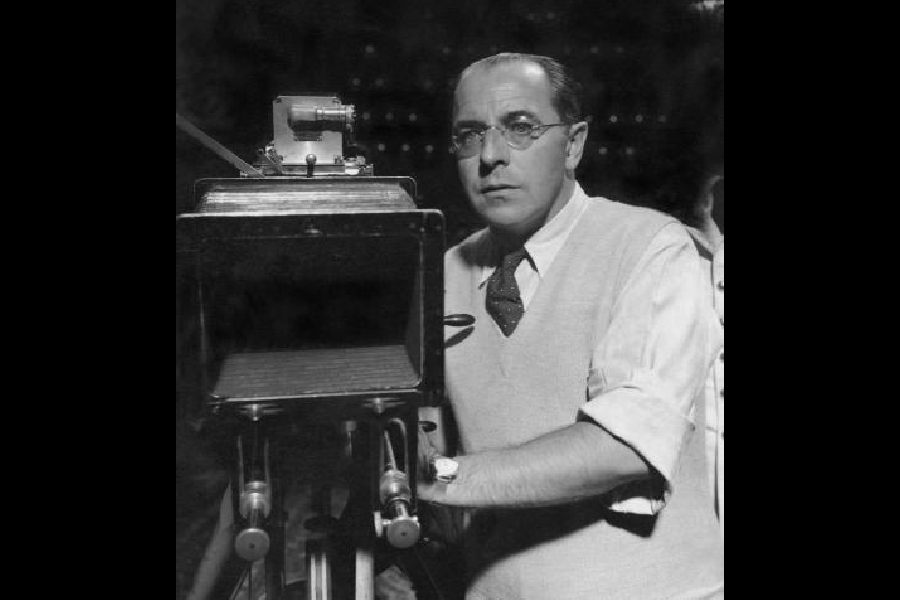
The Director, shortlisted for this year’s International Booker Prize, reimagines the experiences of one of the greatest Weimar-era, German film directors, Georg Wilhelm Pabst (picture), who returns to Austria during Nazi rule, hoping to pursue ‘art’. The immediate trigger, evidently, is his lack of recognition in Hollywood.
What continues to trouble this fictional Pabst is that, whether in America, France, or in Germany, people often mistake him for Fritz Lang, the director of Metropolis. The novel imagines a silent rivalry between them, which also prompts Pabst’s return. Pabst revisits, as if through cinematic flashbacks, the strange mirrored sets of Lang’s film in the artificial city of Babelsberg. And what he had thought his best film to date, The White Hell of Pitz Palu, begins to pale as Pabst attends a screening of Metropolis; he recognises he has witnessed something entirely, astonishingly new. Lang nods to Pabst; he knows. Lang then disappears from the narrative, like an actor who had fulfilled the purposes of his cameo appearance: it is later overheard that he has left for America, while his screenwriter and former wife, Thea von Harbou, is now aligned with the Nazis.
Pabst returns with his wife and son, hoping to lie low with his mother in their small, three-towered castle in a village called Tillmitsch. But with farmhouses and villages becoming “citadels of the people” under National Socialism, social hierarchies have meanwhile been overturned. Their castle’s caretaker, Jerzabek, is now the Local Group Leader of the Nazi Party, and he forces Pabst and his family into moving into the servants’ quarters. Pabst accepts this new reality with resignation, till the point a Party official arrives with a request: “The Minister would like to speak to you.” The official (once a mailman, now elevated within the Reich Ministry of Public Enlightenment and Propaganda) recalls, almost delightedly, that a famous actor
had jumped for joy on hearing this ‘request’; the chief editor of a left-wing newspaper had wet his pants in fear.
What follows is predictable. Once known as “Red Pabst” for adapting Ilya Ehrenburg and Bertolt Brecht, Pabst begins making films for the Third Reich, as Goebbels promises, ‘unhindered’. His wife, Gertrude, attends agonising reading circles of elite women where the novels of Alfred Karrasch — praised by the Führer— are discussed with ritual admiration. Their son, Jakob, imagined into being by Daniel Kehlmann, joins the Hitler Youth and later the Wehrmacht. There are no Faustian moments of guilt for Pabst, no explicit bargains with evil, no recognisable point of moral rupture; he simply continues pursuing ‘art’ in talkies like Paracelsus and The Comedians.
The novel climaxes in Prague where as the war closes in, a disoriented Pabst keeps shooting his next movie, clinging to the only justification left: “Art is always out of place. Always unnecessary when it’s made. And later, when you look back, it’s the only thing that mattered.”
Unsurprisingly, once the war is over, Pabst is again directing films — a man who had been honoured, not quite in the distant past, under the swastika and the fasces for The Comedians, now finds what he had perhaps sought all along: self-recognition. He is once again celebrated, now for making a film against anti-Semitism, and becomes one of “those who held out in the homeland in dark times”. Yet, despite Kehlmann’s effort to centre it, Pabst’s lost masterpiece remains what it always was: not an act of creation, but a social deception — a forced adaptation of the novel by the Nazi propagandist, Karrasch, shaped by Pabst’s self-deceptions.
Perhaps Kehlmann’s attempt is to explore the complex self-justifications of artists when reality catches up with them. Here the violence, the dehumanisation of individuals, the pogroms and the genocides are part of a semi-invisible background: almost invisible to all the characters, including Pabst; too unreal to be spoken of loudly, even by the narrator. And as introspection is steadily outrun by its subject; the novel ends with a manageable ambiguity, but without, say, the deep searing pain of Klaus Mann or Günter Grass, who confronted the lived realities of Germans under the Nazis more mercilessly. Was Pabst really pursuing ‘art’? Or, as the Austrian writer, Karl Kraus, stunned by Hitler’s seizure of power, asked more generally of the German intelligentsia in The Third Walpurgis Night: “If all that political life teaches us is that in the end we die, how could this transformation of cliché into experience stimulate creativity?”
Somewhere towards the end, Pabst and his wife walk through their estate and speak in lowered voices. “You’re right,” he tells her. “But only half right. Because all this will pass. But art remains.” Gertrude replies: “Even if that’s the case. Even if it remains, the… art. Doesn’t it remain soiled? Doesn’t it remain bloody and dirty?”
Does it? Or does it not? That is, always, a question history answers in retrospect.