

Ujwala was just 16 when she met then Prime Minister Manmohan Singh in her village, Waifad, in Maharashtra's Wardha district. But she knew her mind even then. "My parents want me to marry into a farmer's family. But I will not do that looking at the condition of my father who is a farmer," she told Singh when he was on a tour of drought-hit regions of the state in 2006.
Within days of that visit, Singh announced a Rs 3,750-crore package for the Vidarbha region where debt-ridden farmers were killing themselves. He even launched a loan waiver scheme for farmers across the country in 2008. But nothing could change Ujwala's mind.
In 2012, she married an employee of a private firm in the nearby town of Hingni. She is convinced that she took the right decision. "In fact, farmers' condition has worsened since 2006. At that time, most farmer suicides happened in Vidarbha. Now they are happening all over Maharashtra. I would tell every girl in my state and even India that they should never marry a farmer if they want to be happy," she says.
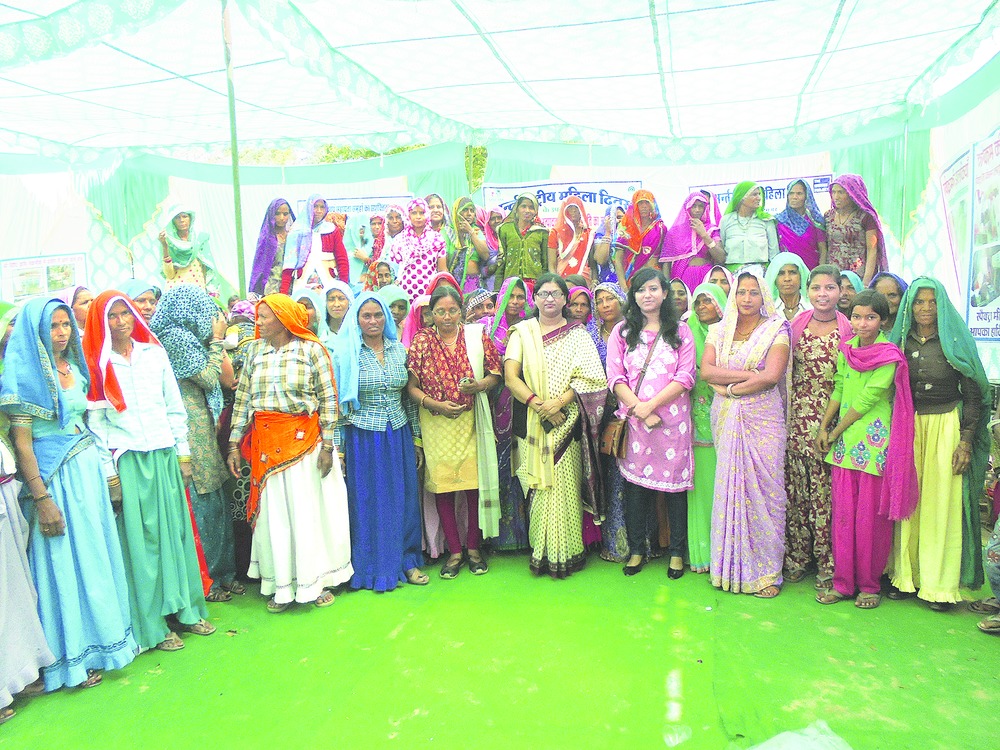
More than a thousand kilometres away in Rata Khurd, a village nestling in the Aravalli hills and surrounded by lush green onion fields in Rajasthan's Alwar district, Ramapali, the wife of a small-time farmer and a mother of three, says that her only daughter would marry a man in "service" and not agriculture. "My husband and I have suffered enough. We don't want our sons and daughter to have anything to do with agriculture," she says.
In fact, not a single person in a self-help group of 30 women in the village wants her daughters to marry a farmer. They don't want their sons to become farmers like their husbands, either.
Farmers' sons, indeed, are looking at other occupations. In some parts of Maharashtra, people are leaving their homes in search of jobs to get a bride. Shrikant Ghate, 31, a cotton farmer of Gavalwadi in Beed, recently migrated to Nagpur to look for work after failing to get a bride of his choice.

"I have a decent family and a few acres of land, but no girl with a degree wanted to marry me because my family was into farming," he says.
A "good" marriage, farmers say, is one of the casualties of the agrarian crisis that has gripped parts of India. Around 630 farmer suicides have taken place this year alone, owing to crop failure and mounting debts.
The census figures of 2011 show that while around 119 million people have identified themselves as cultivators, the figures have been declining over the years in rural areas. Repeated crop failures, dependence on rains, dropping groundwater levels, inconsistent government policies spread over several decades are cited as the reasons for increased marginalisation of farmers.
Not surprisingly, few want to marry into farming families, especially in areas hit by droughts.
"Across many villages, you will find many men well into their mid-thirties waiting to get married. But there are no brides for them. How can families and girls be persuaded when they see so many news items of farmers committing suicide," asks Bharathbhushan Kshirsagar, secretary of a Beed-based non-government organisation and a National Congress Party leader.
Although there are no hard figures, Kshirsagar estimates that weddings have come down in Beed district by more than 50 per cent in the last three years.
Sitting in his office in Alwar, Pradeep Pundhir, founder of the Society for Public Education Cultural Training & Rural Action (SPECTRA), says that the problem is not limited to Maharashtra but is being played out across Rajasthan, Haryana and Madhya Pradesh where SPECTRA works for rural empowerment.
"Till a decade ago, people used to say that a boy should have a tiya or some land to fall back on. Not any longer. These days, a job in a small town or city is the most important qualification for finding a girl," he says. One of his organisation's goals is to encourage men and women to adopt new and sustainable methods of farming in Rajasthan and Haryana. Pundhir admits that it's an uphill task convincing families to take up agriculture as a source of livelihood and prosperity.
Though farmers in Haryana are better off than their counterparts in most other parts, men find it difficult to find a bride because of a skewed sex ratio. According to the 2011 census, there are 879 females per 1,000 males in Haryana - as against the all India figure of 933.
Members of the Haryana-based Jind Kunwara Union (Jind Bachelors' Union), formed last year as a pressure group during the general elections, say that farming is not something they are proud of any more. "Even girls from other states refuse to marry us when we say that we are farmers. They feel that they have to work in the fields along with us," Ramesh Kumar, a member of the union, says.
It is not just farmers' sons who find the going tough. It's equally difficult for farmers to marry off their daughters, says Dharmendra Malik, a leader of the Uttar Pradesh-based Bharatiya Kisan Union. "This is one of the issues we discuss often. Farmers can't find decent families for their daughters," Malik says.
Vijay Jawandia, a leader of the Shetkari Sanghatana, a farmers' organisation in Maharashtra, says that not getting women of their choice can also be a reason Patidars in Gujarat, Jats in Haryana and Uttar Pradesh and Gujjars in Rajasthan are demanding reservations in government jobs. "Most of these people come from farming communities. There is a crisis in the farm sector and they are now finding that their social standing has taken a nosedive. They feel that the only way to redeem it is by having government jobs and getting married to educated women," Jawandia says.
The problem is deeper, according to Ajay Vir Jakhar, who is the chairman of the Bharatiya Krishak Samaj, a farmers' organisation.
"Farming is the riskiest profession in India. Until we stop seeing farmers from the perspective of productivity and deal with their sustainable growth and prosperity, the rural distress will continue and we will continue to encounter newer problems," Jakhar adds.
Farmers who once baulked at the idea of selling their land are now giving up their forefathers' land and occupation. "Fathers are now selling their lands to fund the education of their sons and daughters. They are even selling land to bribe to get government jobs to be able to marry off their sons and daughters. That is the level of desperation among farmers," Malik says.