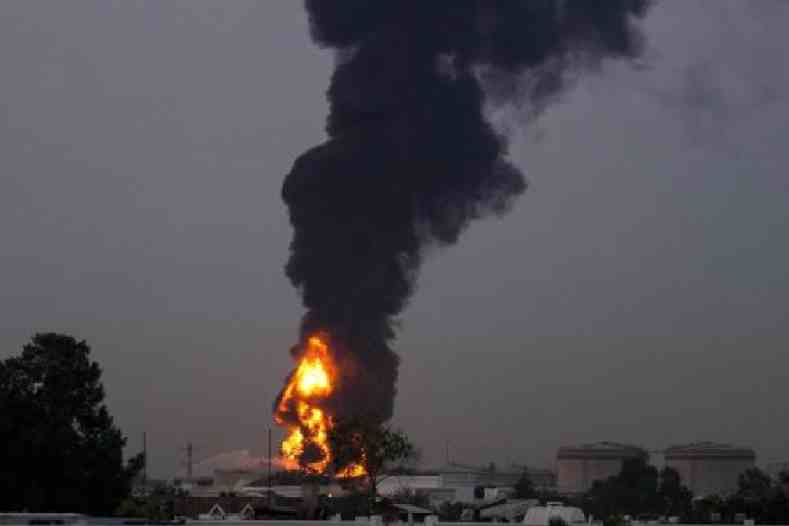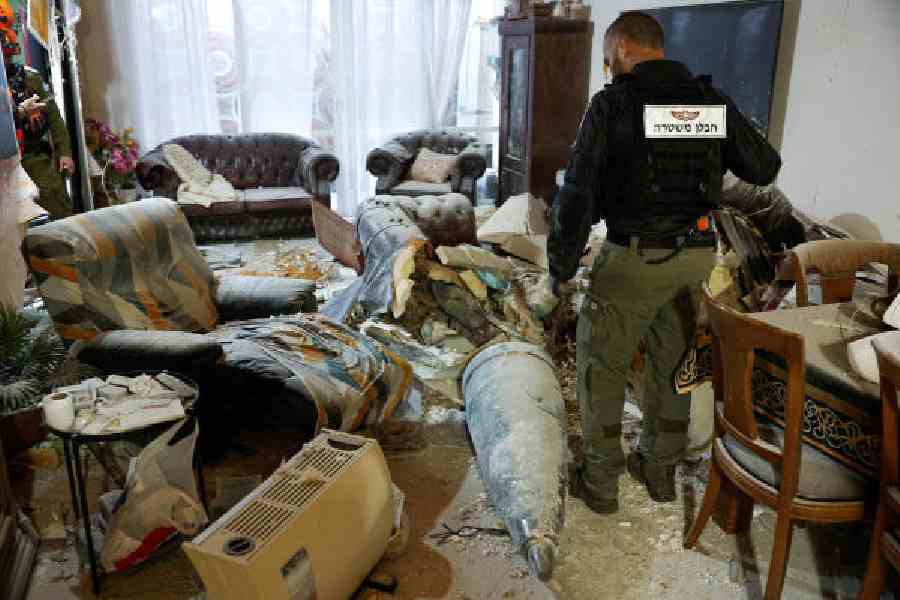
Israel launched a major attack on an Iranian gas field this week, prompting retaliation by Iran against Gulf States, a threat to global energy supplies and a surge in fuel prices.
US President Donald Trump first insisted the US “knew nothing about” the strike, then later backtracked and said he warned Israel against attacking the complex.
His attempt to distance his administration from the strike underscored the diverging aims of the US and Israel as their war against Iran grinds on.
As a superpower with global responsibilities, the US cares deeply about global energy supplies and the safety of its Persian Gulf allies. And with crucial midterm elections later this year, the Trump Administration cares deeply about the rising price of gasoline in the US.
But as a regional power, Israel has different strategic aims and more narrow concerns, analysts and former officials say. Israel has its own natural gas, little dependency on the Strait of Hormuz, where Iran has a chokehold on the transport of fuel, and no responsibility for the free flow of global trade. The stakes for Israel are higher than for the US, since it sees Iran, sworn to the destruction of Israel, as a clear danger, both from its nuclear programme and especially from its ballistic missiles.
Aaron David Miller, a former US West Asia negotiator now at the Carnegie Endowment, said: “We are a global power and they are a regional one. So their threat assessments create a different set of objectives than ours.”
That divergence is inevitable, said Suzanne Maloney, an Iran expert and director of the foreign policy programme at the Brookings Institution. Not only are their goals fundamentally different, she said, but “the costs the two sides can bear are even more different, especially over time”.
Washington is focused much more now on the problem of the Strait of Hormuz, she said, since a lengthy closure could mean a sustained global recession and higher fuel prices.
“Israel doesn’t care as much about this,” she said. “They have a set of strategic objectives and believe they are succeeding, and they’re not as price sensitive as the White House. They are more willing to weather the storm and try to finish the job.”
Israel is more determined than Washington to change the regime in Iran, dismantling the Islamic republic and its ballistic missile programme, and to degrade Hezbollah, Iran’s proxy force in southern Lebanon, to the point that it cannot threaten Israel again for many years. Israel is also more amenable, analysts said, to the possibility of state collapse and chaos in Iran than Washington appears to be.
Having been on a war footing since Hamas attacked it from Gaza in October 2023, Israel is more willing to bear the costs in casualties and economic damage than the US is likely to be. It sees an extraordinary opportunity to clobber Iran with American help, and it is likely to want to continue the war longer than Trump, these analysts said.
So the attack on Iran’s South Pars facility, from which Iran gets most of its natural gas for domestic consumption, was a logical move for Israel, as was an earlier bombing attack on Iranian fuel depots, which Washington also criticised privately, analysts and officials say.
Trump’s strong initial response to the South Pars strike — he said that Israel had “violently lashed out” at the gas field — was the reaction of a global power, prompted by Iran’s retaliatory strikes against Qatari and Saudi natural gas production facilities.
Either way, Trump’s fury will have an impact in Israel, where Netanyahu, who must conduct elections by October, cares deeply about keeping the American President and the US military on his side.
As a result, Israel will likely feel intense pressure to heed his orders to stop hitting Iran’s gas fields and even to stop the war.
At some point, said Miller of the Carnegie Endowment: “Netanyahu’s interests in creating some different Iranian reality will confront Trump’s need to stop. And when Trump needs to say ‘stop’, Netanyahu will reluctantly do so.”
“The price of oil, pressure from the Gulf States and even the international markets matter to Israel, but far less than to the US,” Natan Sachs, a senior fellow at the Middle East Institute in Washington, said. But Israel is sensitive to those concerns to the degree that they influence Trump, he added.
New York Times News Service