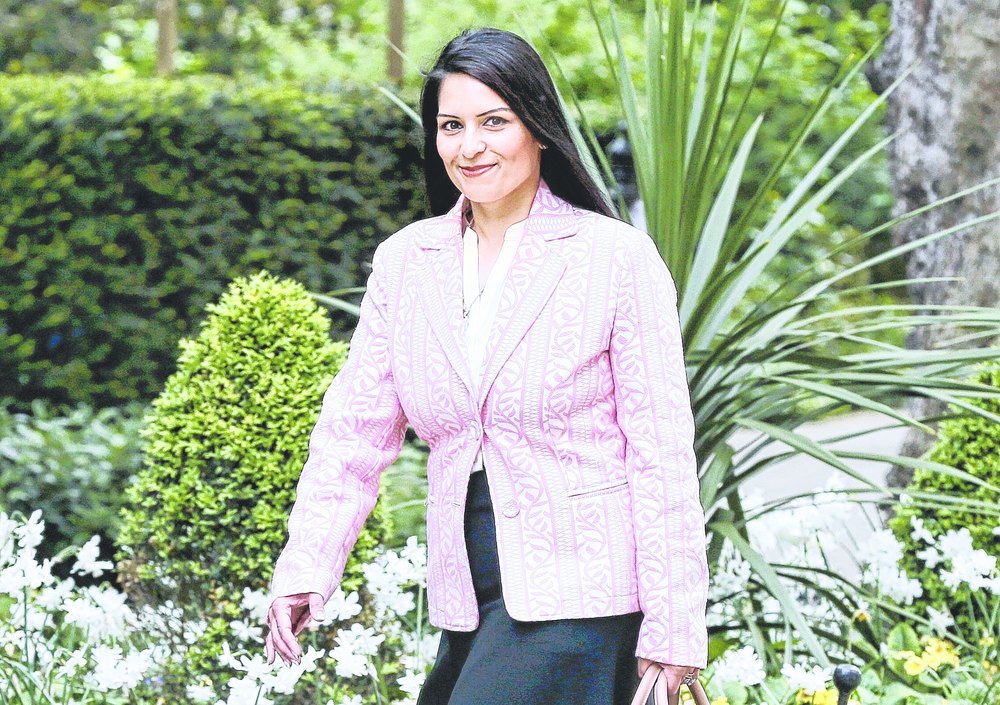

London, May 11: Priti Patel, who introduced David Cameron to the joys of Calcutta during the British Prime Minister's visit to the city on November 14, 2013, was today given a ministerial job which will give her the right to attend all cabinet meetings.
Cameron was quick to tweet: "Priti Patel is to be Minister of State for Employment at the Department for Work and Pensions. She will be attending Cabinet." Priti, who was exchequer secretary at the treasury under the chancellor, George Osborne, in the last government, will now have the works and pensions secretary, Ian Duncan Smith, as her immediate boss.
In her new role, she will have to deal with some very difficult issues such as unemployment or underemployment among young people, low pay among women and the growth of part time or contract work. If she does well, she can expect to become a full-fledged cabinet minister within two years. Priti has another role - that of "diaspora champion" - which was entrusted to her by Cameron. This was a vaguely defined new position in British politics. She was expected to strengthen relations with India and the 2.3 million-strong Indian-origin population in the UK. Priti, 43, who was born in London of Indian parents, is clearly thought to have done well in the role.
In the aftermath of Cameron's stunning victory, all sorts of groups are claiming the credit for the Tories getting to 331 seats, which gives them an absolute majority in the 650-seat House of Commons. First, in her own constituency of Witham in Essex, Priti increased her majority from 15,196 in 2010 to 19,554 last week on a turnout on both occasions of just over 70 per cent.
Once upon a time, Indians closed their eyes and voted Labour - it had been the party that had given India independence back in 1947 under Clement Attlee. But with passing decades, the old links have faded, Labour has been hijacked to some extent by Pakistani-origin voters and more and more Indians found their interests, especially if they were running small businesses, better served by the Tories.
Add to that Cameron's personal desire to develop a "special relationship" with India - he went to India on becoming Opposition leader in 2006 and an unprecedented three times as Prime Ministers. On his last two visits, Priti has been by his side - and it does look as if a sizeable proportion of Indian voters have gone with the Tories. And that is not a trend that will easily be reversed. Before today's appointment, Priti had said that Tory economic policies appealed to Indians. "This is a Prime Minister who attaches a lot of importance to India."
Priti expects to carry on as Cameron's "diaspora" champion.
The Guardian today did a quick assessment after Priti's promotion and said that the junior treasury minister "was a familiar face on TV during the general election campaign, putting the Conservative party line forcefully, and less robotically than many other frontbenchers put up by CCHQ (Conservative Campaign Headquarters). "We're going to be hearing more from her. She is replacing Esther McVey, the former employment minister who lost her seat, and she will be on the screens every month when new employment figures come out."
It added: "For a party that has been historically short of women and minority ethnic figures at the top, Patel's promotion ticks two boxes at the same time, but she is not someone whose rise has been accompanied by offstage whispers about tokenism." The Guardian pointed out that Priti "has had a long background in politics, working for the party as a press officer in the William Hague era."