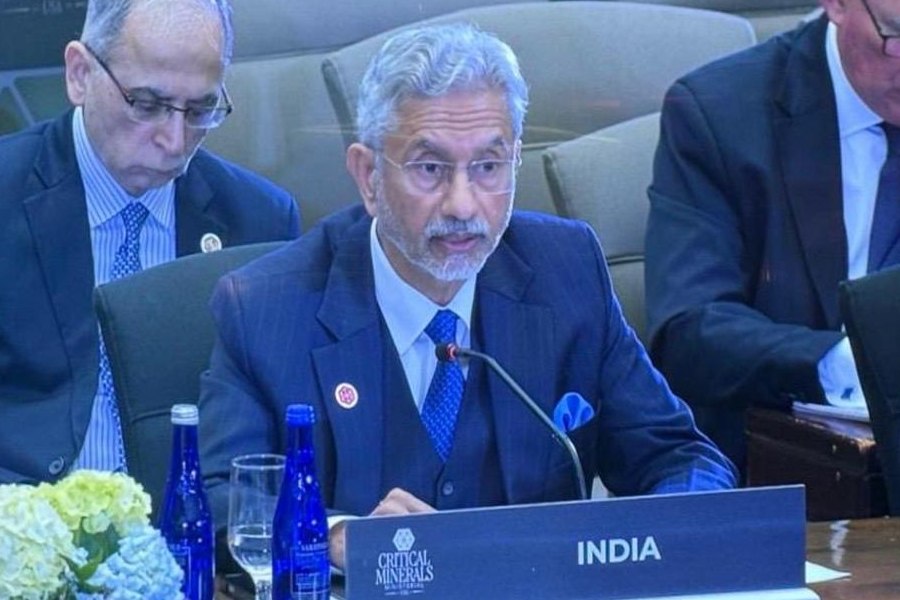
External affairs minister S. Jaishankar on Wednesday highlighted the challenges of “excessive concentration” of critical minerals and the importance of de-risking supply chains through structured international cooperation.
Addressing the inaugural Critical Minerals Ministerial convened by US secretary of state Marco Rubio in Washington DC, Jaishankar also expressed India’s support for the FORGE initiative on critical minerals.
“Spoke at the Critical Minerals Ministerial in Washington DC today. Underlined challenges of excessive concentration and the importance of de-risking supply chains through structured international cooperation,” the minister said in a post on X.
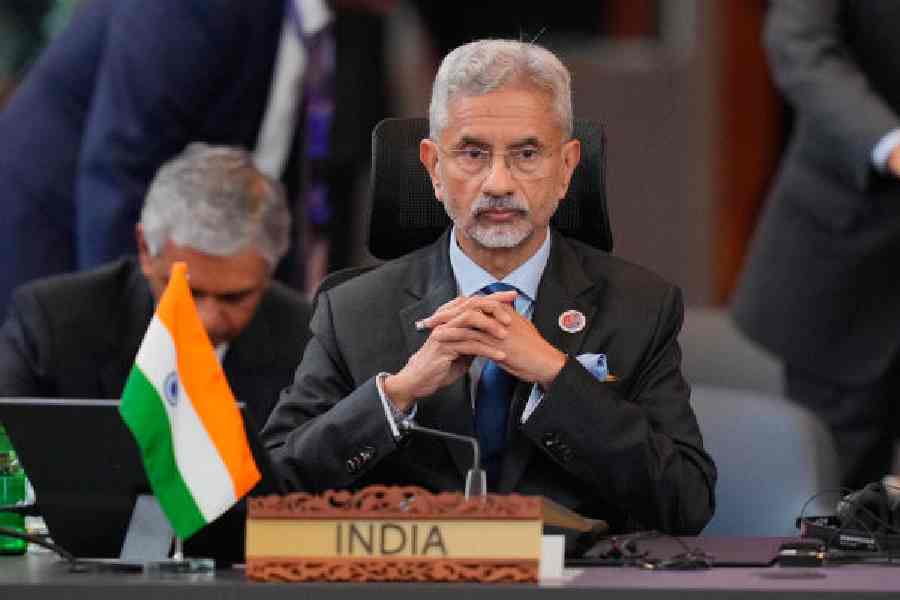
In his address, he also highlighted India’s efforts for greater resilience through initiatives including the National Critical Minerals Mission, Rare Earth Corridors, and responsible commerce.
Before the start of the ministerial, Jaishankar met with several global counterparts, including Canadian foreign minister Anita Anand and Singapore’s Vivian Balakrishnan.
He also interacted with ministers from the Netherlands, Italy, Malaysia, Bahrain, Mongolia, Poland, Romania, Israel, and Uzbekistan.
The Trump administration is aiming to create a critical minerals trading bloc with its allies, using tariffs to maintain price floors and counter China’s tactic of flooding the market to undermine potential competitors.
Vice President JD Vance said on Wednesday that the trade war over the past year exposed how dependent most countries are on the critical minerals that China controls.
“We want members to form a trading bloc among allies and partners, one that guarantees American access to American industrial might while also expanding production across the entire zone,” Vance said at a meeting of foreign ministers at the State Department.
“What is before all of us is an opportunity at self-reliance that we never have to rely on anybody else except for each other, for the critical minerals necessary to sustain our industries and to sustain growth.”
Critical minerals are needed for everything from jet engines to smartphones. China dominates the market for these ingredients, crucial to high-tech products.
“I think a lot of us have learned the hard way in some ways over the last year, how much our economies depend on these critical minerals,” Vance said at the opening of a meeting hosted by Rubio with officials from several dozen European, Asian, and African nations.
The meeting comes amid tensions between Washington and major allies over President Donald Trump’s territorial ambitions, from Greenland to Canada, and his moves to exert control over Venezuela and other nations.
Trump’s rhetoric directed at US partners has led to frustration and anger. The conference, however, signals the Republican administration’s effort to build relationships on issues it views as key national security priorities.
Meanwhile, Chinese President Xi Jinping spoke with Trump on Wednesday, according to Liu Pengyu, spokesperson for the Chinese embassy in Washington.
To make the trading group effective, it will be important to prevent countries from buying cheap Chinese materials on the side and to encourage companies to avoid sourcing critical minerals from China, said Ian Lange, an economics professor at the Colorado School of Mines.
“Let’s just say it’s standard economics or standard behavior. If I can cheat and get away with it, I will,” he said.
For defense contractors, Lange said the Pentagon can enforce where companies get their critical minerals, but it may be harder with electric vehicle makers and other manufacturers.
Two days ago, Trump announced Project Vault, a plan for a stockpile of rare elements to be funded with a USD 10 billion loan from the US Export-Import Bank and nearly USD 1.67 billion in private capital.
Last week, the government made its fourth direct investment in an American critical minerals producer, extending USD 1.6 billion to USA Rare Earth in exchange for stock and a repayment agreement.
The Pentagon has spent nearly USD 5 billion over the past year to support mining.
Trump’s moves come after China, which controls 70 per cent of the world’s rare earths mining and 90 per cent of the processing, restricted the flow of these elements in response to Trump’s tariff war.
The two countries are in a one-year truce after a meeting in October, agreeing to reduce tariffs and ease rare earth restrictions. China’s limits, however, remain tighter than before Trump took office.
Vance said some countries have signed on to the trading bloc, which is meant to ensure stable prices and provide members access to financing and critical minerals. He expressed hope that others would join after the meeting.
Administration officials said the plan will help move beyond complaints about access to critical minerals to taking action.
“Everyone here has a role to play, and that’s why we’re so grateful for you coming and being a part of this gathering that I hope will lead to not just more gatherings, but action,” Rubio said.
Heidi Crebo-Rediker, senior fellow at the Council on Foreign Relations, called the meeting “the most ambitious multilateral gathering of the Trump administration.”
“The rocks are where the rocks are, so when it comes to securing supply chains for both defence and commercial industries, we need trusted partners,” she said.
Japan’s minister of state for foreign affairs, Iwao Horii, said Tokyo was fully on board with the US initiative and would work with as many countries as possible to ensure its success.
“Critical minerals and (their) stable supply is indispensable to the sustainable development of the global economy,” he said.
The Export-Import Bank’s board approved the USD 10 billion loan this week, the largest in its history, to help set up the US Strategic Critical Minerals Reserve.
It is tasked with ensuring access to critical minerals and related products for manufacturers, including battery maker Clarios, energy equipment manufacturer GE Vernova, digital storage company Western Digital, and aerospace giant Boeing.
The bank’s president and chairman, John Jovanovic, told CNBC that manufacturers benefiting the most from the reserve are making a long-term financial commitment, while the government loan encourages private investment.
David Abraham, a rare earths expert, noted that the administration has focused on increasing critical minerals production, but development of manufacturing that uses these minerals is equally important.
He added that Trump’s cuts to incentives for electric vehicles and wind turbines have reduced domestic demand for these elements.
Last month, a bipartisan group of lawmakers proposed creating an agency with USD 2.5 billion to boost production of rare earths and other critical minerals.
The lawmakers praised steps by the administration to collaborate with allies to resolve the issue.
“It is unacceptable for America’s economic well-being and national security to be at the whim of China due to their overwhelming control of critical minerals supply chains,” Sens. Jeanne Shaheen, D-N.H., and John Curtis, R-Utah said in a statement.