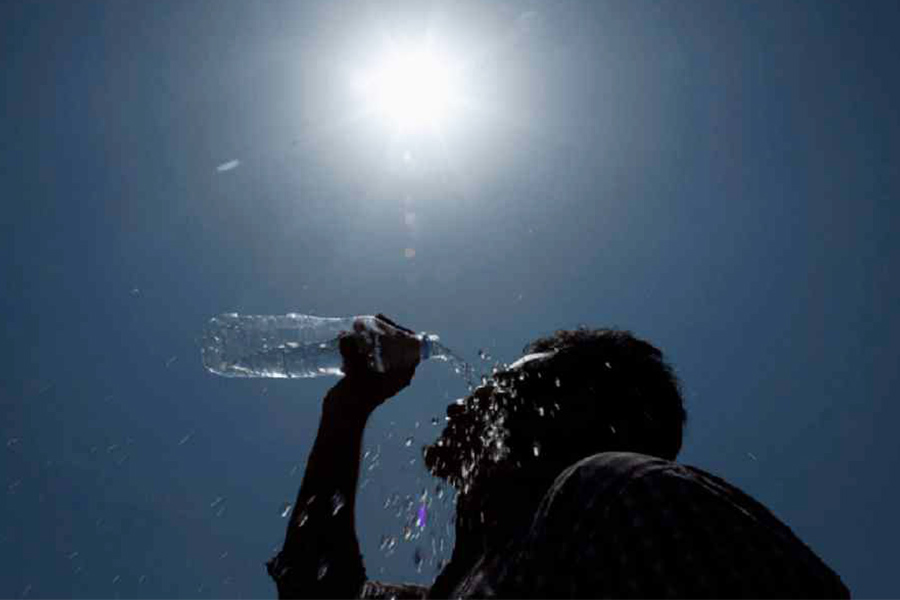
The world has just experienced its hottest decade since records began, the United Nations’ weather agency confirmed, warning that key climate indicators are reaching alarming levels.
A report released by the World Meteorological Organization (WMO) said the period between 2015 and 2025 marks the warmest 11-year stretch since record-keeping began in 1850. The findings reinforce growing concerns about accelerating global warming and its impacts.
According to the WMO’s State of the Global Climate report, 2025 ranked either the second or third hottest year on record, with global temperatures about 1.43 degrees Celsius above the pre-industrial average. The agency had earlier indicated that 2025 would be among the three hottest years ever recorded.
The report also highlighted severe environmental impacts, noting that glacier mass loss at key monitoring sites was among the five worst on record. Exceptional declines were observed in regions including Iceland and North America, underscoring the rapid pace of cryosphere degradation.
"The state of the global climate is in a state of emergency. Planet Earth is being pushed beyond its limits. Every key climate indicator is flashing red," said United Nations Secretary-General Antonio Guterres.
In addition, the report confirmed that 2024 remains the hottest year on record, with global temperatures reaching about 1.55 degrees Celsius above the pre-industrial baseline.
Under the 2015 Paris Agreement, governments committed to limiting global warming to well below 2 degrees Celsius, with efforts to cap it at 1.5 degrees Celsius — a threshold scientists warn is increasingly at risk of being breached.