|
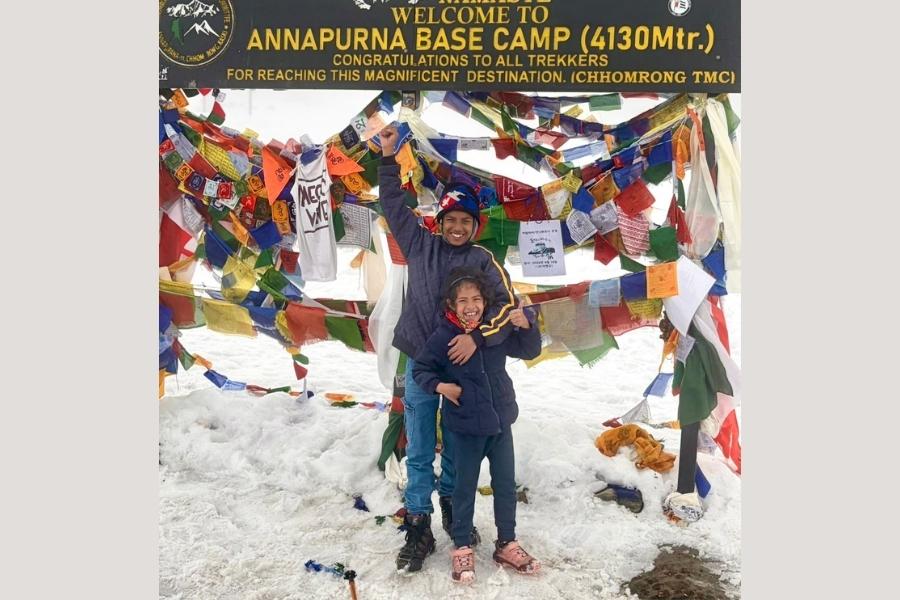
| Tully and his sister during their trip. A Telegraph picture |
Siliguri, Nov. 30: For journalist and scholar Mark Tully, the going back to his school in Darjeeling was almost like old days.
He had his elder sister, Pru Swindells, with him and the siblings walked to their alma mater, New School, just like they used to years ago, when Tully was just four years old.
“It was a sorrowful and joyous moment,” Tully told The Telegraph. “Our hearts pained to see the Queen of Hills reduced to a concrete jungle. However, we were happy that Mount Kanchenjuga is still her beautiful self and the Darjeeling Himalayan Railway still runs as it used to.”
The siblings were here early this month to relive their past on camera for a three-part documentary film, The Raj, presenting the British rule in India and being produced by the BBC to commemorate the 60th year of Indian Independence.
“The series will take you behind the scene of the greatest show in the British Empire — the Raj or the British rule in India,” Marion Milne, the series producer told The Telegraph through an email. “It is set in the backdrop of India from the 1920s to Independence, when the freedom movement was gathering momentum. Each of the 60-minute films will bring alive how British expatriates attempted to create an idyllic version of English life in India.”
“Our aim is to bring to life the world of Mountbatten and rural hill stations,” Milne has written. “We want to recreate, through our interviewees, the decadent Savoy Hotel, opulent mountain villas, outrageous drinking clubs and the austerity of the humid rural working conditions where typewriters would ‘rust by nightfall’ and servants would walk 10 miles for water.”
The team has even come upon a “cast of compelling characters” who are still alive. Other than Tully, the list includes Nancy Vernede, who was 18 in the 1930s and remembers her life being “pure bliss” where a pair of shoes would last for only three weeks, thanks to the sheer number of formal dances.