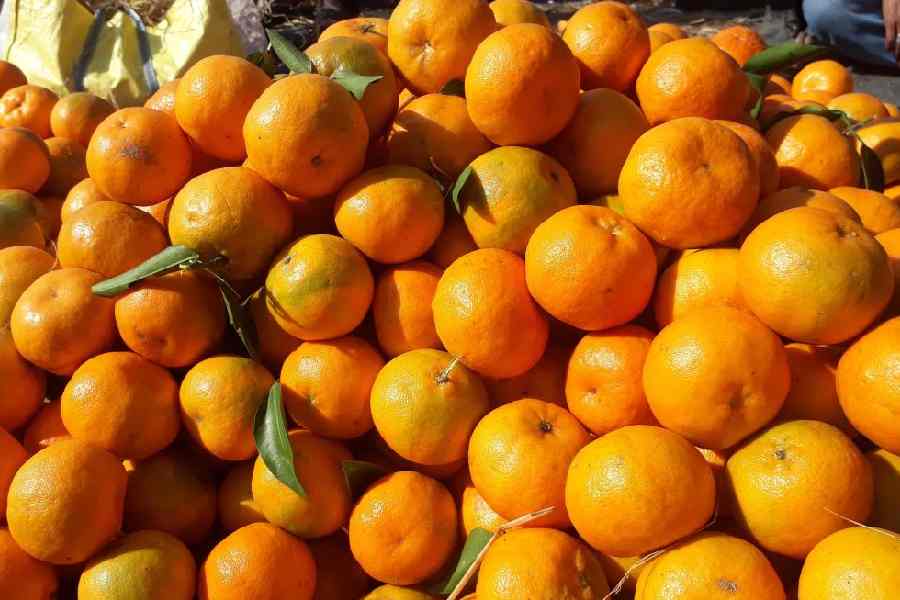
The orange cultivators in the Darjeeling hills should be provided with clean, disease-free planting material to revive production of the famed Darjeeling Mandarin Orange, say agricultural experts.
The Darjeeling Mandarin Orange has recently received the Geographical Indication (GI) tag, which formally recognises its unique characteristics and exclusive link to the region’s geography and climatic conditions.
It is the third product from the hills, after Darjeeling Tea and the Dalle Khursani chilli, to receive the prestigious certification.
“Our research shows that providing clean and disease-free planting material to growers is the most critical requirement to increase the production of oranges in the Darjeeling hills. In addition, proper nutrient management, plant protection measures, along with correct harvesting and post-harvesting practices, must be followed to improve production,” Debabrata Bosu, the vice-chancellor of Uttar Banga Krishi Viswavidyalaya (UBKV), told The Telegraph over the phone on Wednesday.
UBKV is located at Pundibari on the outskirts of Cooch Behar.
The production of the Darjeeling Mandarin, which is known for its distinctive taste, aroma, and quality compared to other varieties found across the country, declined significantly over the past three decades because of multiple factors.
Currently, oranges are cultivated on around 4,150 hectares in the hills. However, in recent years, the annual production declined to 29 metric tons, which is almost half the earlier production of around 52 metric tons annually.
The decline in production made the UBKV conduct research and come up with a list of interventions needed to reverse the trend.
The varsity, through its research centre in Kalimpong, has been regularly engaging with farmers to raise awareness of best farming practices.
Sources at the centre said techniques such as tissue culture and inarching were being adopted in laboratories to develop healthier planting material and improve overall production.
Also, the state horticulture department has been conducting workshops
for cultivators and organising orange festivals across the hills to encourage farmers.
However, experts believe collective efforts could yield better results.
“Instead of individual initiatives, if groups of farmers or producer collectives come together, production will automatically increase,” a source said.
Bosu, the VC of UBKV, also emphasised the need for stronger marketing strategies, as effective marketing is essential for boosting the growth of the iconic winter fruit.
“Special focus must be given to marketing by involving large corporate houses and fruit-processing companies already active in the sector,” he said.
With the GI tag secured for the citric fruit of the hills, the experts said the next crucial step would be to register all growers in the Darjeeling and Kalimpong districts as its Authorised Users (AU).
“This would allow them to legally use the GI label and ensure that they receive the rightful premium value for their produce,” said an expert.