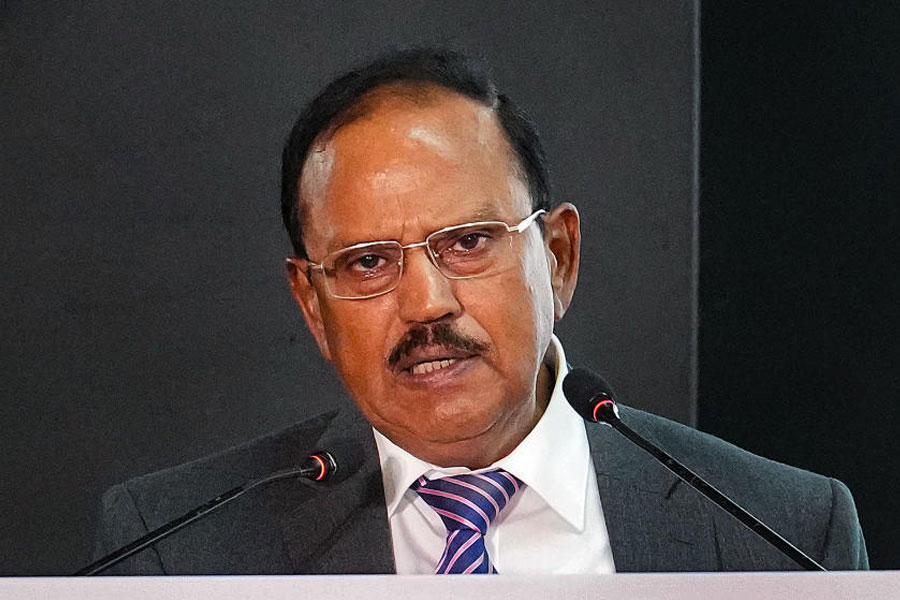
The India-US trade deal announced earlier this week after months of bickering appears to owe in no insignificant measure to a meeting national security adviser Ajit Doval held with secretary of state Marco Rubio in September last year on Prime Minister Narendra Modi's instructions, according to a Bloomberg report on Wednesday.
In that meeting, Doval made it clear that India wouldn’t be bullied by US President Donald Trump and his top officials and would be willing to wait out his term, having faced other hostile US administrations in the past, Bloomberg said, basing the report on its conversations with officials in New Delhi familiar with the meeting. These officials chose not to be identified as the discussions between Doval and Rubio were private.
The meeting, according to Bloomberg, took place in the immediate aftermath of Modi's convivial interactions with the leaders of China and Russia, Xi Jinping and Vladimir Putin, at the Shanghai Cooperation Organisation Summit.
The Bloomberg report said Doval conveyed to Rubio New Delhi's view that Trump and his aides must refrain from publicly criticising India so that the ties between the two countries could be brought back on track as New Delhi considered Washington a long-term strategic partner.
Till late on Wednesday, the Indian government had not commented on the Bloomberg article. According to the report, Bloomberg got in touch with the external affairs ministry and the Prime Minister's Office but did not receive a response to its email queries. A spokesperson for the US state department was quoted in the article as saying that in keeping with standard diplomatic practice, it did not disclose the details of private discussions.
Trump had taken an acutely confrontational stand by slapping 50 per cent tariffs on India — a 25 per cent reciprocal levy and another 25 per cent as punishment for buying Russian oil and defence equipment — and kept nettling New Delhi by calling India a "dead economy" and claiming on numerous occasions that he had stopped the India-Pakistan conflict despite India's assertion that there had been no external influence.
Bloomberg reported that signs of a thaw began to emerge after the Doval-Rubio meeting with Trump calling Modi on the Prime Minister's birthday on September 17 and heaping praise on him. Over the next three months, Modi and Trump had spoken four more times over the phone as the two countries continued trade negotiations.
On Monday night, Trump announced on social media that a trade deal had been clinched and that the tariff on Indian goods would be reduced to 18 per cent. The punitive tariff was also scrapped. The 18 per cent tariff is one of the lowest for Asian countries.
Trump also claimed that India had agreed to purchase $500 billion of US goods, switch to buying Venezuelan oil, and reduce tariffs on US imports to zero. Modi's social media post, which followed Trump's, and the Indian government's official comments on the trade deal made no mention of these claims. Neither side has made the details of the agreement public yet.
The Bloomberg report said the arrival of new US ambassador Sergio Gor, a Trump aide, to New Delhi in December appeared to have intensified the efforts to mend the ties between the two nations.