|
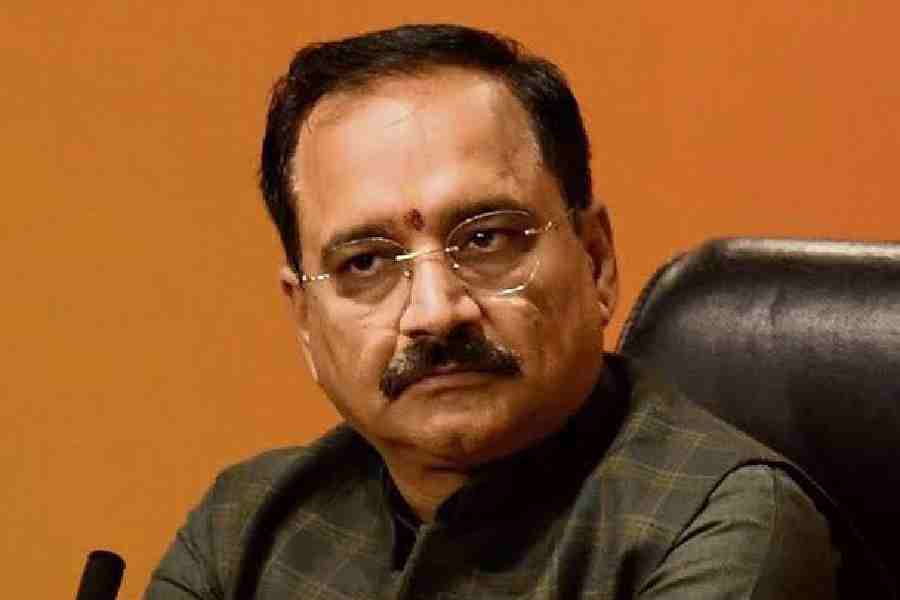
| Producer of the film Roshan Rai (centre) in Gangtok on Sunday. Picture by Prabin Khaling |
Gangtok, Sept. 18: The struggle, popularity and the tragedy that cut short the successful career of Nepali singer Bhakta Raj Acharya, also known as Bhajan Siromani, would come alive in the big screen here tomorrow.
Acharya, a biopic on the life of the singer, is set for its premiere at the Denzong Cinema hall here in Gangtok.
“The film is based on the true life story of legendary singer Bhakta Raj Acharya. The movie portrays his talent, contribution to Nepali music, early days of struggle, success and the tragedy in his life,” said producer Roshan Rai.
According to Shyam Pradhan, a member of the committee that is organising the screening, Bhakta Raj was born in Dhankuta in Nepal in 1942. He went to Samsing in the Dooars with his parents at an early age to work in a tea garden.
When he was around 20, Bhakta Raj left for Nepal to pursue a career in singing and by early 70’s he had written and sang over 400 songs for Radio Nepal.
In 1993 Bhakta Raj’s flourishing career was hit by a tragedy after he lost his tongue in an accident. He returned to the Dooars in the same year.
According to Rai, the two hour 20 minute-long Nepali film that is being brought out under the banner of Silk Route Pictures has been shot in the Dooars, Nepal and Sikkim.
Prashant Rasaily, the director of the movie, said chief minister Pawan Chamling and footballer Bhaichung Bhutia would be present at the screening tomorrow. The music of the film has been composed by Bhakta Raj himself and his character is being played by his eldest son Satya Raj Acharay.
Rasaily said ghazal maestro Ustad Ghulam Ali from Pakistan has a guest appearance in the film that has been selected for the 13th Mumbai international film festival.
The Nepal premiere will be held on September 21 and screening will begin there from September 23, Rai said. “The movie will be shown in Sikkim, Darjeeling and Siliguri from October 14. We are also getting a lot of enquiries from Hong Kong and the Gulf countries where a lot of Nepali- speaking people live.”