 |
Realising that passenger shelters have become a source of visual pollution and are of no use to the thousands who commute by bus every day, the Calcutta Municipal Corporation (CMC) has decided to address the issue on a war footing.
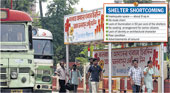
According to an estimate by the civic body, more than half the 230-odd passenger shelters in the city have been encroached on, and hence, cannot be used by passengers.
Besides, the civic town planning wing has found that about 90 per cent of the passenger shelters were built in the interests of the outdoor advertising agencies, without any field study on passenger concentration.
Buses, therefore, seldom stop at the shelters and vendors, rag-pickers and tea-stall owners occupy the built-up space.
“We have decided not to allow any public or private agency to build passenger shelters… If an agency like the Calcutta Metropolitan Development Authority, Calcutta Improvement Trust, Calcutta Port Trust or a private organisation wants to build passenger shelters or footbridges, they have to approach the town planning wing,” said mayor Bikash Ranjan Bhattacharyya.
According to municipal commissioner Alapan Bandyopadhyay, the town planning section of the civic body will first assess the need for a shelter at a certain spot before giving the green light.
The town planning wing will provide the design for the bus shelter, which the agency concerned will have to follow.
“Seven types of structural designs have been readied with help from Bengal Engineering and Science University (Besu), Shibpur, to standardise the structures,” said commissioner Bandyopadhyay.
Besu has already submitted a detailed report, along with guidelines and drawings, after carrying out a study on the state of the existing passenger shelters.
City town planner Dipankar Sinha said the designs will be area-specific and the size of the shelters will be increased to accommodate more people.
“We are dividing the city into three zones — heritage, old city and new growth areas. So, colonial or Indo-Saracenic style of architecture will be used for shelters in north Calcutta and the BBD Bag-Esplanade zone. Modern functional designs will be used in the new growth zone,” explained Sinha. For south and south-east Calcutta, modern and post-modern style of designs have been planned.
“To carry out our plan, we will have to demolish the existing shelters… We will start the process soon,” stated Sinha.