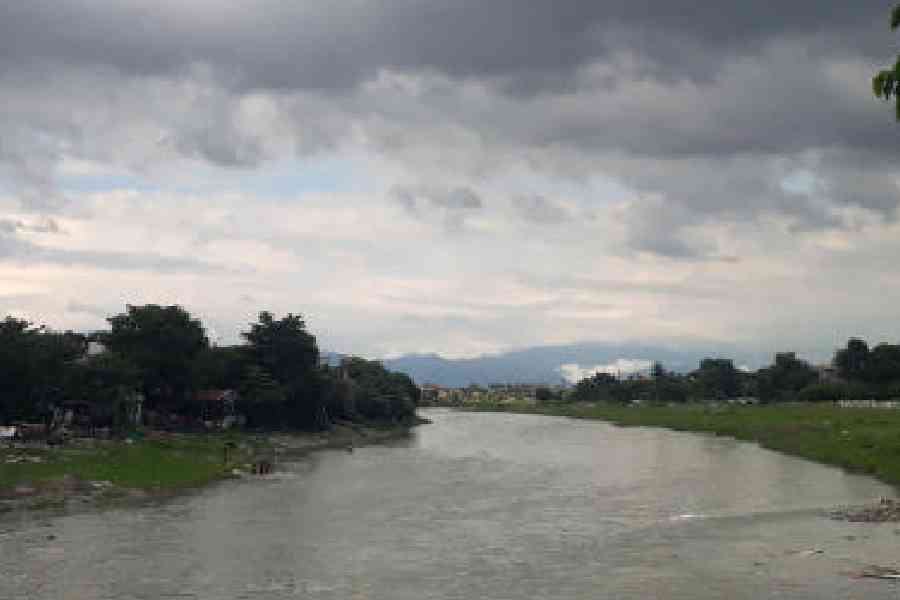
The Mahananda river, along with some other rivulets flowing through Siliguri, has been brought under the Centre’s Urban River Management Plan (URMP), Siliguri mayor Gautam Deb said on Tuesday.
The project is being implemented under the central government’s National Mission for Clean Ganga (NMCG).
“We had been appealing for the inclusion of the Mahananda river in the Centre’s river rejuvenation programme. The Centre has finally approved its inclusion, along with other urban river stretches in Bengal such as Asansol, Durgapur, Nabadwip, and Howrah,” the mayor said.
Apart from the Mahananda, four rivulets — Maheshmari, Jorapani, Fuleswari, and Sahu — which flow through different areas of the Siliguri Municipal Corporation (SMC) and adjoining localities have also been included in the project.
Deb said the SMC would also urge the Centre to bring the Karala, which flows through Jalpaiguri town, under the same rejuvenation programme.
“Jalpaiguri is known to be a twin town of Siliguri. That is why we would send a request to the authorities concerned for the inclusion of the Karala in the project,” he added.
The URMP, an initiative under NMCG, is meant for the rejuvenation of the rivers as well as the beautification of the river banks.
It includes removal of encroachments, restriction on or ban of certain activities on the riverbank or in the river, development or restoration of the riverbank area, prevention of the discharge of untreated sewage into the river, reuse of tertiary treated sewage within the city or elsewhere for industrial, irrigation, horticultural, non-potable domestic and commercial uses, groundwater recharge, and disposal of sludge generated due to sewage treatment in an acceptable manner and reuse of sludge and
sludge-derived products.
The mayor noted that the SMC had earlier carried out rejuvenation work in the Fuleswari and the Jorapani with the assistance of the state irrigation department. However, with the inclusion of these rivers and rivulets in the central scheme, the work will now be undertaken under expert supervision.
“An expert team from Jadavpur University will work as the nodal agency for the implementation of the project,” Deb said.
The SMC — the largest civic body in north Bengal — has also formed a monitoring committee comprising the commissioner of the SMC, subdivisional officers of Siliguri and Jalpaiguri, and officials of the state land and land reforms department, public health engineering, public works and irrigation.
“The committee will review the progress of the project every fortnight to ensure timely and effective implementation of the project,” the mayor added.