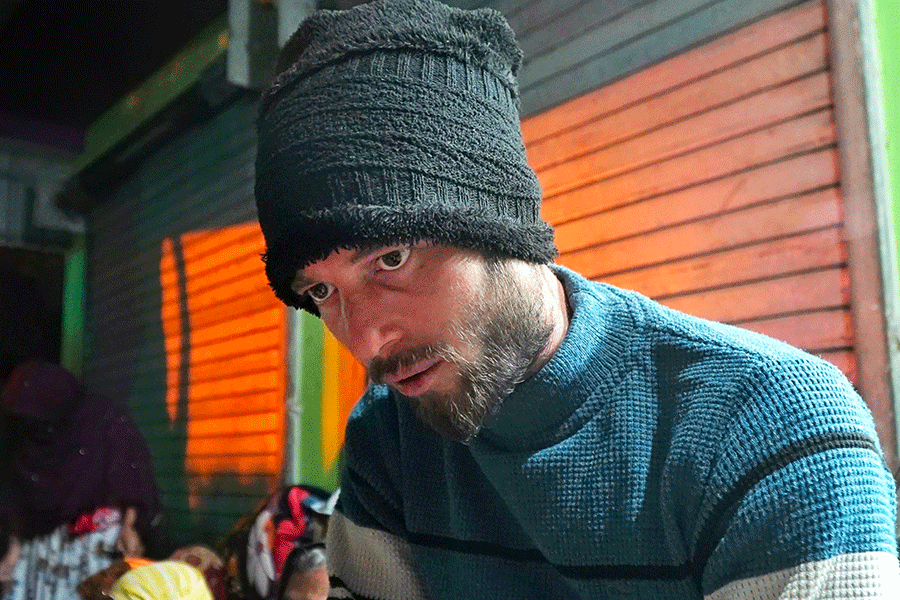
Nadim Ahmed and Samrat Banik do not know each other.
The young men, both in their early 20s, stood within an arm’s distance, oblivious of each other on a midweek evening under a banyan tree in North 24 Parganas’ Swarupnagar, about a kilometer and half from the Hakimpur check post on the India-Bangladesh border, around 86 km north-east of Calcutta.
Nadim and Samrat were part of a smaller group waiting for the signal from the BSF to make a move towards the international border in the wake of the special intensive revision (SIR) of electoral rolls underway in Bengal.
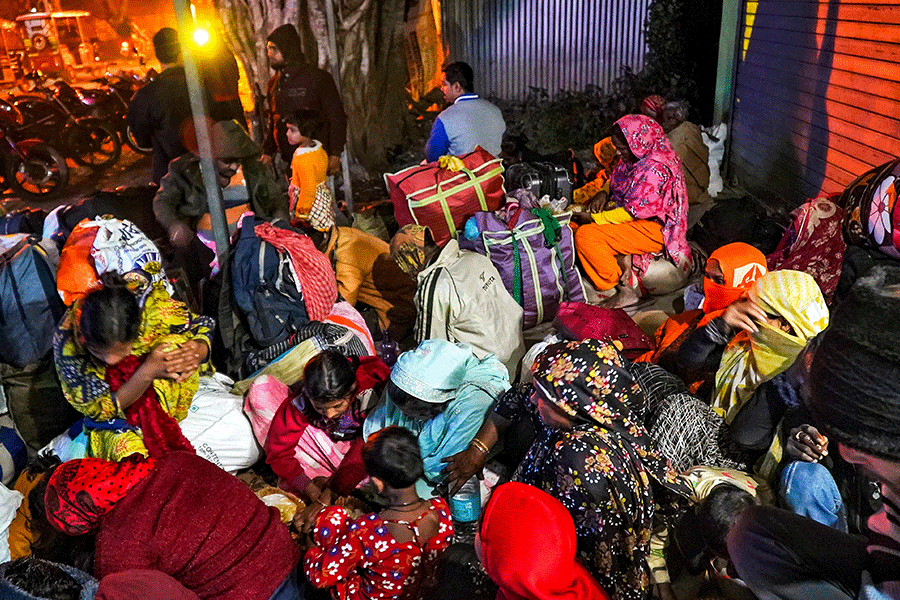
People waiting at the Hakimpur Checkpost (Soumyajit Dey)
“The contractor for whom I was working and others told me, ‘SIR has started. You don’t have any documents of your arrival to India. You could be arrested. Better you leave for Bangladesh now’,” said the shy Nadim.
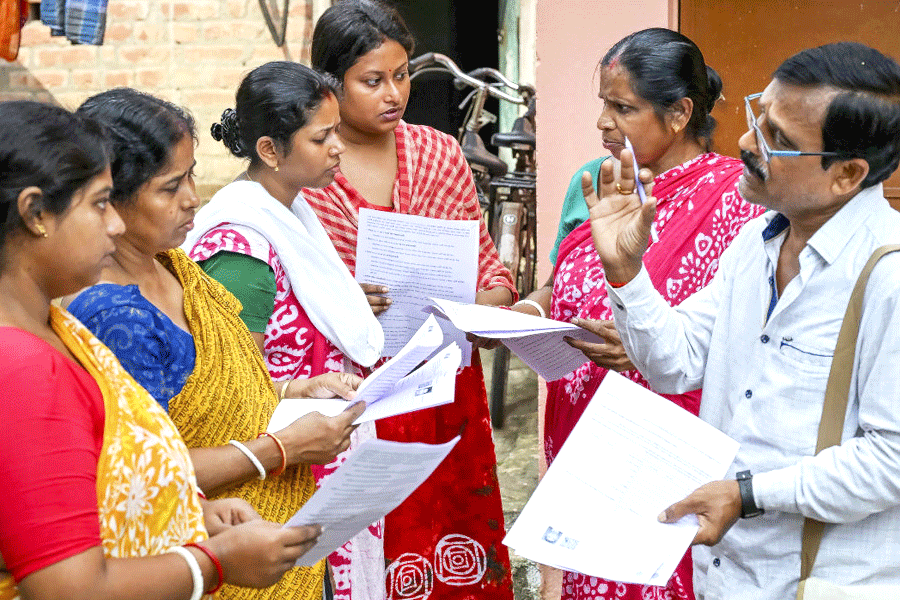
The logic that the SIR is only to cleanse the voter lists and not to weed out non-citizens from the country does not work for Nadim, or others like him.
He was the only person from Bangladesh in a group of seven working as rajmistris (construction workers) in the Calcutta suburb of Salt Lake aka Bidhannagar. The rest were from Murshidabad.
“I am a Hindu,” Samrat introduced himself. A Class X dropout from Gopalganj, Samrat Banik’s parents are still in Bangladesh.
“Your government will not let me live here any longer,” he said dispassionately.
Across the fence and the fields and the Border Guard Bangladesh (BGB) camps are lives that Nadim, Samrat and thousands, if not lakhs, of others from the neighbouring at-present-trouble-torn country had left behind.
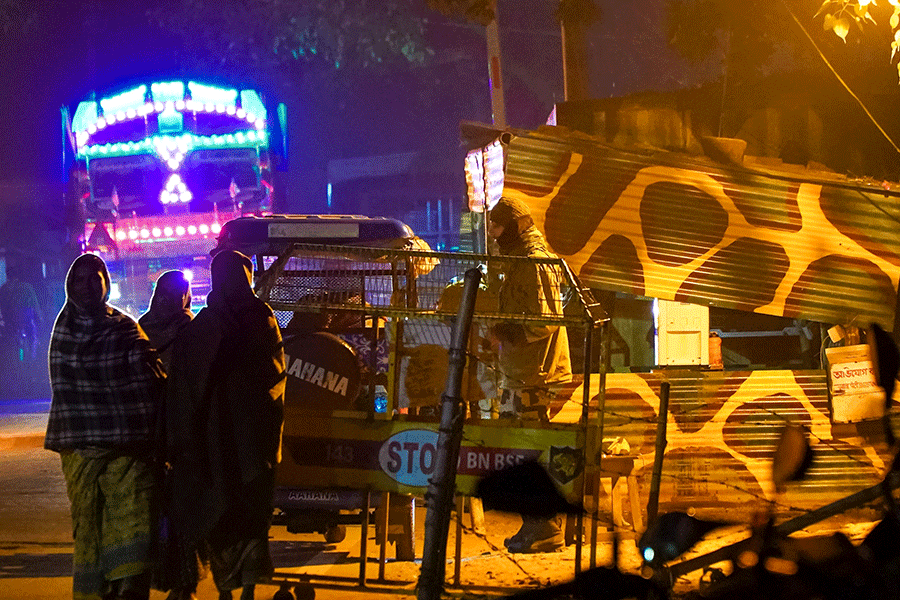
Hakimpur Checkpost (Soumyajit Dey)
They came over to this side of the border in search of a better life. Probably some of them found it too, till it lasted.
But life in India was no bed of roses, either in Salt Lake for Nadim or in Odisha’s Jharsuguda for Samrat.
Nadim had in mind the 0.36 paise difference between the Indian rupee and the Bangladeshi taka when he decided on leaving home.
He had sent Rs 6,000-7,000 to his diabetic mother at home in a village in Jessore every month of his three-and-half years in Calcutta.
“The money is for her medicines. I lost my father when I was still a child. My brother drives a van in Khulna. I did the same work while I was in Bangladesh. The money was less than what I earned here [in Calcutta],” Nadim said.
He rarely lifted his face while we spoke. Whether he kept his head bowed out of shame for having been identified as an undocumented migrant or because he was worried about the future, he would not say.
He sat on a new wooden bench outside a tea stall. On the ground under nature’s canopy a group of people, mostly women and children, sat huddled close together, barely leaving room for anyone to move through the crowd.
Others around him were hungrily gobbling up plates of rice and dal or fish arranged from an eatery across the road.
The misery and the uncertainty of life brought them together. A border check post in Bengal, in the news for almost a fortnight when the first batch of Bangladeshis living without documents in India started fleeing.
That initial heavy rush has trickled down to 30 or 40 people per day. A fortnight ago, the BSF personnel would proceed with the departures twice or even thrice a day. The exit march would start early in the morning.
“Depends on them [the BSF] when they will open the border,” said Asit Ghosh, a resident of Hakimpur.
On the other side, it is up to the BGB when to allow those returning to proceed towards their homes.
Nadim had his last meal in the afternoon before he left Salt Lake for Hakimpur. That evening he was not in a mood to eat.
Towards the end of 2021, he had paid Rs. 5,000 to an “agent” in Bangladesh to cross the border, he said.
“They arranged for the travel here and crossing the border. I didn’t have to pay any money to anyone in India,” said Nadim.
“I was working as a rajmistri in Bangladesh too. The daily wage was between 300 taka and 350 taka. Someone in my village suggested I move to India. The pay was slightly more here and then there was the higher exchange value.”
Sending money home to his mother was the tricky part. Nadim does not have a bank account; the electronic transfer route was not an option for him.
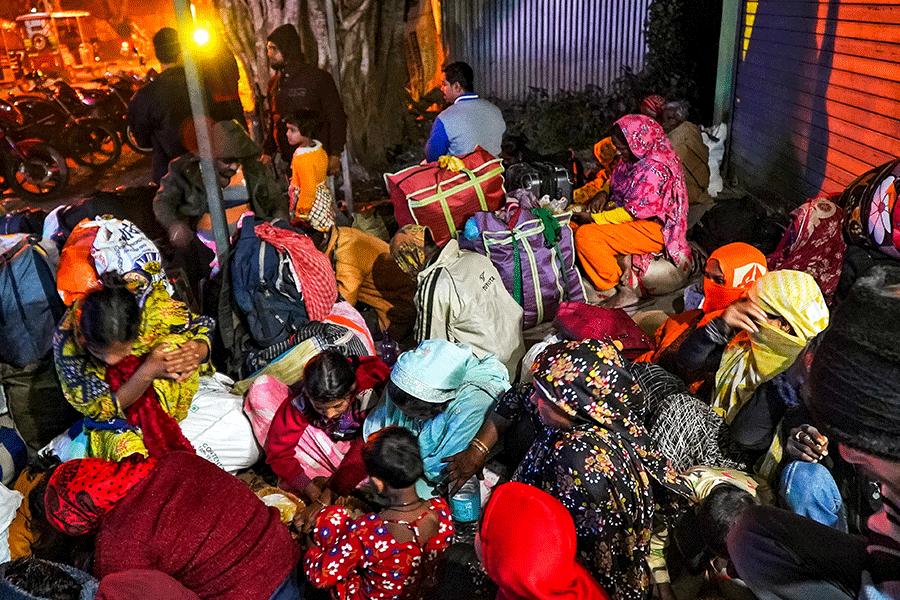
People waiting at the Hakimpur Checkpost (Soumyajit Dey)
“The contractor would help locate agents who could send the money home. Sometimes I would come across someone who was going home to Bangladesh. They would take the money for my mother,” he said.
Did he ever try to get any documents made in India? Did someone approach him? He replied in the affirmative.
“I don’t know the person. This man said he could get me an Aadhaar card for Rs 15,000. I turned him down. I didn’t have that kind of money. All I could think every month was how much I could send back home,” said Nadim.
Nadim did not have to pay rent, or for electricity. He and the others lived on the ground floor of whichever under-construction building they were working on. Food was simple. Rarely ever did he venture out of Salt Lake.
Samrat’s journey from Bangladesh to Odisha
Samrat Banik reached Jharsuguda via several other places in Bengal, courtesy social media.
“I had connected with people from Bangladesh who were working in different parts of India on Facebook. One of my Facebook friends suggested Jharsuguda,” he said.
During the Covid lockdown five years ago, Samrat’s school in Gopalganj shut down. He never returned to class again.
“I needed money, I needed work. India seemed better than Bangladesh, so I decided to try my luck here. I would have probably stayed here for the rest of my life. Back at home I don’t know what I will do,” he said.
He said he paid 6,000 taka to an agent in Bangladesh who arranged for the travel and work. Then he had to pay some more.
“I was wandering along the road near Tentulia [in North 24 Parganas]. I had crossed the border two nights ago and was still figuring out which way to go. Some civic police volunteers caught me. I had to pay Rs 3,000 to them,” Samrat said.
Nadim knows he will go back to working on construction projects in his homeland.
“I don’t know what I will do. You know the condition of Bangladesh,” said Samrat.
Samrat, Nadim and the others squatting under the old banyan tree know they have to return to the home that they had left behind willingly.