Large numbers of fish were found dead in the Teesta on Tuesday, with preliminary indications that poisoning of the river water had killed the aquatic species.
Since February, this is the second time that fish have been found dead and floating in the river.
Residents spotted huge quantities of dead fish floating near Mirichbari in the Mainaguri block of the district on Tuesday morning. Mirichbari is close to Domohani, around 10km from Jalpaiguri town.
Piscean species such as rohu, boroli (Barna baril), aar (long-whiskered catfish), punti (pool barb), foli (Asiatic knifefish), and shol (snakehead murrel) were found dead. Officials from the fisheries department visited the spot.
Many residents were seen collecting the dead fish in utensils and bags at Domohoni, where anti-social elements allegedly poured toxic chemicals into the slow-moving water.
Fish poisoning in the Teesta is not new. Earlier this year, stagnant water in a section of the river had been contaminated with toxic chemicals, leading to the deaths of large numbers of fish near Saradapally in Jalpaiguri.
Saroj Chandra Das, the Jalpaiguri district secretary of Uttar Banga Matsyajibi Forum, said: “After receiving the news, I rushed to the site and informed the fisheries department. Unscrupulous traders are killing river fish by mixing poison with the water or using electric shocks. I have urged the department to identify the culprits and take stern action. A large number of fish have died. People who collected the poisoned fish have been instructed not to sell or consume them.”
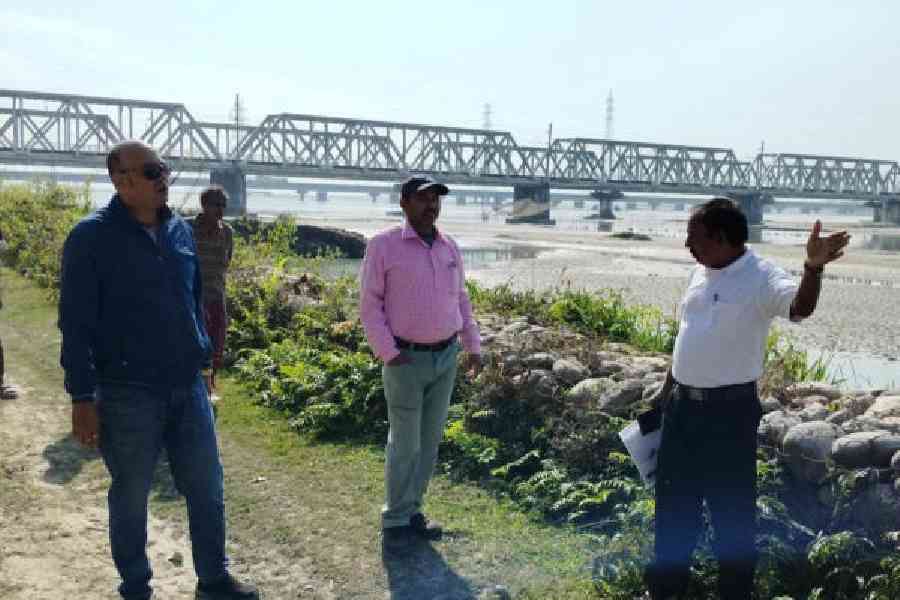
Sources said the toxic substance was allegedly poured into stagnant water near the Teesta rail bridge, which is close to Domohani. The culprits collected many of the dead fish before fleeing. The scale of the fish kill became widely known only later in the morning, after which crowds gathered at the site.
Ramesh Chandra Biswas, an assistant director of the fisheries department posted in Jalpaiguri, said samples of water and dead fish were collected for testing.
“Preliminary findings indicate that some form of toxic oil was mixed with the river water. Announcements have been made in surrounding areas, warning people against consuming or selling the dead fish. Awareness camps will soon be organised at riverine villages and local markets to inform people about the dangers of fish mortality events,” he said.
Earlier, in November and December, 2011 again during the same months in 2015, large-scale fish deaths were reported in the basin of the Karala river, which flows through Jalpaiguri, because of the use of endosulfan, a harmful pesticide.
The river water had to be flushed with fresh water from the Teesta irrigation project to dilute the toxins.
On December 18, 2012, fish were killed in the Karala river after toxic oil was poured into the water. On October 16, 2020, toxic chemicals were dumped in the Teesta near Saradapally in Jubilee Park here, leading to another major fish kill.
On December 1, 2023, and on February 4, 2025, fish mortality due to poisoning was reported again in the Teesta near Saradapally.
“We are conducting awareness camps and will also circulate a dedicated helpline number to report such illegal activities promptly,” said Biswas.