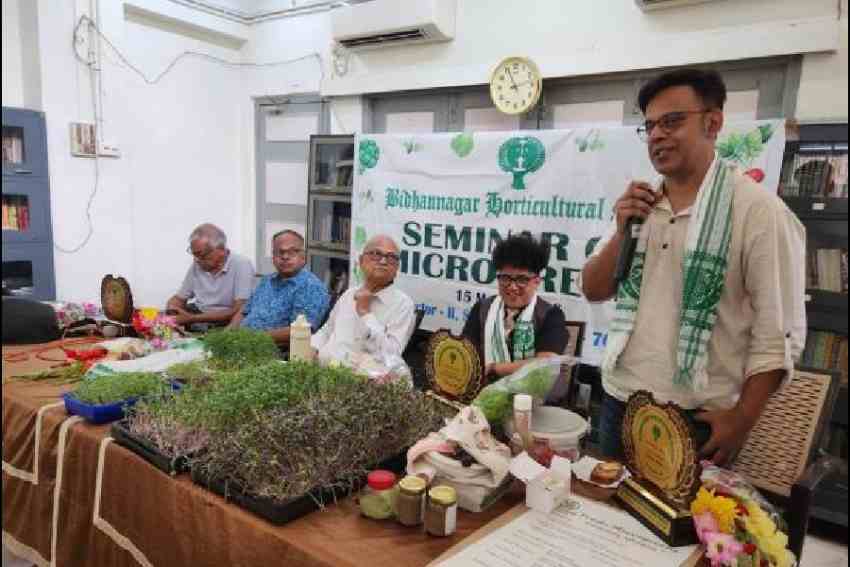
Microgreens is the new buzz-word among both nutritionists and gourmet chefs so Bidhannagar Horticultural Society organised a seminar to teach members how to grow them.
Microgreens are tender, young vegetable saplings that are harvested at a very early age stage of growth, usually within seven to 14 days after germination. At this stage the plants will be five to eight cm in height but are packed with nutrients much
higher than what they would contain at full-grown stage. They have
minerals, antioxidants, vitamins C, E, and K etc.
The first speaker, CG Block-based Amlan Saha, said he had started microgreens as a personal project but that his yield got so prosperous that he is now selling them to the hotel industry.
“I love salads but plants like lettuce would grow only in winter. Plus, they would take two months to grow whereas microgreens would be ready in 10 days. They add to the flavour of the food and provide four times the nutrition,” said Saha.
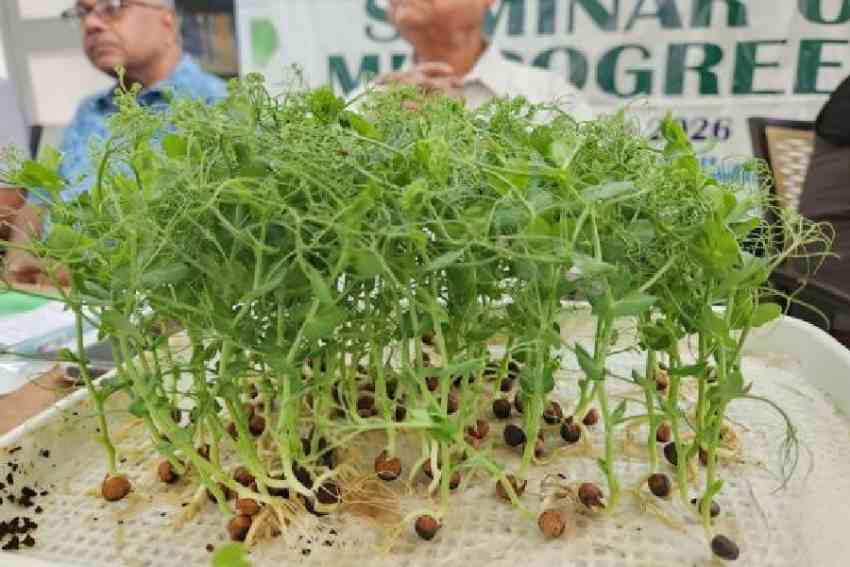
Pea shoots on display
The second speaker, Umesh Thapa, is a professor at Bidhan Chandra Krishi Viswavidyalaya. Besides speaking on caring for microgreens, he spoke on how this hobby, if pursued seriously, can become a source of income.
“This is a great opportunity for young entrepreneurs as the turnover comes in a matter of days. There is a growing demand for microgreens in cities, that youths based even in the rural belt can fulfil,” said Thapa, adding that his students found great response for these from gym-going folks.
Here is what the speakers shared:
Varieties: Start with Radish, that is a sturdy plant and move on to Pea Shoots, Sunflower, Dill, Red Cabbage, Mustard, Kale, Celery. Those like Broccoli and Bok Choy are sensitive and need expertise to grow.
Benefits: Microgreens pack four time more nutrients like vitamins A, C, E, K and antioxidants than mature plants. They help manage blood pressure, diabetes, cholesterol, boost immunity, heart health, and digestion. But they are best when eaten fresh within a couple of days. You can wrap them in banana leaves or plastic wrappers and store them in the fridge but not more than two days or so.
Chop them into salads, chutneys, sandwiches, soups, parathas, poach, pesto, smoothies, or as garnishes (see box).
Seeds: Good quality seeds are important. Many are available online, from nurseries in Bangalore.
Containers: Use pots, cups, plates, or trays—just ensure good drainage. Shallow trays (like seedling trays) are most popular for even growth.
Growing media: Mix cocopeat, vermicompost, and perlite for good results. Soil is preferred as it is more flexible. Sow seeds, press lightly, and mist. They’ll sprout in three to four days. Keep soil moist but not soggy. Spray water, do not pour.
Light: If you grow microgreens indoors, place on a sunny windowsill. But if you wish to scale up indoors, you’ll need special lighting.
Water: Spray the plants lightly never pour, as excess water causes rot.
Humidity: The right humidity is to be maintained for various plants across season. For this you can use a humidifier machine.
Harvesting: The microgreens would be ready in seven-14 days and reach a height of five to eight cm. Cut above the soil line with scissors.
Members enjoyed the session. “I am a wellness coach and recommend healthy lifestyles. I also love plants and have a vast kitchen garden growing fruits and vegetables. Microgreens is on the same lines, and with the guidance I got today, want to try it at home,” said Srabani Maitra of DA Block.
President Achyut Ghosh said their Society has always done its bit to create awareness about the environment and propagate new methods of horticulture. “Microgreens is a healthy, upcoming concept that we knew our members would relate to,” said the BC Block resident.