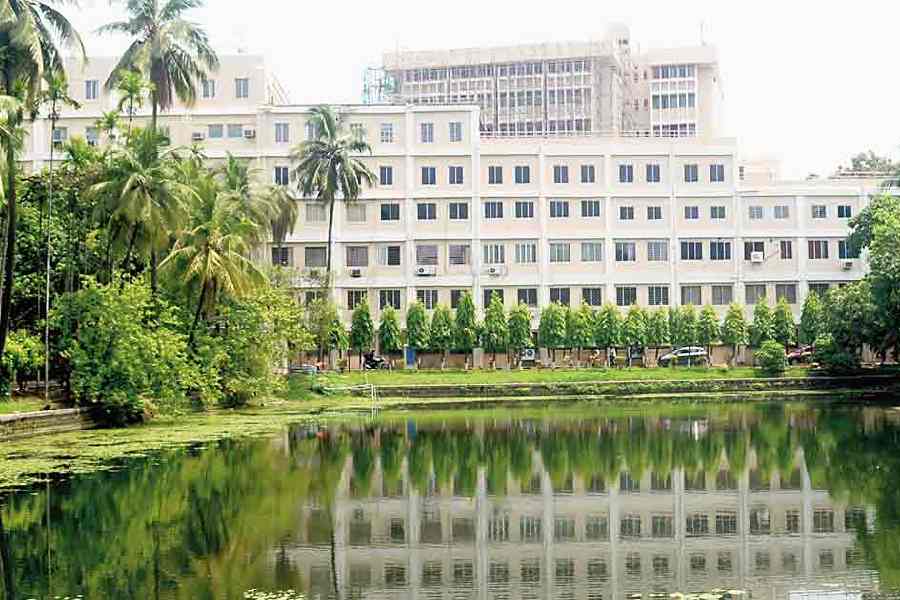
Teachers and staff of the Indian Statistical Institute, Calcutta, voiced deep concern that the proposed ISI Bill could pave the way for the “abolition” of hundreds of vacant teaching and non-teaching posts.
Under the revised draft bill, the board of governors (BoG), dominated by members nominated by the Union ministry of statistics and programme implementation, would become the institute’s highest decision-making body.
Teachers and employees said earlier this week that this restructuring sidelines existing representative bodies and concentrates unprecedented powers in the BoG.
They said that according to the draft, the board would have the “power to specify the number and emoluments of such posts and to define the duties and conditions of service of the academic, administrative, technical and other staff.”
Faculty and staff representatives said that this clause gives the board sweeping control over appointments and service conditions. “With such powers, the BoG is a sure way to abolish several posts,” alleged an ISI teacher.
ISI currently has 60 vacant faculty posts out of 281 sanctioned positions. Of 757 sanctioned non-faculty posts, more than 350 lie vacant. Employees fear these vacancies could be formally scrapped if the bill is enacted.
At present, the ISI council and academic council — which include elected representatives of teachers and staff — are the institute’s top decision-making bodies on administrative and academic issues. The revised draft bill reduces their role.
The proposed BoG would include only two members from the academic council and none from the non-teaching staff. “In such a scenario, we fear that many posts could be abolished,” said professor Arijit Bishnu.
He said the ISI Workers’ Organisation (ISIWO), which includes faculty and non-teaching staff, cannot accept such “draconian provisions”.
Professor Debrup Chakraborty echoed this concern. “The BoG will be empowered to take unilateral decisions without adequate representation from academics or employees. This affects the legitimate rights of all,” he said.
One of the strongest objections concerns Section 5 of the draft, titled “Effect of Incorporation of the Institute”.
Partha P. Mohanta, associate scientist and president of the workers’ association, said the clause allows the service terms of workers — their existing contract with ISI — to be altered by future regulations. If employees do not accept those altered terms, their employment may be terminated.
“The bill has this draconian provision… it reads like a severance clause to throw away workers,” Mohanta said, adding that no draft of the new regulations has been shared, leaving employees in the dark. “Without knowing the service conditions that may be framed later, workers are expected to accept and abide by them,” he said.
The ministry issued a revised draft earlier, but employees said the changes were “cosmetic”. The revision followed widespread protests, including a human chain formed by teachers and students along BT Road outside the Baranagar campus on November 28 to demand withdrawal of the bill, which they said undermines the autonomy granted under the ISI Act, 1959.
With the winter session of Parliament under way from December 1 to 19, teachers and staff fear the bill may be rushed through. Public comments on the revised bill have been invited until December 15. “We suspect it will be tabled this session. That is why we are making ourselves heard as much as possible,” said a faculty member.
Many within ISI allege that the bill seeks to dismantle the institute’s society structure under the Bengal government and transform it into a body corporate, enabling bureaucratic control. Several teachers said this threatens the legacy of founder Prasanta Chandra Mahalanobis, who built ISI on the principle of academic freedom and institutional autonomy.