An emeritus professor at the Indian Statistical Institute, Calcutta, who also served as a National Chair of Science, has written to the ministry of statistics and programme implementation opposing its move to place the ISI Bill before the Union cabinet despite objections from the institute’s teachers and researchers.
Partha P. Majumder, former director of the National Institute of Biomedical Genomics, described the move as “undemocratic” and “unfortunate”, alleging that the ministry was seeking cabinet approval “without any structured discussion between the ministry and the internal constituencies and the statutory bodies”.
In his appeal last week, Majumder said many statutory bodies — including the
ISI Society and the academic council — had passed resolutions opposing the proposed legislation. He said the
Bill seeks to replace the existing council with an overarching board of governors, thereby diluting the powers of the academic council and undermining the institute’s autonomy.
The ISI, founded in 1931 by Prasanta Chandra Mahalanobis, has historically functioned with a Society-based governance structure.
Faculty members have argued that the proposed board, with members largely appointed by the ministry, would centralise decision-making authority.
Majumder said the board would be vested with sweeping powers, effectively extending the ministry’s control over the institute.
“Despite knowing about the opposition, the ministry is trying to push the Bill by placing it before the cabinet. I have written in my appeal that a formal, structured discussion on the goals of the
Bill was never held. It is time the ministry does this now,” he told Metro.
Autonomy concerns
Economist Abhirup Sarkar, a former ISI professor, said the ministry’s actions give the impression that it does not care about the opinion of ISI teachers — past and present — researchers and students.
“They seem to think that as long as they provide funds, they can do anything,” he told Metro.“They are trying to establish control so they can introduce courses bordering on pseudoscience. They have already done this at the IITs,” Sarkar said.
He said that ISI’s reputation for rigorous, critical research could suffer. “Once that happens, the kind of research ISI is known for will decline. Autonomy will be done away with,” he said.
The Bill also curtails the institute’s role in appointing its director, he added.
“Earlier, the institute had a say in the appointment of the director. The Bill curbs that power. From leadership appointments to determining academic priorities, the ministry wants to control everything.”
Protests
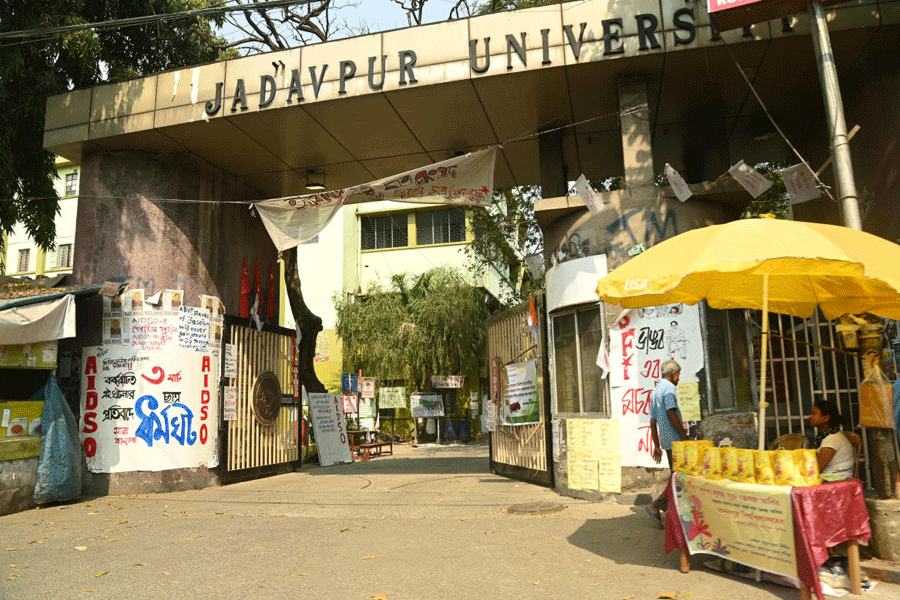
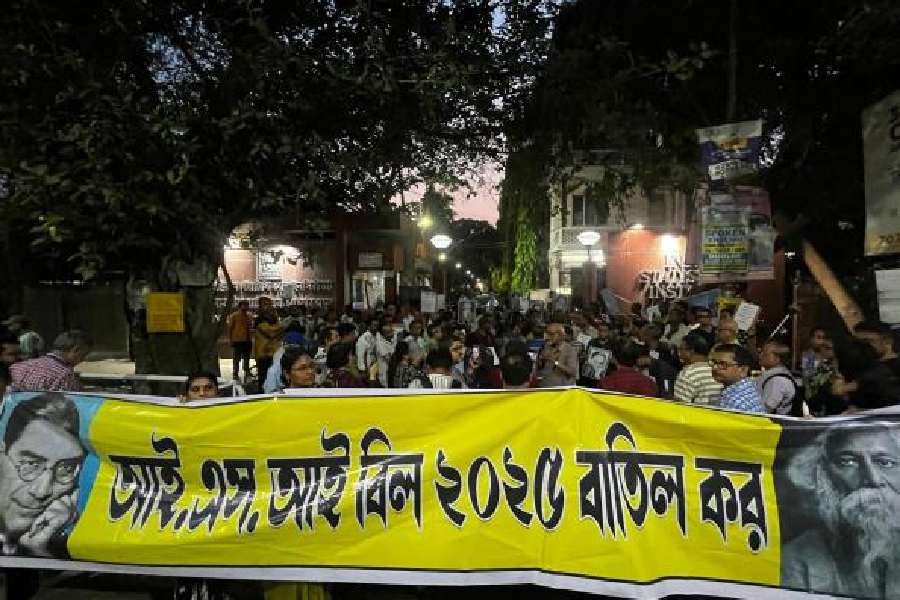
Former and current faculty members, students and research scholars held a candlelight vigil at ISI last week, expressing concern that the Centre may soon place the Bill before the cabinet without addressing their objections.
The protest gained urgency following the ministry’s response in Parliament to a question raised by BJP MP Jagannath Sarkar.
“In its response, the ministry said pre-legislative consultation on the draft Bill – including inter-ministerial discussions — has been completed and legal vetting is over. It stated that the process of cabinet approval has already been initiated,” a protesting professor said.
Protesters disputed the ministry’s claim, saying that key stakeholders within ISI had not been adequately consulted.
Calls and text messages from this newspaper to Jagannath Sarkar on Tuesday went unanswered.
Majumder, who retired from ISI in 2016 and has been an emeritus professor since 2018, also participated in the vigil. He questioned how the ministry could claim that pre-legislative consultation was complete.
He pointed to a resolution adopted by the academic council — the institute’s highest decision-making body on academic matters — at a special meeting on January 20. The resolution stated that the council “was not consulted as a stakeholder during the drafting of the ISI Bill, 2025”.
Metro had reported on February 3 that the council expressed “serious concern” over the draft Bill and urged the ministry to engage in dialogue regarding any changes to the existing system of academic governance.
Majumder further noted that at a January 24 meeting of the ISI council — the
highest decision-making body on administrative affairs — representatives from the institute opposed the proposed overhaul of the governance structure.
“What is baffling is that these meetings of the council and academic council were held at the ministry’s insistence. Yet their opinions are not being recognised now,” he said.
“Despite this, the ministry claims that consultation is complete and the Bill is being taken to the cabinet. This is outrageous.”
Calls and text messages to Puja Singh Mandal, an additional secretary in the ministry who oversees ISI, did not receive any response.