 |
| The atlas will trace the social and cultural influences in eight South-East Asian countries that have witnessed the spread of Buddhism over centuries. We will also try to map some lesser-known cultural and religious sites pertaining to Buddhism VC Jha NATMO director |
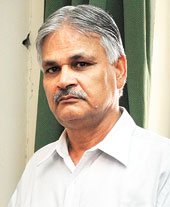
A 10-member team from National Atlas and Thematic Mapping Organisation (NATMO), Calcutta, will retrace Gautam Buddha’s path from India across seven South-Asian countries. The archaeological atlas — the first of its kind in India — will include lesser-known sites relevant to Buddhism and promises to be an invaluable database.
Work on the project began in June and is expected to be completed by 2015.
The next two years will see the director of NATMO, V.C. Jha, and his team from Calcutta travelling extensively for research, recording and development of the project.
“Buddhism spread from north-eastern India to South-East Asia along with the trade routes. It reached China in the first century and from there it travelled to Korea and Japan. The spread of the religion led to several archaeological constructions in these areas. Such geography-based cultural studies could not take place for so long because of the lack of substantial documents and technological know-how. Having an atlas as elaborate as this one was indeed the need of the hour,”Jha said.
“The atlas will trace the social and cultural influences in eight South-East Asian countries that have witnessed the spread of Buddhism over centuries. We will also try to map some lesser-known cultural and religious sites pertaining to Buddhism,” Jha said. He hoped the atlas would create a greater cultural bonding among Asian countries.
The India-ASEAN Archaeological Atlas from Satellite Data — Connectivity of Regional Culture is the result of a memorandum of understanding between India and Thailand during Prime Minister Manmohan Singh’s visit to Thailand in May. A few years ago, the two countries signed a Programme of Cooperation in the field of science and technology for 2012-14.
“NATMO will work in tandem with the Geoinformatics and Space Technology Development Agency, Thailand... using several thematic maps, plates and high-resolution satellite data. We will use geospatial technology. Literary, archaeological and artistic evidence and photographs related to Buddhism will be a part of the documentation,” Jha said.
The book and the atlas will be presented to Thai princess Maha Chakri Sirindhorn on her birthday in 2015 and also at the ASEAN Economic Community Summit the same year.
“Our first step will be research and identification of the Buddhist sites. Next, satellite data needs to be procured and a digital guide prepared with GPS survey. Fieldwork, writing and editing will keep us busy after that,” he said.
Jha said NATMO at present has only one map that traces Buddhist sites in northern and eastern parts of India.
The new atlas and book will be available at NATMO centres in India, Survey of India offices and in all countries covered under the project. The book and a digital version of the research will also be published as part of the ministry of science and technology project.