 |
| Duc de la Rochefoucauld |
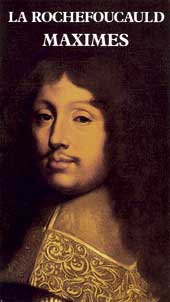
“True love and ghosts are alike; everybody talks about them, but few have ever seen one.” Young hearts aflutter may resent this crooked view of love but this is considered one of the gems of Maximes, penned by the 17th Century French philosopher and moralist Duc de la Rochefoucauld (1613—1678).
Who has ever heard of Rochefoucauld and read this slim volume of 504 maxims, published in 1665 ? Great minds in every age, from La Fontaine, Voltaire, Goethe, Kant, Schopenhauer, Nietzsche to André Gide and TS Eliot. Nearer home, a Rochefoucauld one-liner provides the epigraph of Nirad C Chaudhuri’s autobiography: “Growing old, one becomes madder and wiser.”
A measure of the French author’s local popularity could be gauged recently at Jibanananda Sabhagar, Paschimbanga Bangla Akademi, where a sizeable section of distinguished Calcuttans gathered to listen to Chinmoy Guha on La Rochefoucauld and his Maximes. The programme was presented by Les Amis de la France, an association of Bengali Francophiles in the city. Chinmoy Guha, as introduced by artist and president of the association Paritosh Sen, is a scholar of French and English literature, author and translator. He has also translated Maximes.
Guha portrayed Rochefoucauld on a large canvas, sporting details of social, political and cultural events of the time. An aristocrat, Rochefoucauld had direct experiences of the antics of men and women in the corridors of power. He developed a detached down-to-earth, rational mode of grasping the truths of life and realities in which are rooted the origin of his maxims, free from any personal malice, namby-pambies of God and religion and flashy rhetoric for its own sake. That’s why Maximes strikes us as a contemporary text written in a style admired by Voltaire for its brevity and precision.