Netflix remains one of the leading players when it comes to television usage in the US. Yet scratch beneath the surface and a different picture emerges. The real action is happening elsewhere, and increasingly, that place is YouTube. Once treated as an adjunct to television, the video-sharing platform has become a destination in its own right, drawing viewers not through prestige branding but through sheer gravitational pull. It has conquered the living room TV.
YouTube offers a lower-cost gateway to an ever-expanding library of content that is both vast and varied. What began as an alternative has quietly become a default. Over time, the platform has eroded the old boundaries separating television, streaming and audience-created content. These distinctions may still matter in media boardrooms, but for viewers they fade further into the background with each passing year. What people see is simply video, and YouTube has more of it than anyone else.
The magic of YouTube lies not only in its scale but in the business model that underpins it. The platform allows creators to earn money from what they produce, making it one of the few services truly built around the creator ecosystem. This is not a platform that merely tolerates creators. It depends on them. From educators and hobbyists to full production teams, creators are the engine that keeps YouTube running.
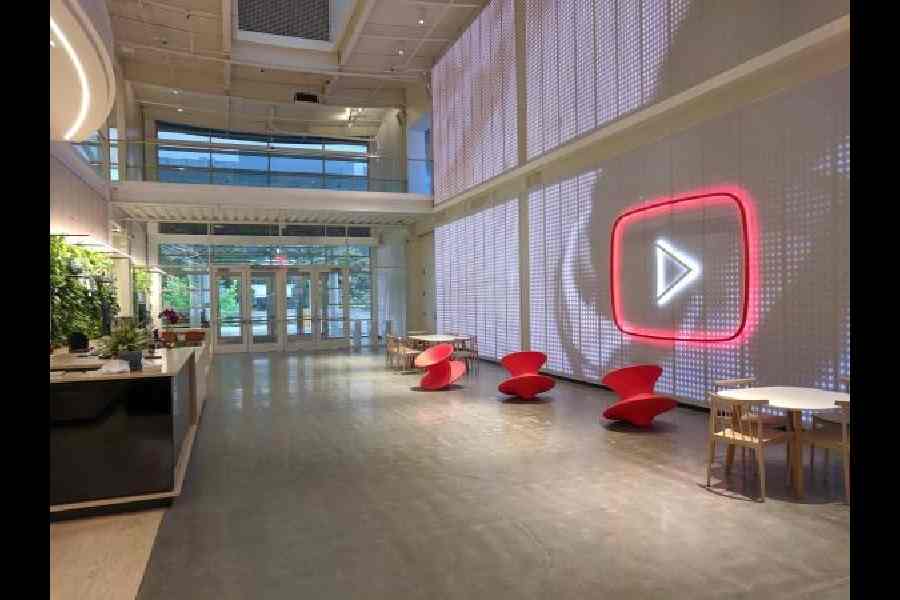
YouTube HQ in San Bruno
YouTube itself is not new. Founded in 2005, it has been around long enough to feel familiar, even ordinary. What is new, however, is the pace at which it is asserting its dominance in the living room. Half or more than half of all YouTube viewing now takes place on television screens in certain markets. This is not passive background viewing on a phone or tablet, but deliberate, lean-back consumption of the sort once associated exclusively with television.
That shift alone should give rival streaming services pause for thought, because it signals not a change in device, but a change in behaviour. Overall time spent watching YouTube continues to rise.
Redefining television without asking permission
Many media executives still prefer to silo content. Premium content, they argue, is what you make for television or subscription streaming services. Everything else belongs on YouTube. There is “proper” television, and then there is the other stuff.
Viewers, however, do not appear to share this distinction. When it comes to time spent watching videos, it is increasingly difficult to place services into neat categories. Whether someone is watching Instagram Reels, settling in for a Netflix binge, dipping into Apple TV, or spending hours on YouTube, the underlying behaviour is the same. Screens are competing for attention, and YouTube is winning more than its fair share.
This blurring of boundaries becomes especially clear when looking at major cultural events. One of the biggest television moments of the year will soon no longer be on television at all. From 2029, the Oscars will stream on YouTube. For decades, the ceremony was a fixture of broadcast television. ABC has aired the Oscars since the 1970s, and before that NBC broadcast the event from as far back as 1953. The film industry’s biggest night was synonymous with network television. That era is now drawing to a close.
The Academy has explained the move by saying the partnership “will allow us to expand access to the work of the Academy to the largest worldwide audience possible”. It is a carefully worded statement, but the underlying logic is clear.
Despite live sport occupying much of the US television schedule, the Oscars ranked as the 74th most-watched live US broadcast in 2024. The Grammy Awards placed 96th. Organisers are betting that streaming will improve those numbers, particularly among cord cutters and viewers who are no longer inclined to sit down for linear television.
Oscar viewership has not returned to its 2014 peak of around 44 million viewers. In 2021, during the height of the pandemic, the figure dropped to just 10.4 million. Subsequent years saw a modest recovery, reaching around 20 million in 2024, but the ceremony has remained well short of its former highs, especially when compared to the Billy Crystal era.
YouTube, meanwhile, has become the default destination for movie trailers, interviews and behind-the-scenes content. The shift underscores a broader truth. Broadcast television is no longer what it once was, and streaming has become the centre of gravity. Netflix, for example, is preparing to buy Warner Bros’ studio, a move that would have seemed fanciful not long ago. The Academy is clearly following the audience rather than clinging to tradition.

Tech YouTubers have a huge fan following, like (left to right) iJustine, Mr Beast, MKBHD
The unstoppable momentum of YouTube
YouTube today resembles an unstoppable juggernaut. In a blog post outlining what is coming to the platform in 2026, YouTube chief executive Neal Mohan was explicit about where the service sees itself.
“Viewers come to YouTube to immerse themselves in the biggest cultural moments,” Mohan wrote. “They want a front-row seat to the Super Bowl action from creators like Jesser and Key Adams, full red carpet coverage from the Oscars and the immersive fandom experience surrounding Taylor Swift or BTS album releases. We offer it all.”
He continued: “YouTubers are buying studio-sized lots in Hollywood and beyond to pioneer new formats and produce beautifully produced, must-see TV. The era of dismissing this content as simply ‘UGC’ is long over. These are shows, built by creators who green-light themselves. Look at Julian Shapiro-Barnum. His upcoming series Outside Tonight is a first-of-its-kind late-night experience built for the digital age. When creators hold the keys to their own production and distribution, the only limit is their imagination.”
The message from YouTube’s leadership could not be clearer. YouTube does not see itself as adjacent to television. It sees itself as television.
The Oscars are not the only example of this shift. Hundreds of classic full episodes of Sesame Street are now streaming on YouTube. “For Sesame Street fans, this partnership is a natural fit. Over half of the official channel’s YouTube watch time already comes from connected TV screens,” Sesame Workshop said.
The show’s reach remains immense. More than 58.3 per cent of children in the US watch YouTube videos, and families have long been streaming Sesame Street content on the platform.
YouTube also hosts hugely popular children’s channels such as Cocomelon, which is set to receive a theatrical film release in 2027, and Ms Rachel.
With distribution deals spanning both Netflix and YouTube, Sesame Street is in a stronger position than it has been for years. As a recipient of government funding, the show could have been affected by cuts to public media under the Donald Trump administration. The new partnerships ensure multiple ways to watch the programme for free and may help it reach new audiences.
Prime time space
In the US, YouTube TV is becoming popular by the day. Be it CNN, AMC, BBC News, CBS, Cartoon Network, Comedy Central, TCM or NFL, there is a long slate of channels on offer. You will find families gathering around the TV to watch Stephen Colbert or Seth Meyers via YouTube.
The streaming service has been generating more TV viewing time in the US than Netflix, Amazon Prime Video, Disney+ and every other app out there. In November, it accounted for nearly 13 per cent of viewing time, compared with 8 per cent for Netflix, the next in line, according to Nielsen.
At 11 am, The New York Times reports, YouTube had an average audience of 6.3 million viewers in October, Nielsen said. Netflix’s audience is less than half of that (2.8 million). Amazon has about a million viewers at that hour, and some streaming services, like HBO Max, Paramount+ and Peacock, draw fewer than 600,000.
The report said that only in prime-time hours that the competition narrows significantly: Netflix’s average audience swells to over 11 million viewers at 9 pm, only a bit behind YouTube’s audience of 12 million, for example. Other large services, like Amazon, Disney and HBO Max, also close in on YouTube’s lead during prime time — before YouTube’s dominance begins again in the overnight hours and continues into the next day.
It’s no surprise that Netflix wants Warner Bros. entertainment properties. Getting the deal through would place it in a better position against YouTube and everyone else.
In September, YouTube announced an important product update connected to live-streaming. The updates make it easier for novices to start streaming, for experienced streamers to try new formats and for everyone to make more money from advertising.
More than 30 per cent of YouTube’s daily registered visitors watch some live content, according to the company. It’s the most popular platform for livestreaming, followed by TikTok, Twitch, Kick and Rumble.

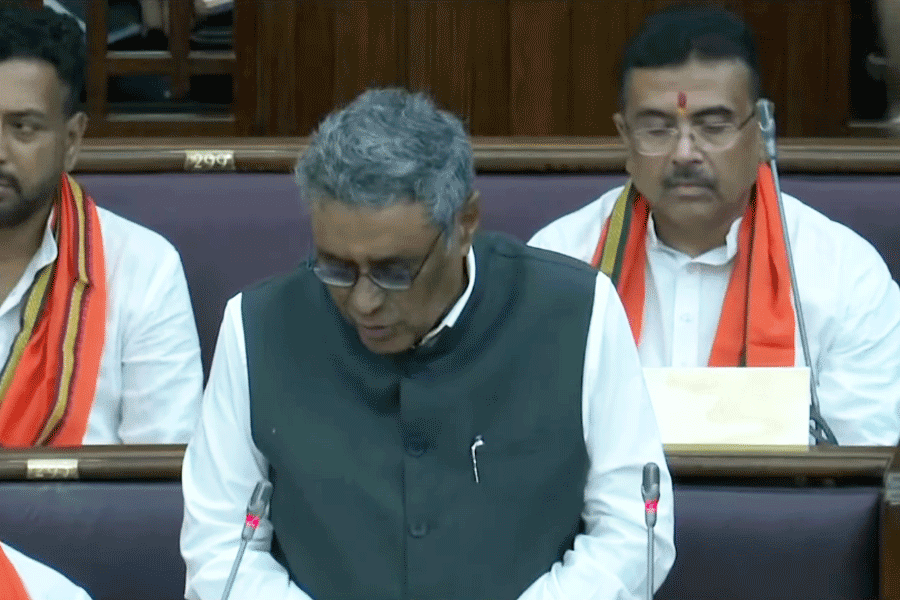
Neal Mohan, chief executive of YouTube
How YouTube was born
The popularity of YouTube today cannot be overstated, particularly given how much ground it has covered in a relatively short time. It has made a great many people a great deal of money. Yet its origins are far humbler than its current scale would suggest, shaped as much by chance as by design. It began with a chance encounter in the late 1990s. Eric Skaggs, a local entrepreneur, was finishing work on his website. His site, GoGetItNow.com, combined email, search and web hosting into a single interface.
As Skaggs was leaving the building, he struck up a conversation with a young student. That was Chad Hurley, who was looking for an idea for a website. Skaggs shared a vision that would later prove prophetic. He suggested that television and computers would one day be fully integrated, and that people would use their mobile phones to create videos and share them with friends and family.
After graduating with a fine arts degree, Hurley began looking for work in the growing Internet industry. He redesigned logos for several major websites and sent them unsolicited to marketing departments. One of those designs caught the attention of PayPal, and Hurley was soon hired as a graphic designer.
At PayPal, Hurley found himself surrounded by some of the brightest technical minds in the industry, including Steve Chen and Jawed Karim. Chen, born in Taiwan in 1978, moved to the US at the age of eight and later studied computer science at the University of Illinois. Karim, born in Germany in 1979, moved to the US as a teenager and quickly established himself as a gifted programmer.
The trio spent years trading ideas while working at PayPal, building technical knowledge but failing to land on a breakthrough concept. That moment arrived not in a boardroom or brainstorming session, but at a dinner party at one of their homes in 2005.
Chen recorded video footage of the gathering, but sharing it afterwards proved difficult. Email could not handle files of that size, and existing photo-sharing sites offered no solution. Their first attempt at solving the problem was a site with the slogan ‘Tune In, Hook Up’. It failed.
“The whole thing didn’t make any sense. We were so desperate for some actual dating videos, whatever that even means, that we turned to the website any desperate person would turn to, Craigslist,” said Karim in 2016.
Disheartened but not defeated, the trio pivoted. They were unable to find footage of Janet Jackson’s 2004 Super Bowl wardrobe malfunction; it helped crystallise the idea. They already had the technology. What they lacked was clarity. The platform needed a broader purpose and a name that reflected it.
On February 14, 2005, they began what would become YouTube. The name harked back to the era when television was known as “the tube”, a reference to the cathode ray tubes that powered early sets.
By early 2006, YouTube had more 25 million videos and was generating 20,000 uploads a day. The growth was extraordinary. Content quickly evolved from home videos to tutorials, entertainment and information, turning YouTube into a destination for both instruction and escapism.
In June 2006, YouTube signed a deal with NBC, marking a dramatic reversal of fortune. A few months later, Google acquired YouTube for $1.65 billion. The launch of the YouTube Partner Programme in 2007 changed everything. For the first time, creators could earn a share of advertising revenue. During the Arab Spring, videos uploaded from Cairo spread rapidly across the platform and other social media platforms, helping to amplify protests and galvanise support. YouTube had become more than a place to watch videos. It had become a tool with real-world consequences.
Why YouTube keeps winning
Today, YouTube is the second most visited website in the world, behind only Google Search. Its success lies in adaptability. It supports vertical videos and long-form documentaries, short clips and multi-hour series. In 2024 alone, viewers streamed more than one billion hours of YouTube content every day from their living rooms.
In the UK, YouTube became the second most-watched media service last year, behind only the BBC. According to Ofcom, one in five young viewers turn to YouTube first when they switch on their smart TVs. Generation Alpha leads the way, while viewers over 55 are watching nearly twice as much YouTube as they did two years ago.
Cost remains a factor. Younger audiences are reluctant to pay for multiple subscriptions, but are willing to pay a modest fee for YouTube Premium or watch adverts in exchange for free access.
YouTube’s secret weapon, however, remains its creators. On average, there are over 20 million videos uploaded daily to YouTube. And over 20 billion videos have been uploaded to YouTube (as of April 2025). The burden of production lies with creators rather than the platform itself. Free does not mean low quality, and for many young viewers, user-generated content is not a fallback option. It is the main event.
YouTube, for many, has become a “teacher”. Many of us have done repair projects/ renovation work after looking up how-to videos and tutorials. Searchable content is what drew many in and they are not going away anytime soon.