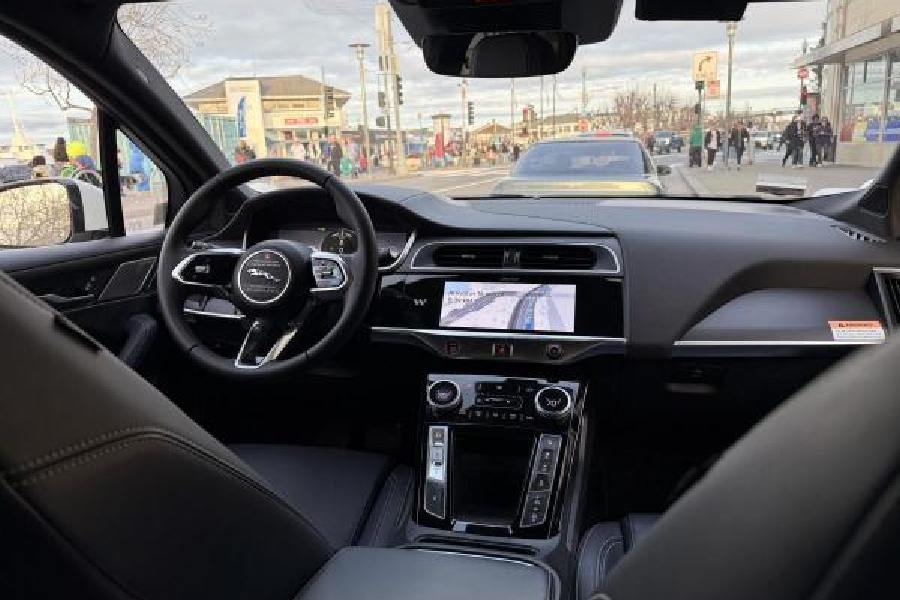
The steering wheel turned by itself and we didn’t flinch. That, perhaps, is the most telling detail from a recent ride The Telegraph took in a Waymo robotaxi through San Francisco, US, finishing up a couple of work meetings on an otherwise ordinary afternoon.
The self-driving car navigated Fisherman’s Wharf without complaint, without fatigue and without the faint anxiety that comes from wondering whether the person behind the wheel slept properly last night. It was efficient, oddly calm and deeply unsettling in a way that is difficult to name.
Self-driving cars are at the heart of the next great culture war. And like most culture wars, it has already moved well past the point where one side can simply wish it away.
New York’s new mayor, Zohran Mamdani, recently pulled back from a pilot programme that would have opened the city to robotaxis. At the same time, the number of US cities permitting autonomous vehicles on public roads is growing quickly.
Alphabet-owned Waymo is rolling out a fleet in London. These are cars packed with sensors and powered substantially by artificial intelligence, capable of determining a vehicle’s precise location in real time — threading through traffic, reading pedestrians, making split-second decisions. They cannot yet negotiate the beautiful chaos of Prafulla Sarkar Street into Chowringhee and then onto Park Street on a busy Calcutta afternoon. But they are in many American and Chinese cities, they are learning and they are not going away.
In 2024, 39,345 drivers, passengers, pedestrians and cyclists died in motor vehicle crashes in the United States alone, according to the US National Highway Traffic Safety Administration. That figure does not include the thousands more who sustained life-altering injuries. The overwhelming majority of those deaths were caused by human error — distraction, fatigue, impaired judgement, overconfidence. These are errors a machine, in principle, does not make. It does not glance at its phone. It does not drive home after one too many. It does not zone out on a highway at two in the morning.
That does not mean the road has been smooth. A Florida jury found in August 2025 that flaws in Tesla’s self-driving software contributed to the death of a 22-year-old woman in 2019 and left her boyfriend seriously injured. Reports have emerged of a passenger bound for the airport sitting in a Waymo that went around and around in circles, going nowhere. In San Francisco, a beloved bodega cat named Kit Kat was killed in an incident involving a self-driving vehicle.
In Wuhan in China, last month, over a hundred Baidu Apollo Go robotaxis stalled simultaneously on city streets, stranding passengers and snarling traffic. China responded by suspending new licences for autonomous vehicles. Baidu shares fell sharply, as did those of rivals Pony AI and WeRide. On the other end of the spectrum, a woman successfully gave birth inside a Waymo in San Francisco — an event that inspired equal parts wonder and bewilderment. These are the contradictions the technology is currently living with — miraculous and maddening.
The technology itself varies significantly, depending on who is building it.
The economic logic, for those willing to commit to it, is engaging. Teaching a car to drive itself is enormously expensive. But once the model is built, it is relatively cheap to replicate. A robotaxi can be kept on the road for as long as it can be kept clean and charged, generating revenue through hours.
Andrew Miller, author
of the book The End of Driving: Automated Cars, Sharing vs Owning, and the Future of Mobility, said on a recent podcast that 2035 could be the year most North American cities have a sizeable robotaxi fleet in regular operation. A decade feels both distant and, given how quickly the last five years have moved, uncomfortably close.
Back in San Francisco, as the ride was drawing to a close, a jaywalker approached the car. Realising it was a Waymo — driverless, unattended, mechanically impassive — he grew bold, reaching out and grabbing at a windscreen wiper. Within seconds, a call came through from Waymo’s support team — was everything all right? After a brief account of the incident, the representative asked whether I wished to continue the journey. I said yes. The remainder of the trip passed without incident, though it was difficult to look away from that steering wheel, turning quietly, deliberately, on its own.
Perhaps that is where we are with all of this — still unable to look away, not entirely certain whether we are watching something that will save us, or something we will one day come to regret.