A unique twinning has transcended the miles between the Khasi hills of Meghalaya and the Chimur hills in Maharashtra. Inspired by Mawlynnong, which is over 70 km from Shillong and touted as Asia’s cleanest village, Satara village, nearly 140 km from Nagpur, has transformed into a pristine hamlet.
This metamorphosis was orchestrated by Satara’s villagers, leaders and youth, led by their sarpanch, Gajanan Dhanraj Guldhe. He visited Mawlynnong in September and spent two days in a homestay, observing every minute detail about the way the Meghalaya village ensures cleanliness.
In Mawlynnong, every household participates in waste management, bamboo dustbins line the pathways, organic waste is composted, and plastic use is minimal. Discipline and unity in maintaining cleanliness have made it a model for the entire country. When Satara’s villagers learned about Mawlynnong, they realised that true cleanliness begins not with outside help but in the community.
Upholding a rare vision and the right attitude, Satara’s villagers began to replicate Mawlynnong’s example, setting national benchmarks by working unitedly. They organised cleanliness drives, led by the panchayat, women’s self-help groups and even schoolchildren.
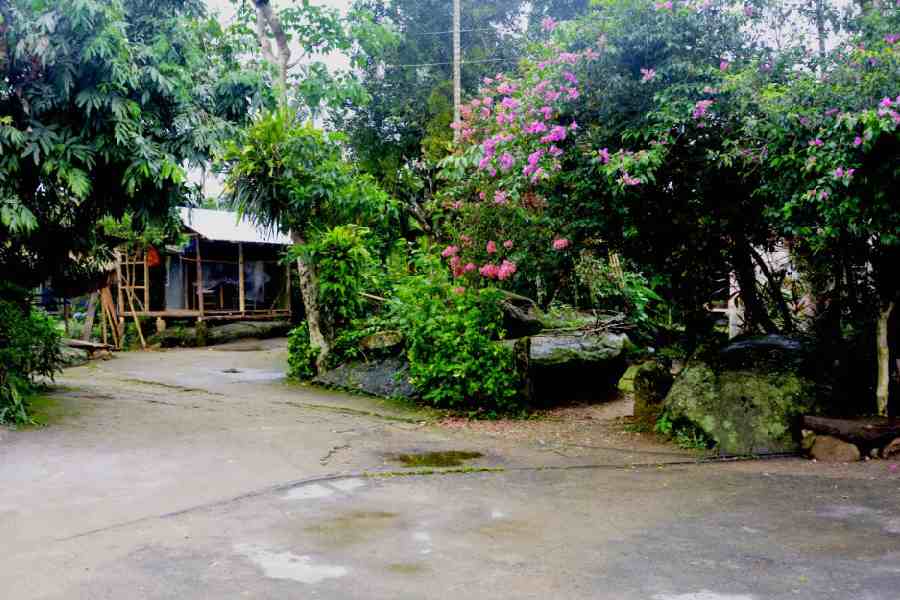
In Mawlynnong, every household participates in waste management, bamboo dustbins line the pathways, organic waste is composted, and plastic use is minimal. X/ @iato_india
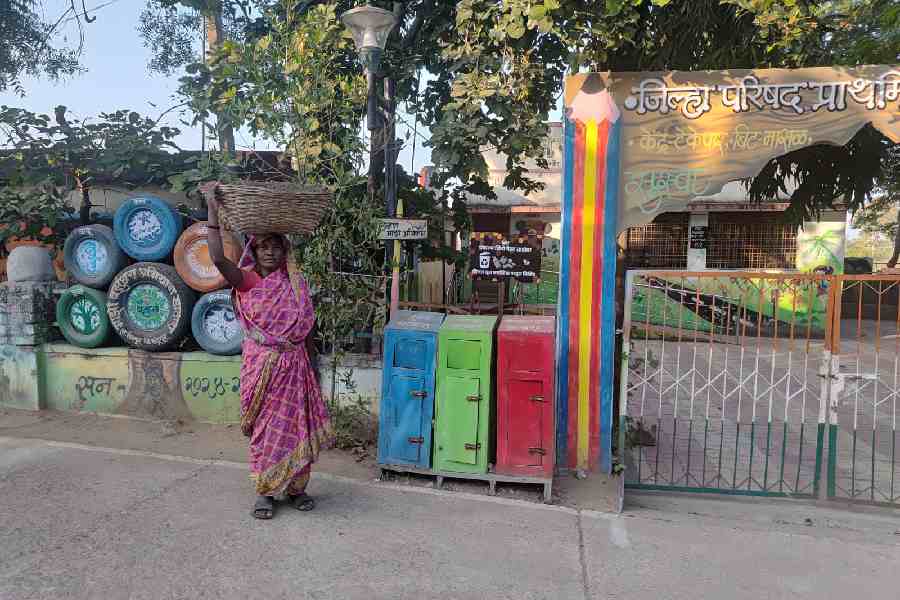
Multi-coloured dustbins are visible in lanes and near community spaces. Households are encouraged to separate wet and dry waste. Drawing from Mawlynnong’s example, Satara constructed compost pits for organic waste, allowing villagers to produce manure for their farms. Awareness campaigns emphasised reducing single-use plastics.
What Guldhe found particularly inspiring in Mawlynnong was the fact that the villagers used indigenous means. “There are no big structures or houses like here. Every little house has a garden. They clean the locality with local materials, not just to impress guests but for themselves,” he says.
In Satara, the residents donate to keep the cleanliness campaign afloat. When I walked along its lanes, not even a leaf lay on the ground. The children take turns in collecting litter on Sundays. “People come forward to help,” the sarpanch explains. “For instance, someone offers Rs 2,000 to provide tea to our senior citizens.”
For the 298 families, comprising nearly 1,200 people, such donations have ensured 28 solar-powered street lights, the first such endeavour in the state, as well as a water heater (from 4 am to 10 am) and a filtered water ATM for community use (at Rs 5 for every 15 litres). There are spectacular constructions: a statue of Shivaji, a stage
and a space to congregate and chant the ‘gram Gita’ to inculcate values.
Inspired by Mawlynnong’s discipline, Satara introduced village-level committees to monitor littering, educate households, and ensure that public spaces remain clean. The participation of schoolchildren as catalysts of change helped spread the message of cleanliness to every home. They now have an impressive library with internet facilities.
Roads are clean, waste disposal organised, and the overall environment enviable. Inspiration can indeed travel across regions, cultures and distance. Mawlynnong’s legacy is not just as a model but a reminder that sustainable cleanliness is possible when communities take ownership.
With its proximity to Tadoba Andhari Tiger Reserve, Satara is poised for village tourism. One only hopes it does not imbibe the challenges Mawlynnong faces: its bamboo bins sport plastic waste, its lanes and streams are littered. Insensitive tourists with little respect for traditions abound, negating the wholehearted efforts of villagers. Come January, Mawlynnong is closing its doors to disruptive tourists every Sunday to save itself. Satara had better take note of this too!