Arundhati Roy's punishment for the scandalizing remarks she deliberately made against the courts in general and the Supreme Court in particular for the temerity shown in issuing a notice against her for the alleged demonstration outside the court has led to wide-ranging debates on the nature and scope of contempt power itself. This is to be welcomed. This writer wrote an article long ago defending the right of Narmada Bachao Andolan activists to protest against the court verdict, criticize its reasoning (without attributing motives) and take such other action within and outside the court which a liberal democratic constitution would permit its citizens. The plea made at the time was to drop the contempt notice as the facts of the case did not warrant such an action and to suggest that the approach should be not to exercise the contempt power except in extreme cases of deliberate scandalizing and disparaging of the institution itself.
After a careful reading of the actions and omissions deliberate and otherwise of Arundhati Roy, in the context in which they happened, I would argue that she did commit such an act in the latter case and deserved the punishment she received. I would further add that while it is welcome to have a debate on how the contempt jurisdiction can be circumscribed to balance freedom with the independence of the judiciary, Roy's case is an inappropriate example of projecting where the court erred in the exercise of that power. The media's taking the contrary position in defence of the author, however well-intentioned, is likely to boomerang, resulting in that very protector of freedom being incapacitated in doing what it is intended to do. The consequence can be terrible to both freedom and democracy.
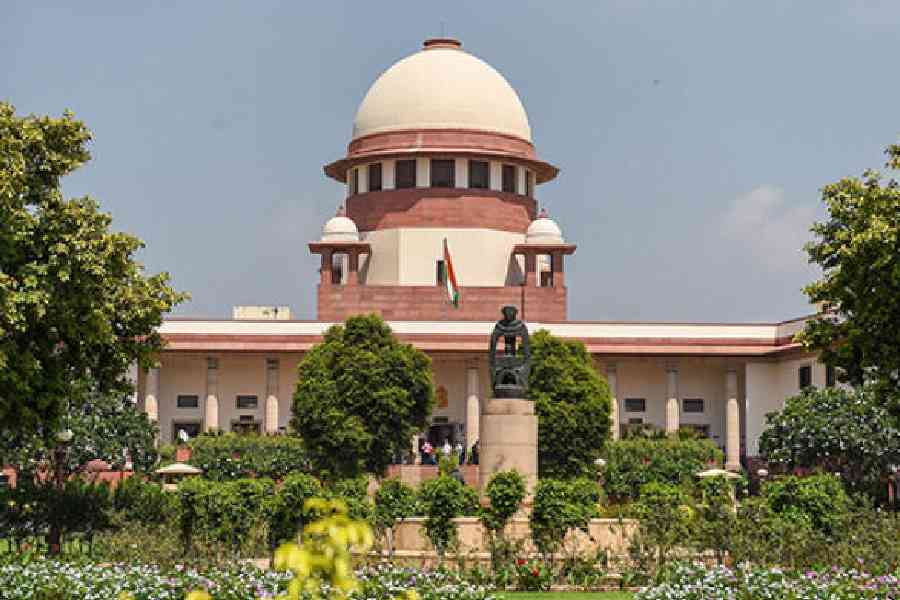
Admittedly, freedom of expression in general and freedom of the press (media) in particular are at the core of civil liberties and deserve to be protected at all costs for the sake of democracy and human rights. Nonetheless, for preserving that freedom in the long run and that too for all citizens with differing points of view, the Constitution itself has prescribed certain limits and directed the high courts and the Supreme Court to review and decide violations if and when brought before them. The grounds on which such restrictions may be put on freedom include public order, decency, contempt of court and incitement to an offence and so on. The Contempt of Courts Act is a law which explains the parameters of such restrictions on freedom which are found necessary for protecting freedom itself. The Indian Supreme Court is the highest court of the land and its decisions or law declared by it (even if wrong or unjust in the perspective of some sections) are binding on all concerned who are supposed to respect its authority in finally deciding on contentious issues including contempt.
It is this constitutional scheme which enables rule of law to survive and democracy to function. Without that people are left only with the political processes to enforce the collective will which may not necessarily be according to the Constitution as the recent Jayalalithaa judgment had demonstrated. As such, before analysing public reactions to Roy's punishment, it is necessary to clarify, admit certain propositions of constitutional law in relation to human rights (including freedom) and judicial supremacy in interpreting the Constitution.
It is sad that knowledgeable people including newspaper editors and a section of activists assail the highest court as intolerant, biased, tyrannical and so on without realizing that in the process they are bringing down the public esteem and credibility of an institution on which the future of freedom and democracy is heavily dependent. This is partly because of a lack of understanding or superficial appreciation of the role of courts under the scheme of the Constitution.
Is not the Supreme Court the final arbiter of all disputes and its judgments binding on all authorities, even if they are 'wrong' or 'unfair' in the perception of even the majority of people? While free speech allows criticism of judgments, should it not be restricted to disallow attributing motives to judges for their decision or characterizing the institution as irresponsible, corrupt and intolerant? If it is not so restricted would the judges be able to decide without fear of favour? Why is it that the Constitution itself restricted freedom of speech on the basis of contempt of court if it is not intended to be exercised whenever a judge feels that the court's dignity or authority is scandalized? If the contempt jurisdiction is withdrawn what will be the impact on judicial authority and independence? On balance, does the small percentage of cases where the Supreme Court has punished individuals for what may arguably not be 'scandalizing of court' on the facts of those cases erode freedom of speech to such an extent that it results in 'judicial tyranny' as contended? Should those sections of the media which claim to be the custodians of freedom sit in judgment of judges in the performance of their judicial functions?
It is possible to make common people understand why criticism of judiciary should be restrained; but it is difficult to reason with those who know the issues and reasons but pretend to be otherwise in their public postures. The state and the political class will be happier if the court loses its credibility and independence; the people will ultimately be the losers in this game of assault on the judiciary in the name of unrestricted freedom of the press.
Yes, there are some deviations from accepted notions of fair trial in proceedings related to criminal contempt of scandalizing the judiciary. First, what constitutes scandalizing is not precisely defined. How can it be so defined except by saying that the alleged action should, in the opinion of the court, have a tendency to bring down the judiciary in public esteem? This has to be a subjective judgment on the facts of each case. The safeguard one can seek against arbitrariness in this regard is in an appeal to a higher court which is possible in all courts below the Supreme Court.
But so far as the apex court is concerned it should be vested in the judges of the Supreme Court only. At least the people should have faith in the wisdom and fairness of the 26 judges of the Supreme Court in whose charge much bigger responsibilities are vested by the Constitution. Even here there are precedents by which the power is circumscribed and streamlined. Judges in the Supreme Court have themselves written to say that the court has broad enough shoulders not to react to every unwelcome criticism and to be selective in exercising the contempt jurisdiction. Of course, in contempt proceedings on a superficial view of the matter, the judge is both the prosecutor and the judge. But in reality it is not so. In contempt of court, the prosecutor is really speaking not to the individual judge but the public at large whose interests are supposed to be protected by courts functioning with due authority and independence. It is the same logic by which the freedom of press is protected not so much to protect the rights of editors and journalists but the public's right to information or right to know. Therefore, contempt proceedings are qualitatively different from other criminal proceedings and are based on higher constitutional principles. To say that courts are judges in their own cause is travesty of truth. To argue that judges could have filed defamation proceedings like ordinary citizens for alleged contempt is, to say the least, mischievous and destructive of freedom itself.
Coming to the facts in Roy's case, any discerning observer can make out a premeditated plan on her part to challenge the authority of the court and attribute motives to it for what she believed to be a wrong judgment in the Narmada dam matter. She is entitled to her opinion and everyone has a duty to respect her right to assert it through demonstrations or otherwise. But how come she could not accept the jurisdiction of the court which took cognizance of what she believes to be a frivolous contempt petition by some lawyers about her alleged behaviour outside the Supreme Court? Since the court dropped the proceedings and admonished the petitioners on finding the facts, the matter should have ended there.
But here is Roy who challenged the wisdom of the Supreme Court in questioning the celebrated Booker Prize winner (by issuing the contempt notice) for what she wrote in her beautiful prose full of sarcasm and innuendoes disparaging the authority of the apex court. Yes, the court could have ignored it, dismissing it with the contempt it deserved. But this is a matter of subjective judgment and the judges who took it as scandalizing have not violated any law or acted arbitrarily. In sticking to her remarks and ridiculing judicial attitude in the matter, she did invite, probably intentionally, the action and the punishment. In doing so, she did a disservice to the cause of freedom which she was ostensibly expounding and displayed an element of arrogance which deserved to be condemned outside the judiciary as well.
Finally, it is not anybody's brief that the judiciary needs to be protected against criticism or that judges need not be accountable or that unrestrained contempt jurisdiction be allowed. Criticism of judgments is not only necessary but needs to be promoted, if it is informed, fair and responsible. However, the limits of such criticism have to be necessarily admitted and judgment in this regard will have to depend on the final analysis on the Supreme Court itself.
Accountability of judges is a matter of increasing concern and apart from inhouse mechanisms, Parliament needs to consider legal mechanisms outside impeachment to extract accountability from judges in superior courts. Public criticism of individual judges or judgments through media in a manner questioning their independence is not a constitutionally permissible method of extracting accountability. Again, the contempt law must be revised to narrow the scope of the jurisdiction and to allow truth as a justifiable defence at least under specified circumstances. If Roy's conviction could clarify the importance of contempt law and lead to desirable changes in balancing the interests of freedom of expression and judicial independence it would have served some public purpose.
The author is vice-chancellor, West Bengal University of Juridical Sciences, Calcutta
 Thursday, 02 April 2026