
A HISTORY OF VIRILITY Edited by Alain Corbin, Jean-Jacques Courtine and Georges Vigarello, Columbia, $50
The cover of the book, A History of Virility, featuring a sullen-looking Brando from the film, A Streetcar Named Desire, invites us to consider the strange lopsidedness of modern notions of manliness. While Brando's haughty, intemperate, working-class seductiveness may have set the template for our contemporary masculine ideal, for the Greeks and the Romans, these were the precise qualities that posed danger to men and led them towards the path of self-destruction. It is this chequered career of Western masculinity from the classical period to the present times that forms the subject matter of this massive collaborative work edited by historians, Alain Corbin, Jean-Jacques Courtine and Georges Vigarello. Translated and abridged from a much longer French work, Histoire de la Virilité, by Keith Cohen, this voluminous book, over 700-page long, is perhaps the most sweeping account of the Western ideal of manhood so far. In its sheer scope and ambition, it can claim a place beside Michel Foucault's History of Sexuality, Philippe Ariès's Centuries of Childhood and Georges Duby's A History of Private Life.
For scholars, the question of sexual identity and its contested relationship with repressive power, manifested through societal norms or religious injunctions or legal statutes, has been a vexed one. Of the many ways to think about sexuality, one would be to see it as something outside of and opposed to the sphere of repression. In this scheme, sex confronts repression and, in turn, is repressed by it. This view, however, now stands discredited by a different hypothesis that urges us to see repression as something that is not opposed to but, in fact, constitutive of sex. Repressive power creates knowledge systems that govern our subjective understanding of ourselves and the social world in which we live. Our gendered understanding - the way we define masculinity and femininity - is dependent on the very structures of power that govern us. Since these power structures are historically contingent, the meanings we associate with manliness can also change over time. A History of Virility is an encyclopedic account of this change.
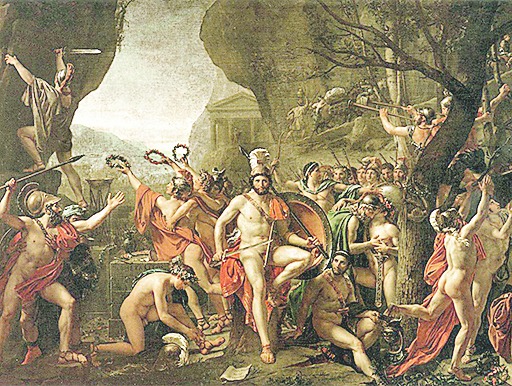
The greatest achievement of the book lies in its effort to debunk the modern misconceptions of masculinity. The contemporary world, which valorizes sexual prowess and vacuous brawn as the essential preconditions of the masculine ideal, is a far cry from the ancient worlds of the Greeks and the Romans, where a different conception of manliness prevailed. For the Athenians and the Spartans, the idea of virility arose from the concept of andreia, which refers to physical courage displayed in the battlefield. This ideal was in no way a monopoly of men (women, too, could possess andreia) and was independent of the sexual preference of the aspiring male (quite contrary to the modern nation states which forbid or discourage gay men from serving in their armies). This virile ideal had to be inculcated from a tender age through rigorous physical exercise, knowledge of the affairs of the polis and initiation rites that involved an intense sexual relationship between young boys and older men. By the time the Romans came on the scene, the domain of virility had shifted to the male universe. The Latin term, virilitas, denotes a complex combination of sexual prowess and physical might along with level-headedness, maturity and control over baser emotions. For the Western world, this idea of virility held its sway for a long time until the first half of the last century when it reached its apogee and faced an eventual decline.
Post-Enlightenment, bourgeois Europe saw the maturation of the virile ideal through proliferation of institutions of total surveillance: schools, barracks, workshops and so on. Corbin picks up from where Foucault had left off in Discipline and Punish and explains how colonial expansion and the increasing militarization of Western European countries necessitated the inculcation of codes of virility among impressionable young boys. Schools and military institutions moulded minds and bodies through practices of self-discipline, physical exercise and sublimation of sexual desires. There were, of course, the shadowy areas of sexual excess and licentiousness - the brothel, the risqué pamphlets and the pages of personal correspondences and diaries. However, as Corbin shows, these sites of pleasure and desire were not altogether outside the demands of discipline. Nineteenth century blokes, it seems, had to deal with the anxieties associated with venereal diseases, specific demands of public civility and certain norms of conjugality.
With the coming of the twentieth century, the old model of virility began to be chipped away, first by the horrors of the Great War and then by the rising tides of working class, feminist and gay-rights movements. The advent of fire-power rendered the physical body useless on the battlefront as horrors of conflict robbed men of their dignity and humaneness. The war veteran no longer represented the ancient ideal of valour and courage but a dehumanized residue left behind by the War.
Post-war Europe also grappled with new challenges posed by women's rights groups, an increasingly assertive working class and sexual minorities trying to turn the very logic of virility upside down. However, as the contributors - Thierry Pillon, Florence Tamagne and Christine Bard - show, the withering of the older model of virility is a fraught process with contradictory pushes and pulls. For instance, the socialist ideal of working-class virility which gained ground in the aftermath of the Industrial Revolution has started to wither away with the rise of the service sector and an increased emphasis on skilled labour rather than brute force. Similarly, the gay rights movement, far from displacing the ideal of virility, often appropriates heteronormative principles in order to undermine the negative, effeminate stereotypes associated with homosexuality.
Its argumentative brilliance notwithstanding, the actual, physical experience of reading this book is a bit overwhelming. More than 700 pages long, it is dense with information that does not necessarily yield a coherent narrative framework. It takes a bit of an effort on the part of the reader to appreciate its difficult, if not entirely impenetrable, prose style. The fact that the editors provide no introductory or concluding chapters adds to its abstruseness. However, to be fair, French historians, especially those of the stature of Corbin, have never been known for dumbing things down.
Discerning readers might also find other faults in the book. The contested terrain of masculine identity involves a constant negotiation with disciplinary power and resistance to it. Even Foucault admits that power and pleasure are intertwined. There is pleasure in exercising power that disciplines but there is also a different kind of pleasure in escaping the grip of that power. If virility is a manifestation of a sort of a disciplinary power, then the history of its failure is not something that readers will find in this book. It analyses a desired goal of manhood well, but is not attentive enough towards the histories of actual practices of everyday life where the ideal is contested and resisted. We are yet to write a history of the idiosyncrasies of men. Finally, for a reader from an erstwhile colony, the book may seem to pass off European (mainly French) experience as representative of the whole of humanity. The idea that cultures and societies that did not pass through the grind of 'enlightened' European modernity may have or had an alternative universe of male identity is something that the editors and the contributors do not care to consider. The gendered experience of colonized men is viewed exclusively through European eyes to which it appears 'lustful' and not virile.