|
| In the dark: Most undertrials in India are unaware of their rights |
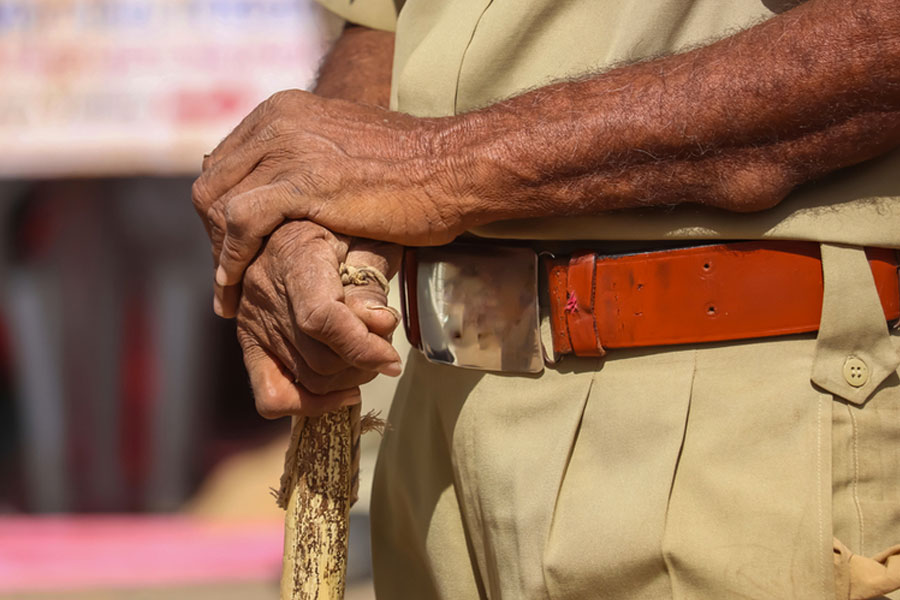
Undertrial Raju Roy, 30, died on December 14 while in Railway Police custody. His wife alleged that the police refused to hand over the body to her unless she stated, in writing, that her husband was a drug addict and ailing. However, injury marks on the victim’s body hinted that he had been tortured.
Roy’s death highlights that more than 60 years after Independence, if there is one area where very little headway has been made it’s in the violation of rights of people accused or convicted of crimes. And what is clear is that a person’s rights are violated because of lack of awareness of Constitutional safeguards.
“Lack of awareness of certain fundamental rights that undertrials or suspects are entitled to (under the Indian Constitution) encourages the police and jail authorities to violate rules and use the law to their advantage,” says Alok Kumar Mitra, senior lawyer, Calcutta High Court.
The recent spate of violence in Nandigram is an example of this. Erratic arrests, the refusal of bail and the arrest of women in the absence of female police personnel reflect how rights are routinely flouted. “According to the law of criminal jurisprudence, even if hundred guilty people are acquitted, no innocent person should be convicted of a crime he has not committed. But do our police force have any respect for such provisions made by law,” asks Mitra.
In fact, several articles of the Indian Constitution speak of equal protection for all. Article 19 guarantees protection of the right to speech, Article 20 provides for protection in respect of conviction for offences, Article 21 assures one of the protection of life and personal liberty and Article 22 ensures protection against arrest and detention.
There’s more. Article 32 (the right to move the Supreme Court for enforcement of fundamental rights) and Article 226 (power of the high courts to issue certain writs) are meant to ensure that undertrials get justice.
The right to life, as the Supreme Court has often stated, means more than the physical existence of an individual. It stands for the right to live with human dignity — and that includes adequate nutrition, clothing, shelter and even facilities for reading, writing and expression in diverse forms. Another common violation one gets to see is a person’s right to speedy trial, where undertrials often undergo prolonged detention.
“A procedure that keeps people behind bars without trial for long cannot possibly be regarded as reasonable, just or fair,” says Rajesh Ganguly, a lawyer who has fought many cases on issues of delayed justice.
In the Hussainara Khatoon vs State of Bihar case in 1980 the court highlighted the plight of undertrial prisoners who were languishing in jail for a long period without trial. The Supreme Court even directed the state government to release them on personal bonds as an exceptional measure. “The apex court observed in this case that the undertrial prisoners were in jail for several years without trial and in some cases for offences for which the punishment would be less than the period of detention,” says criminal lawyer Jay Sengupta of the Calcutta High Court.
“The Supreme Court has observed that the Constitution has no meaning and significance and human rights have no relevance for those confined without trial,” adds Ganguly.
The law also guarantees the right to legal representation on behalf of the accused, suspect or undertrials and equal access to law for the rich and the poor. “In most cases we find that a poor accused does not even know of free legal aid. They do not apply for bail on account of their poverty and financial disability. They are also unaware of their right to obtain their release on bail. In such cases the state has a constitutional mandate under Article 39A to provide legal aid against injustice and to secure to them their constitutional and statutory rights,” says human rights lawyer Tapas Kumar Bhanja. He also mentions the 1997 judgement of the D.K. Basu (the then executive chairman of legal aid) vs State of West Bengal case which directs a ‘thana’ to contact the nearest legal aid cell to help poor undertrials fight their case.
Free legal aid is to be provided by the state to the poor accused not only when the trial begins but also when he or she is for the first time produced before the magistrate so that bail can be applied for. People accused of a crime have the right to a robust defence — and that is usually possible when the accused is not in custody but out on bail.
The accused must also know the charges levelled against him or her. “The accused has a right to be informed of the grounds of arrest under Article 22(1). Grounds of arrest are to be communicated as soon as possible,” says Sengupta.
What is thus urgently required is a change in the attitude of the police and prison officials whose duty is to take care of the rights that the Constitution provides. Only then will the phrase “Justice for all” have true meaning.