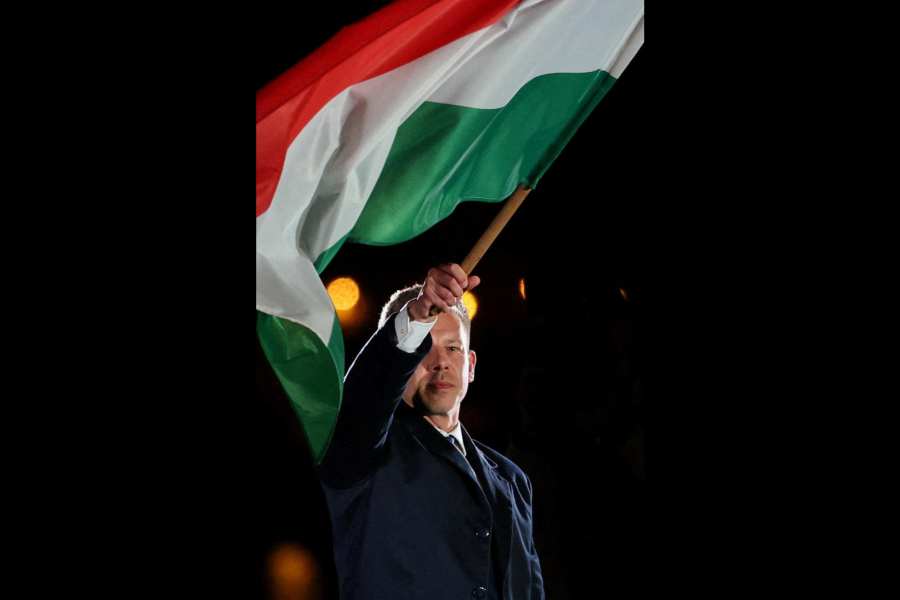
Hungary has a new government after 16 years of Viktor Orbán’s premiership, with the European nation electing the erstwhile Opposition, Tisza Party, under its leader, Péter Magyar. Mr Orbán, who was prime minister between 1998 and 2002 and, then, since 2010, has conceded his Fidesz party’s defeat: Tisza Party has won more than two- thirds of the seats in Hungary’s Parliament. For millions of Hungarians — they voted in record numbers in the weekend election — Mr Orbán’s defeat marks a landmark moment in their country’s democracy. The outgoing premier was one of the faces of Hungary’s pro-democracy movement against communist authoritarianism in the late 1980s — Mr Magyar has cited Mr Orbán’s role in those days as an inspiration for his decision to enter politics. But over his long stint in power, Mr Orbán faced accusations of many of the excesses he once railed against, such as the State’s crackdown on dissent and attacks on the freedom of the press.
Mr Magyar, who ran on the promise of change, represents a break from Orbánism. His victory is also expected to improve Hungary’s relations with the European Union, which has withheld funds for the country over criticism of some of
Mr Orbán’s domestic policies. Many analysts expect
Mr Magyar, once in office, to also lift the de facto veto that Hungary under Mr Orbán exercised over the EU’s funding for Ukraine.
But the path ahead for Mr Magyar, Hungary and Europe remains complicated. Mr Magyar has promised to revive Hungary’s stagnant economy but the success of that project could easily get trapped in a geopolitical tussle. Mr Orbán was the preferred Hungarian partner for the United States of America under President Donald Trump and for Russia under President Vladimir Putin. With Europe increasingly at odds with Mr Trump, and already opposed to Mr Putin, Mr Magyar might need to choose between two camps that could each hurt Hungary. How well he can juggle between such competing forces and manage Hungary’s relations with key blocs and countries could define his premiership. The congratulatory message to Mr Magyar by Prime Minister Narendra Modi underscores India’s recognition of the change in Hungary. What that change means for the rest of the world remains to be seen.