What’s in a name, asked The Bard. What’s in a colour, I wonder.
I am a cisgender woman born and brought up in Kolkata, and I don’t think a colour can define me.
As a child, I remember getting the pink candy floss while my brother always got the blue one. We received the same gifts from relatives — water bottles, lunchboxes, and even clothes — but they came in two colours: pink and blue.
There are no points for guessing which one was for whom.
One day, two T-shirts arrived. One was black, and the other was an obnoxious pink. None of us wanted it. “It is for girls,” said my seven-year-old brother.
When Kolkata Police launched their well-meaning pink booths for women, I could hear my brother’s voice ring in my ears.
For a 12-year-old me, the colour pink defined more than just gender. It defined softness. It was the colour of the delicate gender. It made me more of a woman and made my brother less of a man.
But has pink always been the colour of femininity?
In the early 20th century, pink wasn’t strictly for girls. As per journals available online, a few retailers recommended pink for boys as it was considered a stronger, lighter version of red.
It was in the mid-20th century that historians like Jo B. Paoletti documented in Pink and Blue: Telling the Boys from the Girls in America that post-war marketing and mass consumer culture started coding pink as feminine and blue as masculine.
By the 1980s and 1990s, gendered branding started intensifying, and the colour pink turned into a commercial shorthand for women. But second-wave feminists saw pink as a symbol of imposed softness and rejected it.
In recent years in India, activism has reclaimed pink symbolically. The Gulabi Gang, founded by Sampat Pal Devi in Uttar Pradesh in 2006, adopted bright pink saris as a sign of defiance against patriarchy.
Somewhere amidst tradition, globalised marketing, symbolism, and feminist reclamation, the colour pink became a brand in itself.
And years later, the colour hasn’t left millions of women like me. From razors and contraceptive pills to menstrual cups and tax slabs — the soft, warm hue (defined as a light-toned, unsaturated red) became the colour of women.
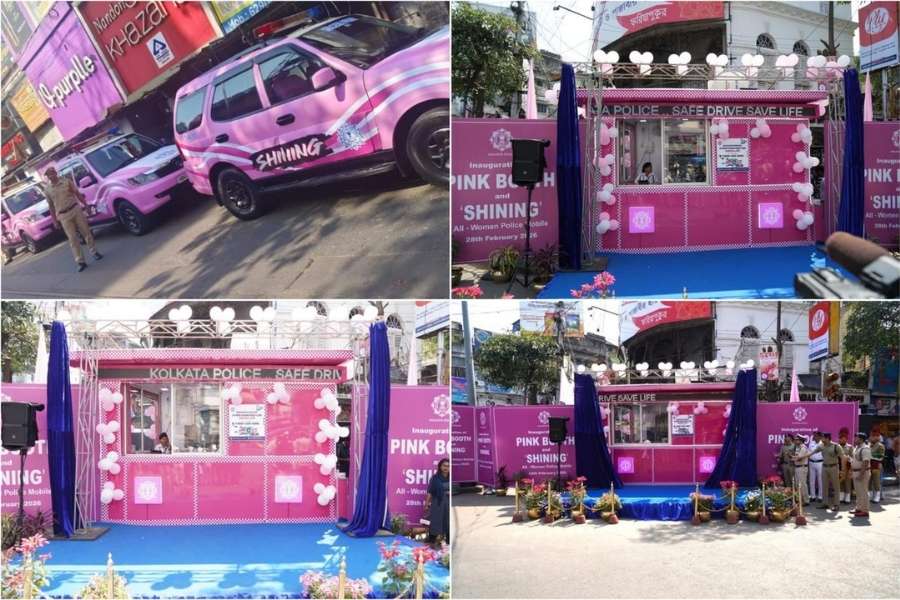
Kolkata Police's two new initiatives for women — Pink booths and Shining Kolkata Police/X
The colour isn’t a problem. The issue lies in the cosmetic flamboyance.
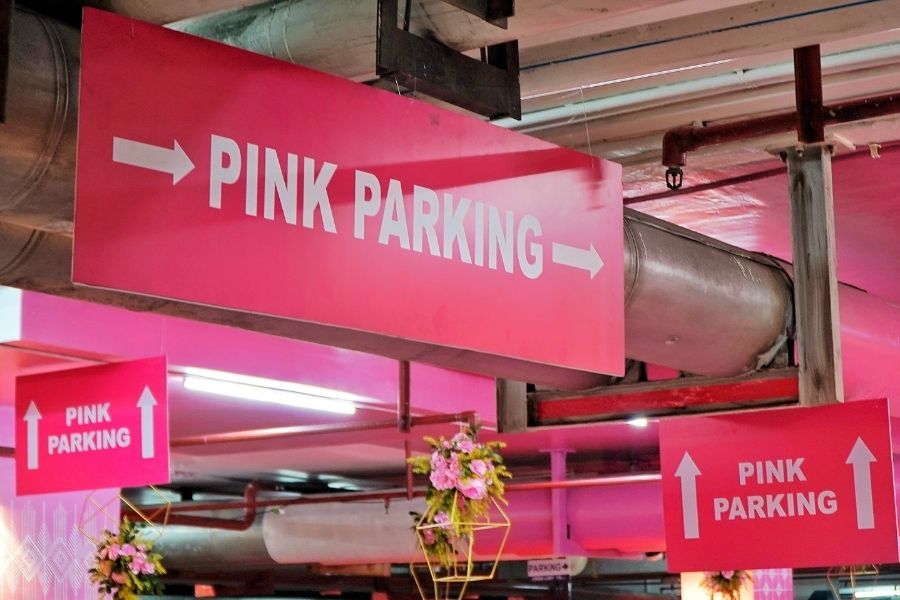
We got pink parking in city malls, pink autos and buses, and now, pink police booths in Kolkata. But did any of these need to be pink, I wonder!
From a marketing perspective, paint anything pink, and you don’t need an explanation. The message is delivered — it’s for women.
But what about greater security, faster FIRs, better conviction rates, and responsive helplines? None of these is colour-coded for improved efficiency.
There’s a social logic at play, too. If you can’t make a place safe for women, create designated “safe” pockets for them and colour them pink.
“Don’t let women work night shifts,” some ministers said when a medical student in Kolkata was raped and murdered at her workplace in 2024.
Locking us up in our homes seemed easier than putting criminals behind bars. And just like that, giving us a designated colour-coded service is easier than making sure that it actually turns out to be useful.
Even a film on consent had to be named Pink to deliver a message.
I don’t have a problem with the colour, as long as these pink booths, spaces and transport facilities are helpful, accessible, and well-staffed. Don’t give us aesthetic designs in pink for the show. Give us services that matter. Because in times of distress, the colour debate will not be relevant. And I am sure many women would agree.
And, please note: I am a 30-year-old cis woman who earns and spends her own money. Femininity comes naturally to me. I want to become a mother someday, and my favourite colour is blue. Pink doesn’t define me.