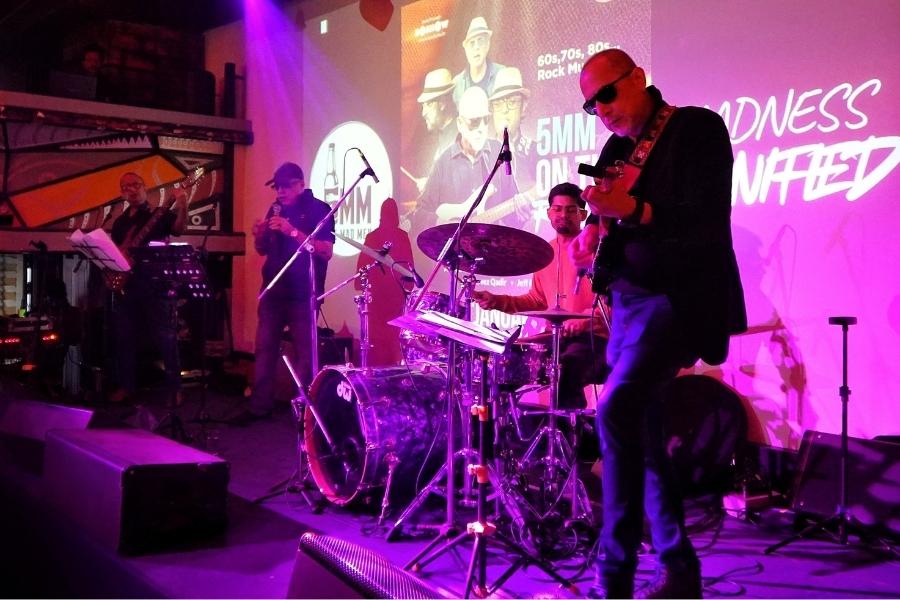
Amyt Datta has never been one to dramatise his presence. At 65, with over five decades of playing behind him, Kolkata’s resident guitar god continues to perform regularly, staying rooted in a sound shaped by the rock music of the ’60s, ’70s and ’80s.
Yet, the questions around why he keeps returning to this music persist, especially in a time when guitars no longer dominate popular culture as they once did.
At Five Mad Men in Sector V on Sunday night, Datta took the stage for ‘5MM On The Rocks’, performing with Mainak ‘Bumpy’ Nag Choudhury on bass, Pervez Qadir on vocals and Swarnavo Dutta on drums.
The setting was intimate, the sound unmistakably old-school, but the conversation around it was firmly contemporary.
Speaking to My Kolkata, Datta pushed back against the idea that he had ever stepped away from rock n roll, exploring the boundaries of avante-garde music with the harmonic sophistication of jazz laced with the aggression of rock.
“I’ve always been coming back to [this] music. I never left it,” he said. For him, the question is not about revival or nostalgia, but about honesty. “If music is done honestly and in its own authentic way, it’s always valid.”
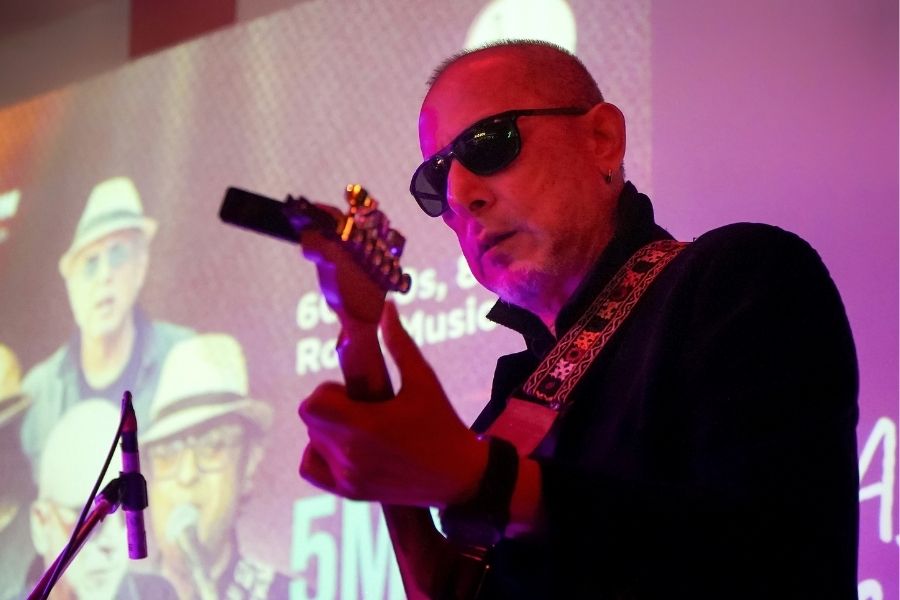
‘This is real music. You make a mistake on stage, you make a mistake. There’s no safety net,’ said Datta
Datta is clear that revisiting the music he grew up with is not an exercise in longing for the past.
“It’s not really nostalgia,” he said. “This is real music. You make a mistake on stage, you make a mistake. There’s no safety net.”
That lack of a safety net is what distinguishes live, instrument-led music from much of what dominates the mainstream today.
Datta is careful not to dismiss technology outright, but he is sceptical of a culture that prioritises ease over engagement. “Life is like that,” he said. “On stage, it’s the same. That’s why it matters.”
The guitar, once central to popular music, has slowly receded from that position. Datta believes this shift reflects changes in listening habits rather than the instrument’s relevance.
“There was a time when the guitar was the instrument,” he said, referencing figures like Jimi Hendrix and Eric Clapton. “I’m trying, in my own capacity, to bring it back into the front again.”
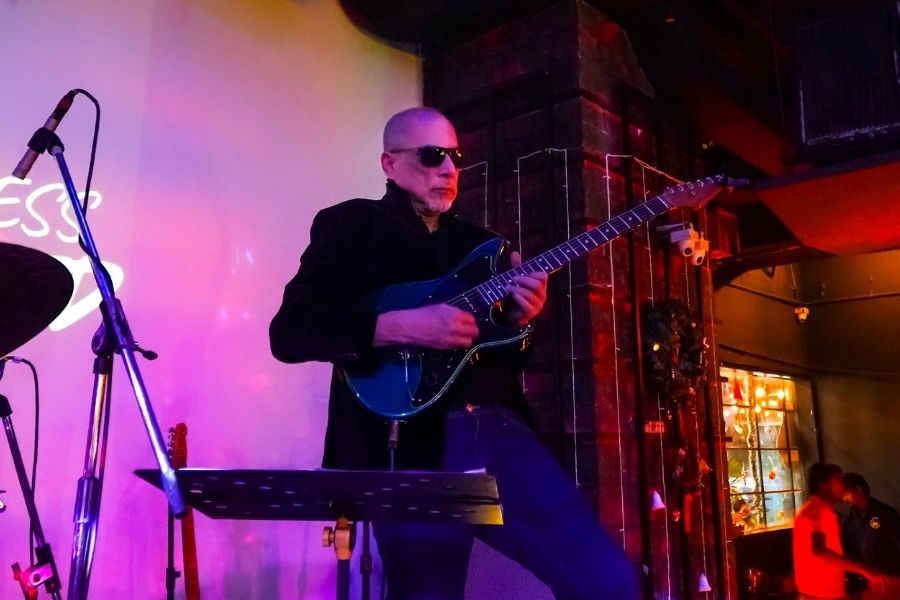
‘There was a time when the guitar was THE instrument. I’m trying, in my own capacity, to bring it back into the front again,’ said Datta
He also remembers a Kolkata that listened differently. Concerts were destinations in themselves, held in auditoriums where audiences arrived to listen, not multitask.
“You bought a ticket, sat for two hours and listened,” Datta recalled. “After that you could go out and eat or drink. The focus was the music.”
Today, attention spans have narrowed drastically. Albums have been replaced by clips and songs judged within seconds. “We used to hold albums, read the liner notes, look at the artwork,” he said. “Now everything is decided in 30 seconds. You flip and move on.”
The impact of this shift is felt most sharply by musicians trying to build long-term careers. While Datta acknowledges the talent among younger artists in the city, he questions whether the ecosystem allows for longevity. “Fifty-two years is a long time,” he said. “Commitment over that time is very hard now.”
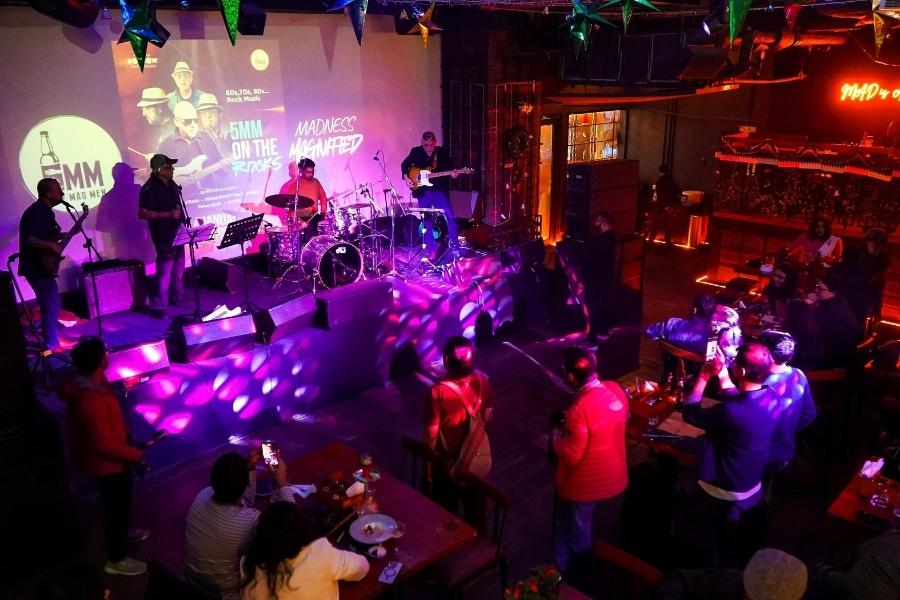
Datta remembers a Kolkata that listened differently. Concerts were destinations in themselves, held in auditoriums where audiences arrived to listen, not multitask
Survival, he believes, depends on more than individual effort. Without support from audiences, organisers, corporate houses and those in power, serious music struggles to exist.
“If this way of life is not supported, it’s going to die. Some of us are just keeping our heads above water.”
Beyond music, Datta sees a broader cultural lesson. India’s strength, he feels, lies in its differences, in how sound, language and culture change from place to place. Music, in that sense, becomes a unifying force.
“The soil changes, the music changes,” he said. “That’s beautiful.”
At Five Mad Men, around 200 people gathered for the gig. For Datta, that was enough.
“We brought people together in one room,” he said.
After more than half a century with the guitar, Amyt Datta continues to play, question and insist on one thing above all else: Music, when played honestly, still matters.