 |
Wal-Mart’s international operations CEO John Menzer recently came to India and conquered it. The media was ecstatic. Politicians fawned. Bureaucrats rolled out the red carpet. Menzer said all the right things and held out the right bait. “We are going to tell the government how we can make a significant investment in India,” he told BusinessWorld. He outlined what accepting the retail giant’s terms could mean. “If Wal-Mart were a nation, it would be China's eighth largest export destination.”
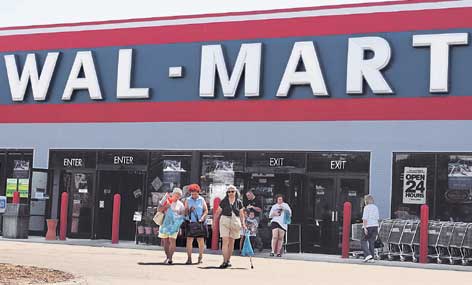
That’s another story. But even as Menzer was wowing India, Wal-Mart was closing down an outlet in Saguenay, Canada. The reason was that the workers there had joined a trade union. The store had been making losses for some time and, according to Wal-Mart, unionising employees would threaten viability further.
Wal-Mart, which with annual revenues of $47.5 billion is America’s biggest company, has no unions in its 1,500 stores in nine countries. So wary is the company of unions that when it entered Canada a decade ago, buying 122 stores of down-in-the-dumps retail chain Woolco, it didn’t buy 10 other Woolco stores because they had unionised workers.
| TALLY OF WRONGS |
| Factories in China that produce goods for Wal-Mart have been accused of: |
 Forced overtime Locked bathrooms Starvation wages Pregnancy tests Denial of access to health care Workers fired and blacklisted if they try to defend their rights Forced overtime Locked bathrooms Starvation wages Pregnancy tests Denial of access to health care Workers fired and blacklisted if they try to defend their rights |
Source: US United Food & Commercial Workers union |
As far as the trade union movement is concerned, Wal-Mart is the pits. They have even coined a word ? walmartisation. According to the unions, “Wal-Mart is viciously anti-union in North America and stands accused of driving down wages and conditions in suppliers and competitors and dumping social costs like health care on taxpayers. If it succeeds in establishing a new corporate model for the 21st century based on low wages, low benefits and insecure jobs it is also bad news for the whole global economy.” Among its many other claimed sins is that it sources products from countries and companies that exploit labour.
Take a look, however, at the other side of the picture. Wal-Mart hates unions because unions have traditionally stalled progress and modernisation. They are selfish beyond measure. One has only to look at how the bank unions in India have extorted additional pay and perks out of managements to realise the truth of this. Look also at how they are extorting an unreasonably high rate of interest from the government for the Employees’ Provident Fund scheme. The rest of the country, including the poorest of the poor, has to subsidise these honourable gentlemen.
Secondly, why is this fuss being created now? After all, Wal-Mart has been around for decades. The answer is simple: Jobs are moving out of the US to places like China and India. The crocodile tears the unions are shedding now on how workers in these two countries are being exploited are part of a battle to keep jobs at home. What’s happening in Wal-Mart is because, if you include indirect jobs, the retailer is the world’s largest employer. It’s all a piece of Western organisations carrying out crusades against, say, child labour in developing countries. They come with campaigns but never with the money to rehabilitate the children.
So should you support Wal-Mart in its efforts to come to India? Should you try for a job with them when they are here? The trade unions have destroyed the work ethic in the country. Can Wal-Mart do much worse?