
Life, liberty and the pursuit of happiness - the touted American dream ironically doesn't sell in many parts of the continent. And, that is where a documentary is born.
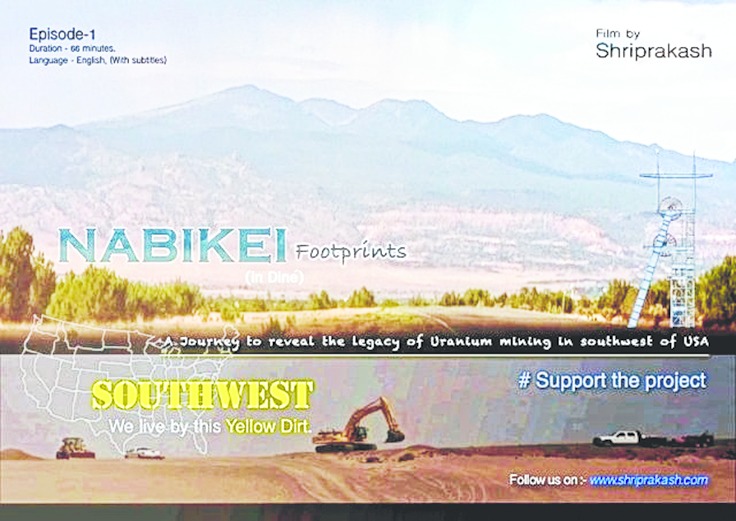
National award-winning Ranchi filmmaker Shriprakash's new venture Nabikei (a Navajo word for footprints) is a reality check on rampant uranium mining in southwest America and its detrimental effects on the health of the tribal natives known as Navajo.
The 66-minute documentary, with English subtitles, will premiere in Hiroshima, Japan, on Sunday. It will be shown on the second day of a three-day conference being organised by World Nuclear Victims' Forum (WNVF) to mark the 70th anniversary of atomic bombings of Hiroshima and Nagasaki in 1945.
The organiser, campaigning for a nuke-free future, has invited Shriprakash to be a presenter at the conclave because of his in-depth knowledge of uranium mining in India and America. In the Nineties, the issue-based filmmaker had made Buddha Weeps, also a take on uranium mining but in Jadugoda in West Singhbhum district of Jharkhand.
Speaking to The Telegraph from New Delhi before flying to Japan on Thursday evening, Shriprakash said Nabikei was a documentation of the once booming uranium industry of the US, which now reflected the squalor of abandoned mines and the sufferings of the native Navajo tribe.
No wonder the poster punchline reads: "Southwest: we live by this yellow dirt".
"In 2006, I had visited Arizona for a conference and that is when I decided to document the condition of southwest America. I went back there in 2011 for the shooting," said the filmmaker who also gave up his national award earlier this month to protest against intolerance in India.
"The areas inhabited by the Navajo people alone had 500 active mines. Despite protective laws, implementing agencies and regulatory authorities, these people are crying for attention," Shriprakash said, adding that students and various local organisations had helped him shoot the documentary.
Should Nabikei be screened in Jharkhand too? Tell ttkhand@abpmail.com