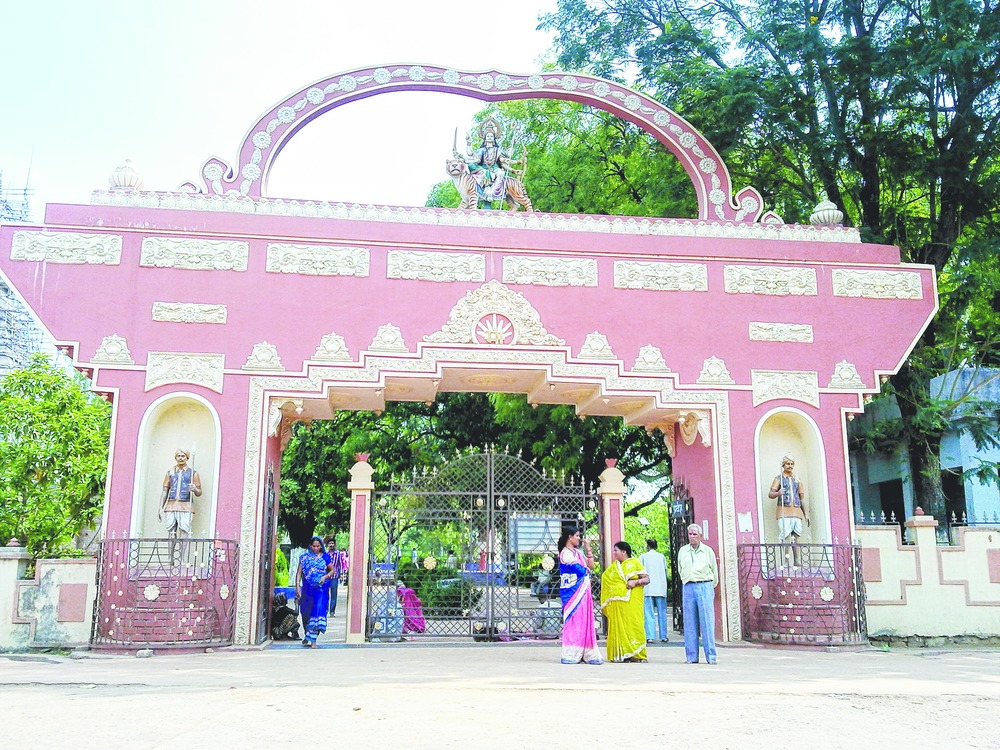

Ranchi, Sept. 24: State minister Chandra Prakash Choudhary today approved a piped drinking water project for the historic Maa Bhadrakali temple in Chatra's Itkhori area - known as a unique confluence of Hinduism, Buddhism and Jainism.
Taken up under the centrally sponsored National Rural Drinking Water Programme, this project, to be executed at an estimated cost of Rs 59.86 lakh, is likely to be completed by the end of the next fiscal (2016-17).
While the state will bear 50 per cent of the total expenses, the Centre will make available the remaining funds for the project that involves installation of a pump house, a treatment plant, construction of a seven feet deep intake well and laying of distribution pipelines.
The technical sanction was granted in February this year, following which the Chatra district administration gave its go-ahead for the project recently.
"I have directed my department's principal secretary to initiate the process for floating e-tender at the earliest. The most suitable agency will be selected through open bidding for smooth completion of this project within the given timeframe," Choudhary said.
The Maa Bhadrakali temple, archaeological accounts suggest, belongs to the 7th century AD. Apart from Maa Bhadrakali, a propitious form of Kali, Lord Shiva and Hanuman idols draw Hindu devotees to the site. Moreover, the presence of a stupa with 1,008 figurines of Buddha and Tenth Jain Tirthankar Sheetalnath's paduka (slippers) on the same premises turns it into a religious confluence. All are made of black stones with similar aesthetic styles, suggesting religious co-existence in close proximity.
About three years ago, the Archaeological Survey of India took up excavation works there, prompting the state and Centre governments and various cultural organisations to take note of the historic and religious significance of the site.
Located about 150km from Ranchi and 60km from Hazaribagh, Itkhori area is surrounded by dense forests with different types of animals, which underline its potential to become a prominent eco-tourism as well as a religious pilgrimage site.
"Availability of clean drinking water on the temple premises is the basic requirement to draw more tourists," Choudhary added.