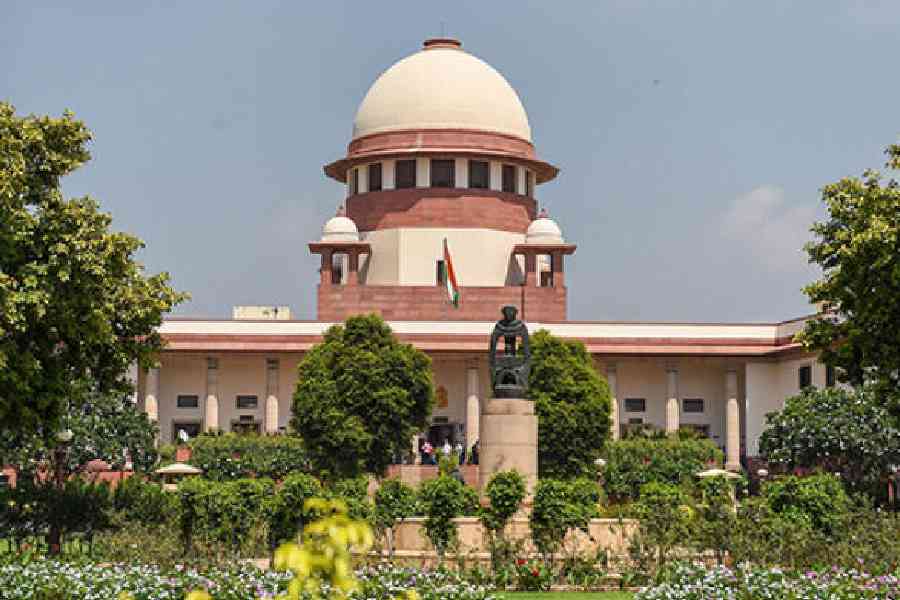
The Supreme Court on Tuesday agreed to hear Allahabad High Court judge
Yashwant Varma’s plea challenging the constitution of an inquiry committee by the
Lok Sabha Speaker to probe corruption charges against him.
A bench of Justices Dipankar Datta and Augustine George Masih issued notices to Lok Sabha Speaker Om Birla and the secretariats of the Lower and Upper Houses on Justice Varma’s contention that the three-member panel was formed by Birla “in an unilateral way” without consulting the Rajya Sabha Chairperson as a notice of impeachment was pending in both Houses at that time.
The bench appeared to be convinced by the arguments of senior advocate Mukul Rohatgi, appearing for Justice Varma, that there were procedural irregularities in the formation of the panel in violation of the Judges Inquiry Act, 1968.
The apex court sought the response of the authorities, posting the matter for further hearing to January 7.
Justice Varma was repatriated from Delhi High Court to Allahabad High Courtafter burnt wads of currency notes were allegedly found at his official residence here on March 14.
Birla had on August 12 constituted the three-member committee after admitting a multi-party notice for Justice Varma’s removal, setting in motion the process of impeachment.
The inquiry committee comprises Supreme Court judge Aravind Kumar, Madras High Court Chief Justice Manindra Mohan Shrivastava and senior Karnataka High Court advocate B.V. Acharya.
Justice Varma’s petition spotlights the surprise resignation by Vice-President and Rajya Sabha Chairman Jagdeep Dhankhar on July 21, citing “medical” reasons even though media reports linked it to the row over the proposed impeachment proceedings against the judge.
Referring to the receipt of the notice for Justice Verma’s impeachment from more than 50 Rajya Sabha members, Dhankhar had directed the secretary-general to find out if a similar motion had been moved in the Lok Sabha, citing the procedure specified for impeachment in the Judges (Inquiry) Act, 1968.
He said the Act clearly stated that if a motion was moved in both Houses on the same day, the committee to be formed shall be constituted jointly by the Speaker andthe Chairman.
Rohatgi on Tuesday told the bench that the decision of the Lok Sabha Speaker to constitute the committee was “unconstitutional” and “arbitrary” because under Section 3(2) of the Judges Inquiry Act, 1968, the Speaker could not take a unilateral decision to constitute the panel when the notice for impeachment was pending in both Houses.
“Where the notices of the motion are ‘given’ to the Houses on the same date, no committee will be constituted, this is peremptory, unless the motion is being admitted in both Houses. And where such motion is admitted in both Houses, the committee shall be constituted jointly by the Lok Sabha Speaker and the Rajya Sabha Chairman,” Rohatgi argued.
Justice Datta asked how the MPs and legal experts failed to notice this aspect.