All eyes are now turned to the second and final day of Vladimir Putin’s state visit, when the Russian president and Prime Minister Narendra Modi sit down for the 23rd India–Russia Annual Summit. The session is expected to lock in big-ticket defence decisions and tackle the elephant in the room: India’s soaring trade deficit with Russia.
Indian and Russian officials say today’s agenda is jam-packed. Discussions will include upgrading India’s Su-30 fighter jets, the backbone of the Indian Air Force, with better radar, new missiles, and improved electronics to keep pace with Chinese and Pakistani aircraft.
Talks will also cover the S-400 and possibly the next-level S-500 air-defence systems. The S-400 is India’s most powerful missile shield, capable of shooting down enemy aircraft and missiles from long distances. The S-500 is Russia’s newer, more advanced system, designed to intercept faster and higher-flying targets, including some ballistic missiles.
The two leaders will discuss as well the R-37 long-range missile, designed to hit enemy aircraft from hundreds of kilometres away, strengthening India’s long-distance strike capability. Another major topic is the BrahMos-NG, the next-generation Indo-Russian missile, which will be smaller, lighter, and easier to deploy across aircraft, ships, and submarines.
Meanwhile, according to Bloomberg, India will pay about $2 billion to lease a nuclear-powered attack submarine from Russia, finalising a deal that has been in negotiation for nearly a decade. Talks had stalled repeatedly over pricing, but a November visit by an Indian team to a Russian shipyard helped clinch the terms. Delivery is expected by 2028, though timelines could slip given the technical complexity, Bloomberg said. Signed in March 2019, the lease will deepen the two navies’ long-running cooperation on undersea platforms, an area where India remains heavily reliant on Russian expertise.
Trade will also be a central focus. India wants to reduce its huge trade deficit with Russia by dramatically expanding exports – from pharmaceuticals and agriculture to electronics, IT, and services. The two countries have set an ambitious $100-billion trade target for 2030.
Bilateral trade reached a record $68.7 billion in 2024-25, but Indian exports accounted for only $4.9 billion. The jump in overall trade largely reflects India’s purchases of discounted Russian oil, while Indian goods remain a small fraction of total trade.
Moscow has signalled a “major expansion phase” for relations, courting Indian SMEs and pitching cooperation in AI, cybersecurity, logistics, energy, and tourism, with Russian e-commerce players helping Indian companies reach Russian consumers.
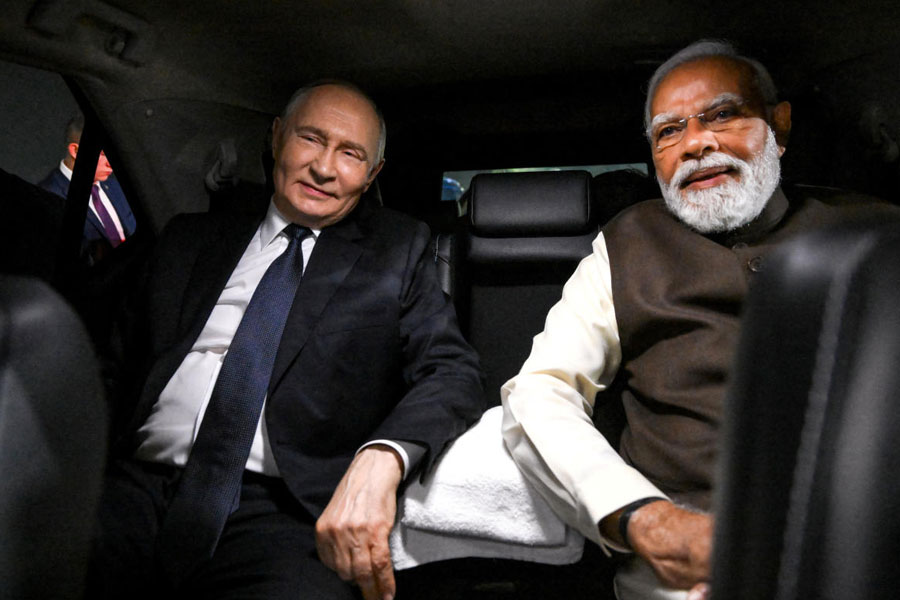
The visit began with a warm show of diplomacy: Modi received Putin at the aircraft ramp Thursday evening with a hug before they drove together to 7, Lok Kalyan Marg for a private dinner. Afterward, Modi presented Putin with a Russian translation of the Bhagavad Gita, calling it “an inspiration to millions,” while Varanasi’s Ganga Aarti spelled out “Welcome Putin” in diyas.
The summit comes amid tense US–India relations, with stalled trade talks and 50 per cent tariffs on many Indian goods, partly aimed at pressuring India over Russian oil purchases, as well as disagreements on defence deals and technology sharing.
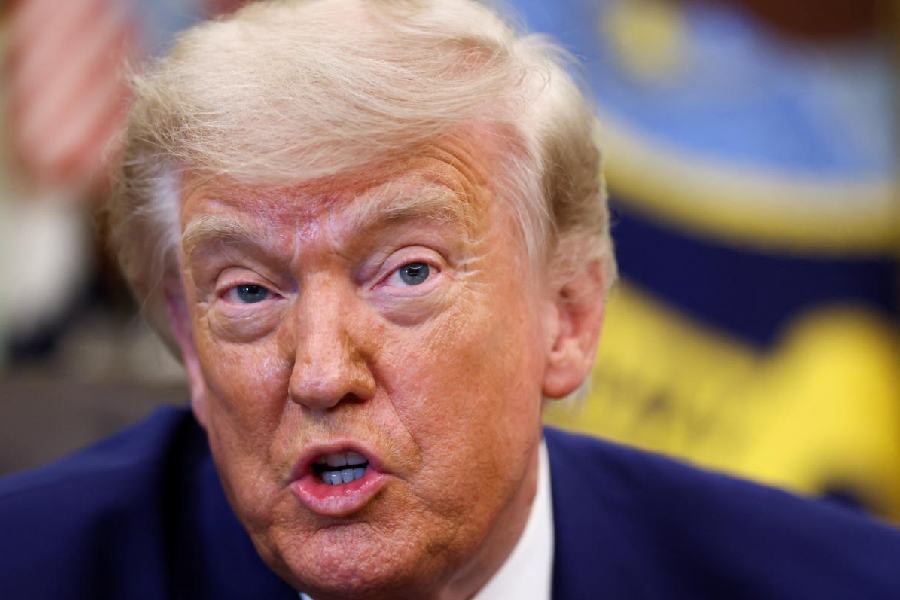
Before the summit, Putin gave an interview to India Today, insisting that Russia “did not start this war but the West and Ukraine started this.” He said that US companies are eager to return to Russia once the conflict ends. “We have letters from American companies, asking us not to forget about their existence and resume cooperation," he told the publication. Putin addded he believed US President Donald Trump’s “sincerity is genuine” in seeking to end the war.
He praised India as a global power that does not bow to pressure, backing Modi’s resistance to US tariffs on Russian oil. Putin also lauded the “Make in India” initiative, saying Indo-Russian defence cooperation is “not a buyer–seller relationship” but built on technology sharing and trust.
Ahead of the summit, defence ministers Rajnath Singh and Andrei Belousov held preparatory talks. Afterward, Singh said the longstanding partnership “is based on a deep sense of trust, common values and mutual respect,” while Belousov added that Russia is “ready to support India towards becoming self-reliant in the field of defence production.”