India’s first Prime Minister Jawahar Lal Nehru overshadowed the debate on the country’s national song, Vande Mataram, in the floor of the Lok Sabha being held on the song’s sesquicentennial, as the Congress accused the ruling BJP of using Nehru to hide its failures.
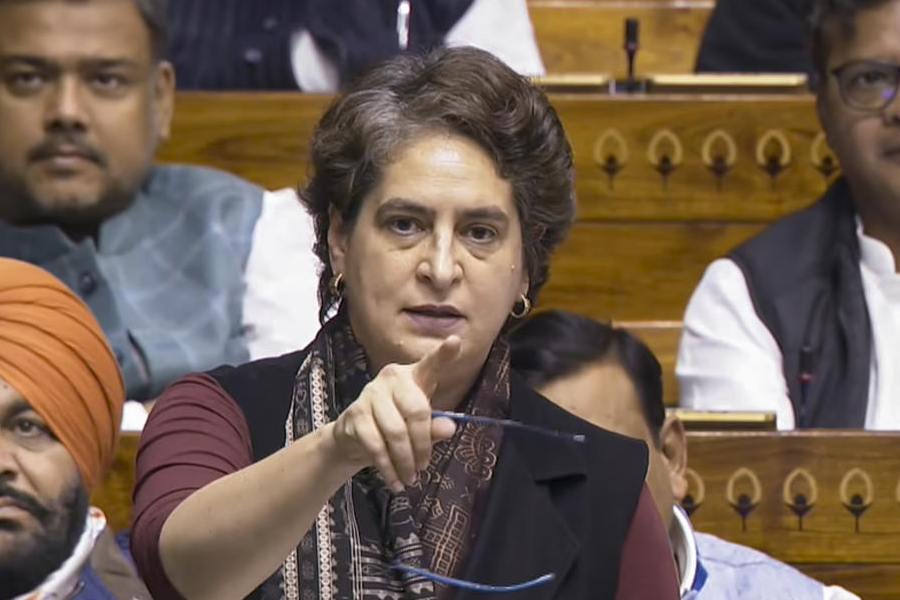
“It seems weird to have this debate. Why are we having this debate on the national song? There are two reasons behind this debate. First, the Assembly elections are approaching in Bengal and our prime minister wants to play a role there,” said Priyanka Gandhi, the Congress MP from Wayanad. “The second is to frame new charges on those who made sacrifices during the freedom struggle and divert people’s attention from the burning issues of today.”
The first-time MP had a suggestion for the ruling BJP and its allies.
“Like you are having this discussion today, let’s have a discussion on the mistakes of Nehru, Indira ji, Rajiv ji, what dynasty politics. Let it continue for 24 hours, 40 hours, for as long as you are not satisfied. Let us finish it once and for all,” she said. “Then let us talk on unemployment. On what is going on in the PMO, what is happening in the PMO on a betting racket, the name of one of your minister appearing in the Epstein files.”
“The people are unhappy. They are facing tremendous hardships in their daily lives and you cannot provide solutions. If we don’t talk about the past, what else should we talk about? They are capable of only talking about the past,” the first-time MP from Wayanad said.
Priyanka Gandhi also gave a short lesson in history to the treasury bench MPs as to why the first two stanzas of Vande Mataram were adopted by the Congress Working Committee in 1937.
“Have the ruling party MPs turned so arrogant they consider themselves greater than Mahatma Gandhi, Rabindranath Tagore, Subhas Chandra Bose, Maulana Abul Kalam Azad, Rajendra Prasad and Dr BR Ambedkar?” Priyanka asked, avoiding the name of Nehru.
Nehru was among those who gave the nod to include only the first two stanzas of Bankim Chandra Chattopadhyay’s composition, which became a mantra for the freedom fighters, both the pacifists among the Congress and those involved in armed struggle.
The Congress’ deputy leader in the Lok Sabha Gaurav Gogoi informed the Lok Sabha Modi had uttered Nehru and Congress a combined 91 times in his speech during the debate on Operation Sindoor and on the 75th anniversary of the Indian Constitution.
“No matter how much you try, you will not be able to succeed in putting even one blot on Nehru’s contribution,” Gogoi said.
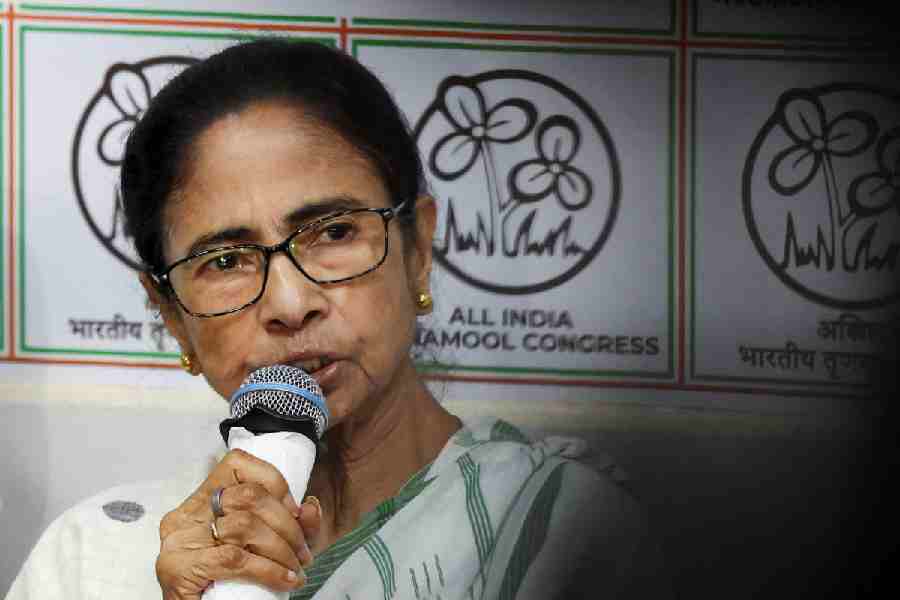
In Calcutta, before leaving for her administrative meeting in Cooch Behar, Bengal chief minister Mamata Banerjee asked, “You don’t appreciate Netaji, Rabindranath Tagore, Raja Ram Mohan Roy, then whom do you appreciate?”
Congress MP Imraan Masood challenged the BJP’s claim over the song. “Which of the RSS leaders sang this, went to jail and who was raising slogans on the roads?” the Lok Sabha MP asked.
He said Congress workers carried the song through prison, protest and struggle, and argued that the BJP “sold what Nehru made.”
Congress Rajya Sabha MP Rajeev Shukla linked the government’s sudden interest in the national song to the Bengal elections.
He said they “never cared about Vande Mataram” and accused the ruling party of “abusing Jawaharlal Nehru” and “insulting Rabindranath Tagore.”
Congress MP Ranjit Ranjan questioned the government’s priorities. “If learning this history reduces pollution, then teach history,” she said, asking why Parliament was debating a song while people were stuck at airports and paying “four times the price” to travel.
The PDP chief Mehbooba Mufti criticised Parliament for focusing on a “two hundred year old Vande Mataram” debate while IndiGo passengers struggled nationwide.
She called the government’s approach “empty symbolism” that does nothing to fix jobs, prices, or people’s immediate problems.
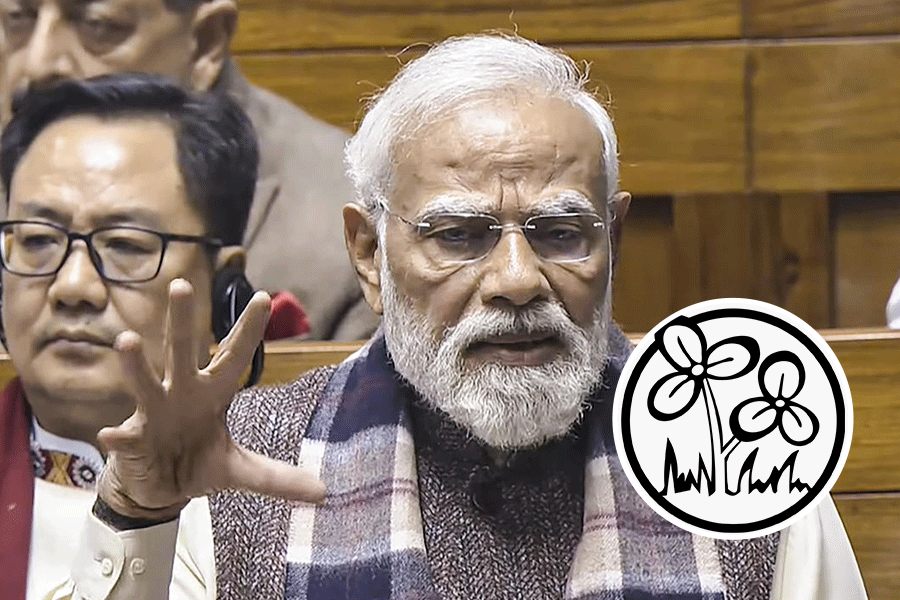
Prime Minister Narendra Modi on Monday said first PM Jawaharlal Nehru betrayed Vande Mataram by echoing Muhammad Ali Jinnah’s communal concerns and fragmenting the national song that put India on the path of politics of appeasement, leading to its Partition.
"Instead of firmly countering the baseless statements of the Muslim League and condemning them, Jawaharlal Nehru, the then Congress president, did not reaffirm his and the Congress party’s commitment to Vande Mataram, but began questioning Vande Mataram itself. Under the pressure of appeasement politics, the Congress bent and agreed to break Vande Mataram to pieces. Therefore one day, it had to bend for the Partition of India," he said.