Patna, Feb. 8: Former President A.P.J. Abdul Kalam today became the first visitor at the site of the proposed University of Nalanda at Rajgir foothills, 16km from the Nalanda ruins.
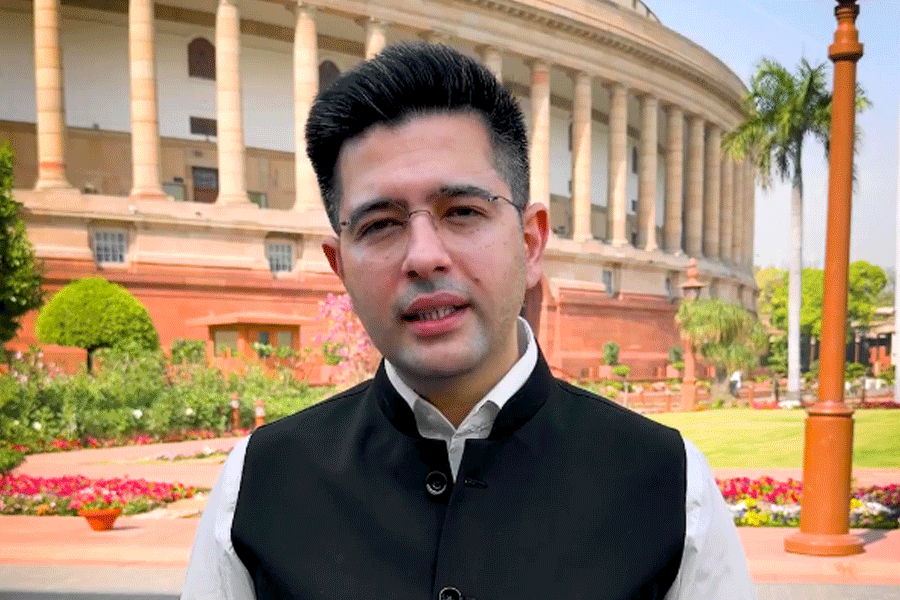
The former President (in picture by Deepak Kumar), a member of the mentors’ group for the university, attended a power-point presentation of the university’s progress, expected to start its academic session in 2010.
Talking to reporters after returning from the site, Kalam said: “I am satisfied with the site modification. It’s a good choice for an international university.” The university, he said, should aim at “creating and integrating minds”.
“It would be distinct from other universities because it will have a rare confluence of theology, spirituality, science and technology,” said the first visitor. The government has allocated Rs 80 crore for current and next fiscal for the project. Bihar chief minister Nitish Kumar added: “While academic session would take some time to start, academic activities have already started. Doctor Kalam’s visit today was no less than a step towards that academic activity.” Kalam addressed the audience at SK Memorial hall on how Bihar could be developed into an ace knowledge hub.
Earlier at Rajgir, Kalam said the university would help restore Bihar’s past glory. “I am happy about my association with Nalanda and Bihar. Bihar has produced many scholars and can offer so much more to the world.”
The detailed project report of Nalanda University, being set up in collaboration with Southeast Asian countries, will be architecturally designed in consonance of ancient university. The mentors’ group, set up by the Union government, is headed by Amartya Sen and has foreign secretaries of partner-countries as members. The group will prepare a report on the academic calendar, syllabi, funds and organisational structure.
The university would begin with 1,137 students in the first phase (2009), and by its 10th phase it would have 5,812 students (2018). It will contain schools of philosophy and Buddhist studies, informatic, basic and applied sciences, development studies, natural resources management, international studies and language studies — with a student-teacher ratio of 1:10.
The proposed university will try to “recapture” the holistic traditions of knowledge creation, acquisition and dissemination as practised in Nalanda University centuries ago — in a more modern context.