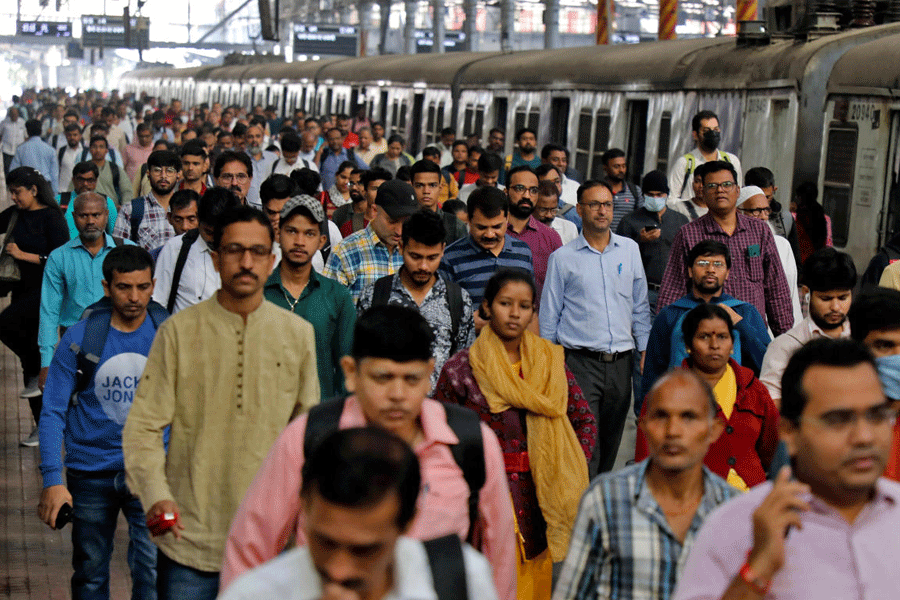
India on Thursday started counting its population, the world's largest at an estimated 1.4 billion people, in a long-overdue census that was delayed for years in part due to the COVID-19 pandemic.
Officials have started surveys across five states and three federal territories in the country, in the first phase of the year-long exercise. But what does it take to count a billion-plus people? Here's how India is doing it.
The logistics
More than 3 million officials, mostly school teachers, will physically visit every house, knock on every door and count every single person living in the country, across its 36 states and federal territories, down to and including nearly 640,000 villages.
There will be two phases of the physical door-to-door surveys. The first will list houses and housing conditions, the second will focus on inhabitants and their economic and social parameters.
In its entirety, the exercise will take a year and it is expected to cost $1.3 billion.
The once-in-a-decade population survey, originally due in 2021, will conclude next March.
Self-enumeration
In a first, before the physical survey every region will have a short window for citizens to register themselves online on a government portal that can function in 16 languages.
Citizens can record the necessary details on the portal for enumerators to confirm the data during their visit and include it in the original database.
Digital tools
In another first, India will conduct this census through a mobile app, along with the self-enumeration option. There's also a web-based portal to manage and monitor the process.
In addition, New Delhi has deployed an application to map the nation's households by dividing them into small geographic areas with a limited number of houses, a task critical to ensuring no one is missed and the survey is accurate.
Many datasets from the census will be released quickly as the digital database is expected to reduce processing time.
Caste count
The census will also collect details of castes in its second phase. India recorded its castes in 2011 for the first time in 80 years, but the data was not fully publicised amid concerns about its accuracy.
The rigid social stratification system dates back thousands of years and pervades Indian life and politics.
There are scores of caste-based political parties, and many state institutions must offer affirmative action quotas to the so-called lower castes for employment and college places.