
New Delhi, June 8: India's judiciary has repeatedly upheld filmmakers' freedom and ruled that a government "cannot prevent open discussion and open expression, however hateful to its policies".
This history becomes relevant with the producers of Udta Punjab approaching the Film Certification Appellate Tribunal today against a censor board order directing numerous cuts, amid suggestions the film's focus on Punjab's drug problem had riled the ruling Akali Dal.
A three-judge apex court bench had in 1989 stressed the State's "duty to protect the freedom of expression since it is a liberty guaranteed against the State" while underlining films' role in widening the public debate on issues of concern.
"Movie is the legitimate and the most important medium in which issues of general concern can be treated. The producer may project his own messages, which the others may not approve of. But he has a right to 'think out' and put the counter appeals to reason," the bench had ruled.
"The State cannot prevent open discussion and open expression, however hateful to its policies."
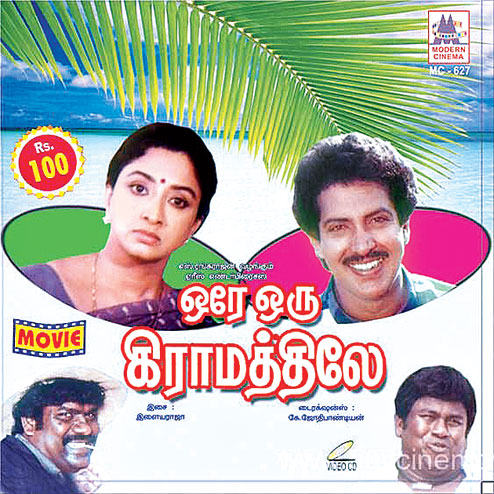
Headed by Justice K.J. Shetty, the bench had set aside a Madras High Court judgment that had revoked the "U" (unrestricted public viewing) certificate granted to Tamil film Ore Oru Gramathile (In One Village).
The film had been critical of the caste reservation policy and sought to suggest that reservation should be based solely on economic criteria.
Madras High Court had revoked the "U" certificate on a batch of petitions from various caste organisations and the state government, which said the movie was a threat to law and order and national integrity.
"We fail to understand how the expression in the film with criticism of reservation policy... will affect the security of the state of sovereignty and integrity of India," the apex court had said.
"There is no utterance in the film threatening to overthrow the government by unlawful or unconstitutional means. There is no talk for secession either. Nor is there any suggestion for impairing the integration of the country. All that the film seems to suggest is that the existing method of reservation on the basis of caste is bad and reservation on the basis of economic backwardness is better. The film also deprecates exploitation."
Justice Shetty, who wrote the judgment, said the high court's reasoning had run counter to the democratic principles promoted by the Constitution.
"In democracy it is not necessary that everyone should sing the same song. Freedom of expression is the rule and it is generally taken for granted. Everyone has a fundamental right to form his own opinion on any issue of general concern. He can form and inform by any legitimate means," the apex court judgment said.
"We are amused, yet troubled, by the stand taken by the state government with regard to the film.... We want to put the anguished question, what good is the protection of freedom of expression if the State does not take care to protect it? If the film is unobjectionable and cannot constitutionally be restricted under Article 19(2), freedom of expression cannot be suppressed on account of threat of demonstration and processions or threats of violence."
Article 19(2) allows the State to impose "reasonable restrictions on the exercise of" the freedom of speech and expression "in the interests of the sovereignty and integrity of India, the security of the State, friendly relations with foreign States, public order, decency or morality or in relation to contempt of court, defamation or incitement to an offence".
Suppressing freedom of expression on account of threats of violence would amount to "negation of the rule of law and a surrender to blackmail and intimidation", the court said.
"It is the duty of the state to protect the freedom of expression since it is a liberty guaranteed against the State. The State cannot plead its inability to handle the hostile audience problem. It is its obligatory duty to prevent it and protect the freedom of expression."
The 1989 judgment had referred to a five-judge Constitution bench ruling in 1971 in K.A. Abbas vs Union of India.
Abbas, a film producer, had challenged the censor board's refusal to grant a "U" certificate to his short documentary A Tale of Four Cities, which exposed the exploitation of sex workers.
The bench, headed by Justice Mohammad Hidayatullah, had quashed the viewing restrictions and observed: "The requirements of art and literature include within themselves a comprehensive view of social life, and not only in its ideal form, and the line is to be drawn where the average man... moral man begins to feel embarrassed or disgusted at a naked portrayal of life without the redeeming touch of art or genius of social value."
It added: "If the depraved begins to see in these things more than what an average person would... it cannot be helped. In our scheme of things, ideas having redeeming social or artistic value must also have importance and protection for their growth."
The 1989 judgment also referred to an observation by the then Nagpur High Court judge, Justice Vivian Bose, in Bhagwati Charan Shukla vs Provincial Government (1947).
"The effect of the words must be judged from the standards of reasonable, strong-minded, firm and courageous men, and not those of weak and vacillating," Justice Bose had observed.
"This in our opinion is the correct approach in judging the effect of exhibition of a film or of reading a book. It is the standard of ordinary reasonable man...."
Therefore, the apex court said in 1989, "The standard to be applied by the (censor) board or courts for judging the film should be that of an ordinary man of common sense and prudence and not that of an out-of-the-ordinary or hypersensitive man.
"We, however, wish to add a word more. The censors board should exercise considerable circumspection on movies affecting the morality or decency of our people and cultural heritage of the country. The moral values, in particular, should not be allowed to be sacrificed in the guise of social change or cultural assimilation."