|
| Emma Maersk: Christmas presents for England |
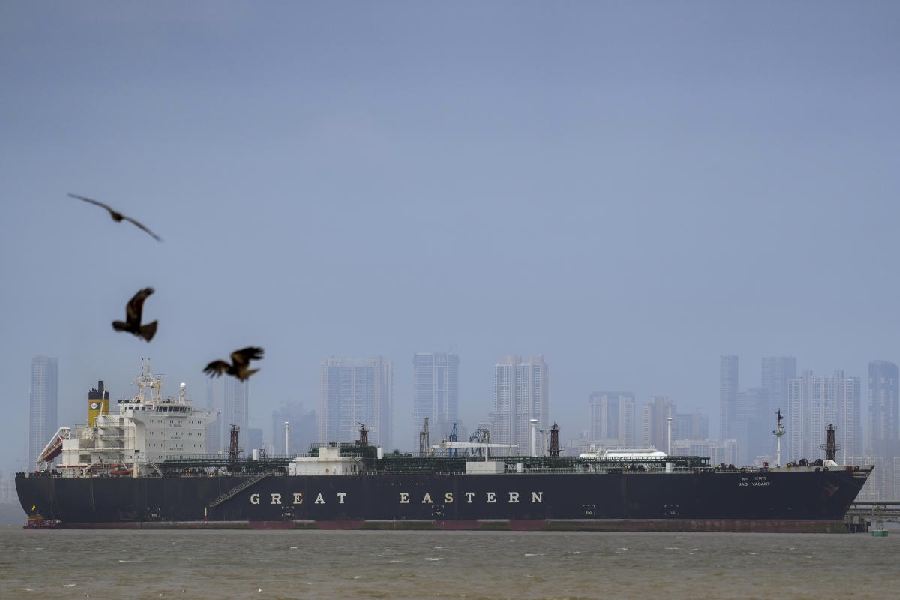
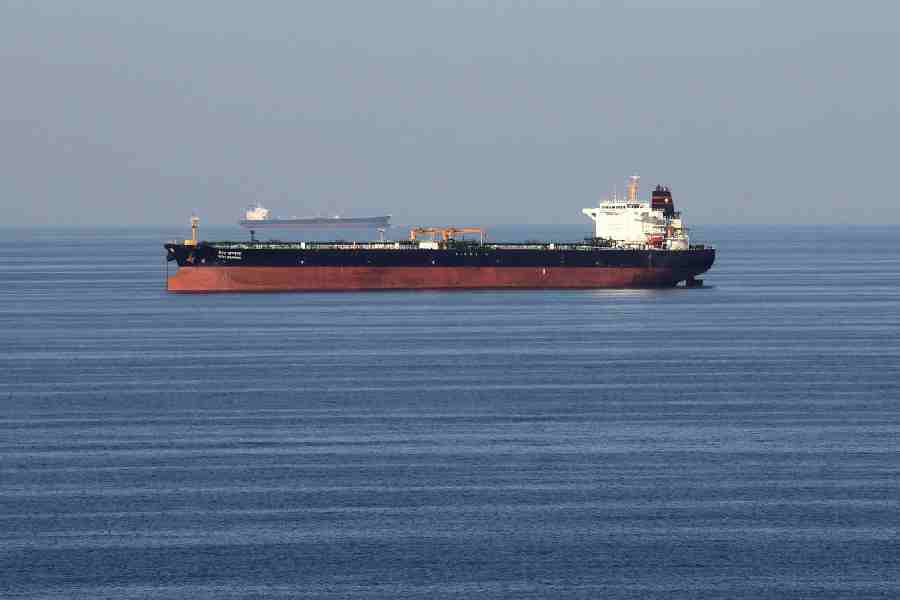
London, Nov. 4: This is what India is up against — the Danish-built MS Emma Maersk, thought to be the biggest shop afloat, which was about to dock today at the English port of Felixstowe in Suffolk with 3,000 containers carrying 45,000 tonnes of goods for Christmas.
The giant vessel, which is 1,200 ft long, 180 ft wide and 200 ft high — the Titanic, launched in 1911, was 800 ft long, 100 ft wide and 175 ft high — will then move on to ports in mainland Europe to unload another 8,000 containers.
The irony, of course, is that while the comrades in Calcutta debate whether to be pro-Peking or pro-Moscow and how best to keep out unwelcome investment, the capitalist Chinese are sniggering all the way to the bank. The lesson is that power no longer comes out of the barrel of a gun; it lies in ensuring the Indians never catch up.
While Indian politicians and industrialists are wandering the world, boasting how the country’s GDP is growing at 8 per cent a year and that India is capable of sophisticated technology, unlike the Chinese with their mass production of “cheap goods”, the Emma Maersk offers a sobering vision of the here and now.
Crowds were gathering on British beaches today to welcome the behemoth which is on its maiden two-month voyage. It began its round trip in Gothenburg, Sweden, and has called at Yantian, China, Hong Kong and Tanjung Pelepas, Malaysia.
The vessel’s main engine generates 1,09,000 horsepower, equivalent to 1,156 family cars. Its anchor alone weighs 29 tonnes, the same as five adult African elephants. And it is as high as a 12-storey building. It has 1,000 plugs for its refrigerated containers and if the latter were laid end to end, they would make a 44-mile-long train.
What is especially worrying for India is the variety of the products on board: Martini glasses, sports bags, shower gel, shampoo and bath foam, clothes, food, furniture, pinball machines, toothpicks, chopsticks, electric guitars, tool boxes, drum kits, lampshades, silver and wooden photo frames, wooden trouser hangers, candles, books, laptop computers, singing and dancing gorilla toys, poker tables, bingo sets, lunch boxes, cuddly toys, make up, electronic toys, dolls, toy motorcycles, Christmas decorations, sofas, toys, games and puzzles, televisions, furniture, frozen mussels, computer parts, CD players, fax machines, key rings, jam, noodles, biscuits and frozen pumpkins.
The cargo also includes more than 1,000 bales of carpet, 1,740 containers filled with toys, games and jigsaws, 117 cartons of girls’ jeans, 40 cartons of bras, nearly 2,000 pairs of men’s and boys’ shoes, 9,000 pairs of trainers, three cartons of spectacle frames and more than 1,500 frozen cooked chickens.
Britain exported about £2.8 billion of goods to China in 2005 but imported nearly £16 billion — a 30-fold increase over 1980.
“These are the goods that Europe used to make,” said Dr Caroline Lucas, Green Party MEP (member of the European parliament) for South East England.
Lucas said the Emma Maersk was a microcosm of globalisation. “Whole sectors of global trade are now being dominated by companies operating out of China and it’s clear that the whole free trade project is in question. The real cost of the goods that the Emma Maersk is bringing in should include the environment, the markets destroyed in developing countries and the millions of jobs lost.”
Her party has warned of the environmental damage such giant ships could cause.
“We must manage international trade in a way which is socially and environmentally sustainable, working towards global agreement on a raft of measures such as taxation on fuel and import tariffs designed to support homegrown businesses and offset the environmental damage caused by ships like the Emma Maersk plying international waters filled with MP3 players and plastic toys.”
But the ship’s Danish owner, Maersk Line, said the vessel was “one of the most environmentally friendly” container vessels built.