The government has introduced a new bill to reset the legal framework governing India’s civil nuclear sector, signalling a move to open the space to private participation while revising the country’s nuclear liability regime.
The Sustainable Harnessing and Advancement of Nuclear Energy for Transforming India Bill, 2025 seeks to repeal two existing laws, the Atomic Energy Act, 1962 and the Civil Liability for Nuclear Damage Act, 2010.
Officials describe it as a single, consolidated legislation aimed at addressing long-standing concerns raised by industry partners and investors.

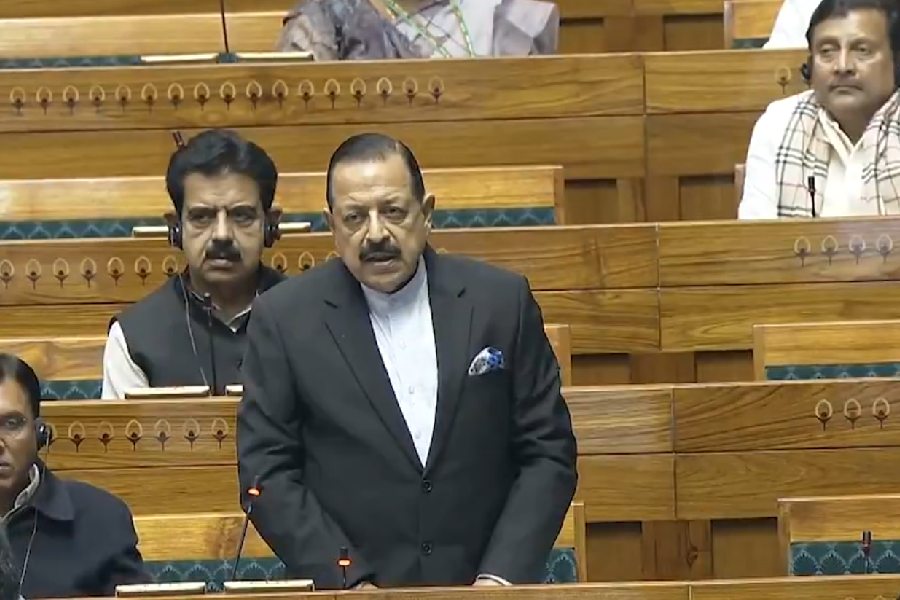
Introducing the legislation in Lok Sabha, Minister of State in the Prime Minister’s Office Jitendra Singh said on Monday, “The Bill seeks to provide for a pragmatic civil liability regime for nuclear damage and to confer statutory status to the Atomic Energy Regulatory Board.”
Granting statutory backing to the regulator has been a recurring demand, particularly from global suppliers who have sought clearer oversight mechanisms. A central feature of the Bill is the reworking of liability provisions.
It states that the operator will be liable for nuclear damage, except in cases caused by “a grave natural disaster of an exceptional character, an act of armed conflict, hostility, civil war, and insurrection or terrorism”.
At the same time, the proposed law limits the operator’s liability in specific circumstances.
The operator will not be liable for damage to “under-construction nuclear installation itself and any other nuclear installation including a nuclear installation under construction, on the site where such installation is located, any property on the same site which is used or to be used in connection with any such installation; or the means of transport upon which the nuclear material involved was carried at the time of nuclear incident.”
The Bill also places a cap on compensation.
“The maximum amount of liability in respect of each nuclear incident shall be the rupee equivalent of three hundred million Special Drawing Rights or such higher amount as the central government may, by notification, specify,” it says.
Special Drawing Rights are reserve assets maintained by the International Monetary Fund and are often used as a reference in international agreements.
According to Singh, the legislation aligns with the government’s broader energy goals, including increasing the share of nuclear power in India’s overall energy mix, supporting innovation in nuclear science and technology, and expanding non-power applications, while continuing to honour India’s obligations on safety, security, safeguards and nuclear liability.
The Bill also proposes the creation of an Atomic Energy Redressal Advisory Council to handle disputes related to nuclear incidents and liability, adding another layer to the proposed regulatory and grievance redressal framework.