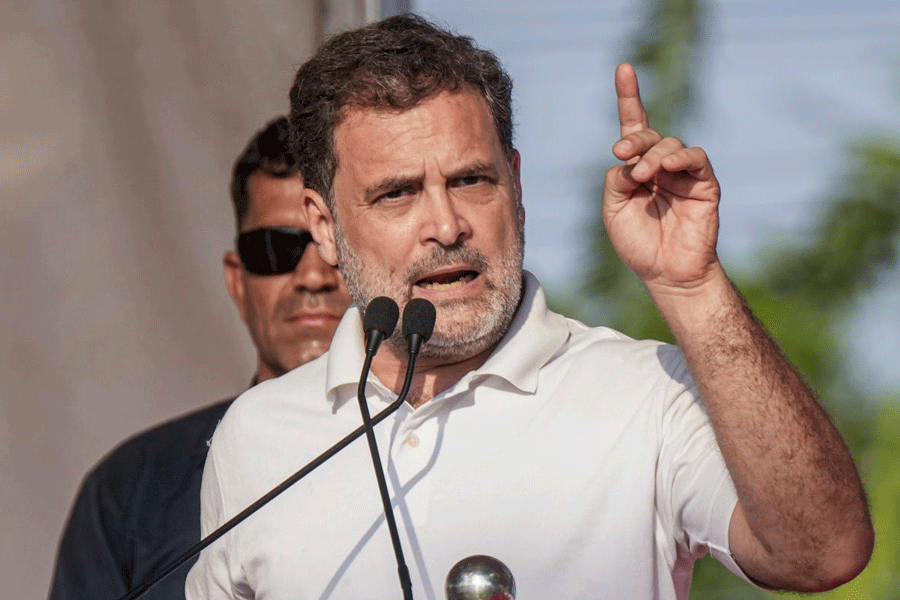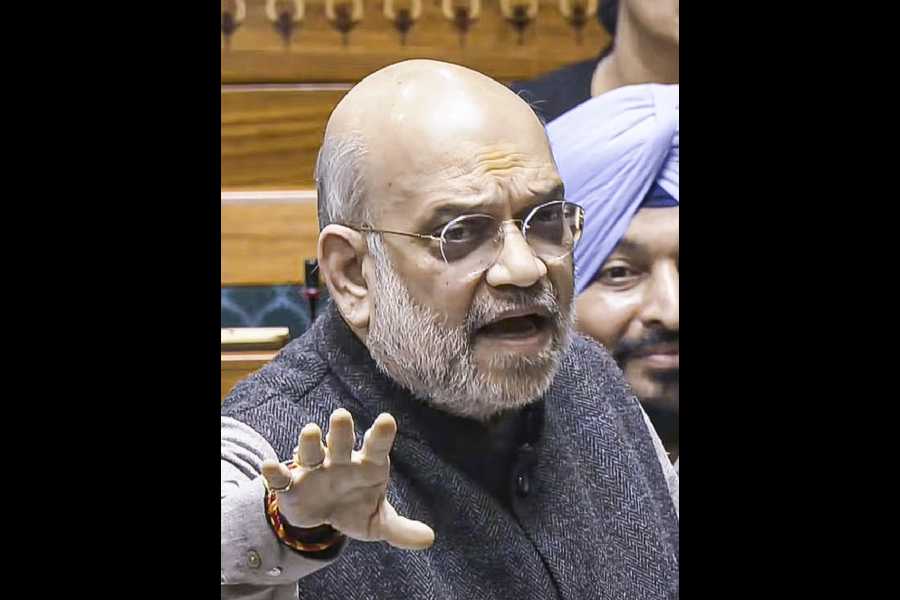
Union home minister Amit Shah on Wednesday told the Lok Sabha that the Opposition’s “vote chori” campaign was aimed at protecting “ghuspetiyas” (infiltrators), triggering a face-off with leader of Opposition Rahul Gandhi.
Tensions escalated as Rahul repeatedly interrupted Shah’s speech and dared him to hold a debate on the points he had raised in his recent media briefings on “vote chori”. Shah dismissed the allegations as baseless and went on to argue that the Congress leader was desperate to protect the infiltrators.
“I challenge you to have a debate on my media conferences,” Rahul interjected.
Amid the uproar, Shah retorted: “He (Rahul) cannot decide what I speak. I will decide the order of my speech. I decide what I speak. The leader of Opposition wants me to answer this or that question first. Parliament will not work based on his wishes,” he said, urging Rahul to listen patiently.
Rahul hit back, claiming Shah’s response was defensive and fearful. “Defensive response hai. Dara hua response hai (It’s a defensive response. It’s a fearful response),” he remarked, prompting loud protests from the BJP benches.
As tempers rose, Shah remained defiant and sought to assure Speaker Om Birla. “I can see concern on your face… I will stick to what I have to say,” Shah said.
He said he won’t get provoked and went on to launch a fierce attack, accusing the Nehru-Gandhi family of being generational “vote chors”. He alleged that the first instance of “vote chori” took place when the first Prime Minister was decided.
“The heads of Congress units of the provinces at the time were supposed to get one vote each. Twenty-eight votes went to Sardar Vallabhbhai Patel and two were cast in favour of Jawaharlal Nehru. But Nehruji ended up being the Prime Minister,” he said, adding: “Yeh vote chori hota hai (This constitutes vote theft)”.
Targeting Indira Gandhi next, Shah said her election from Rae Bareli in 1971 was struck down by Allahabad High Court. “To hide the vote chori, Indira Gandhi brought in a law that no case can be filed against the Prime Minister,” he said amid loud protests by Congress MPs.
“The leader of the Opposition talks of immunity to election commissioners and I will respond to that. But what does he have to say about this immunity?” he asked.
Shah then took on Sonia Gandhi. He said a case had been filed in a Delhi court alleging that Sonia became a voter in 1980 even before becoming an Indian citizen. This led to a huge protest from the Congress benches. “This is a bogus case. Sonia Gandhi did not vote in the election,” Congress MP K.C. Venugopal said.
“I have just stated a fact. You can reply in the court,” Shah replied.
The home minister cited legal and constitutional provisions to claim that the Election Commission had the right to undertake special intensive revision (SIR) to cleanse the electoral rolls and alleged that the “INDI alliance” was attempting to tarnish India’s democracy by opposing the move.
“If the electoral rolls were corrupted, why did you contest elections? Why did you take oath?” Shah said and went to target Rahul’s leadership abilities. “The reason for your defeat is not the EVM or the electoral rolls. Your leadership is the primary reason. One day, Congress workers will demand responsibility,” he added.
“Whether it’s the old voter list or the new one, your defeat is certain,” Shah said.
He said the SIR was to “detect, delete and deport” infiltrators and accused the Opposition of attempting to protect them. “Can democracy in any country be safe if infiltrators decide the PM and CM?... I believe this hurts the political goals of a few parties. I have sympathy for those parties, voters of the country don’t vote for them, a few infiltrators used to vote for them and even they would be gone now,” he said.
Responding to Rahul’s charge that the integrity of the election commissioner’s appointment process was undermined by removing the Chief Justice of India from the selection panel, Shah said: “For 73 years, there was no law governing the appointment of the election commissioners in this country. The process was overseen directly by the Prime Minister. From 1950 to 1989, the Election Commission operated as a single-member body. Throughout this period, the Prime Minister was responsible for all appointments,” he said.
Justifying the three-member selection panel comprising the Prime Minister, home minister and the leader of the Opposition, Shah said the Modi government, for the first time, ensured Opposition representation in the panel. “In their time, only the Prime Minister decided the name of the chief election commissioner,” he said.
“Rahulji says that the leader of the Opposition has only 33 per cent say in the appointment. Our 140 crore people decide who will get 66 per cent and who will get 33 per cent,” Shah remarked, seeking to justify the dominance of the ruling side in the appointment of election commissioners by invoking the weight of the people’s mandate.
Shah claimed that the immunity granted to the election commissioners was in accordance with the constitutional provisions, setting off protests from the Congress. Rahul and his party have claimed that the immunity clause was added in 2023 to shield the election commissioners against wrongdoing. “This is not immunity; this is impunity,” Venugopal told the House.
“The Opposition’s main issue is to keep illegal infiltrators on the voters’ list. We will not allow this,” Shah alleged, as the Opposition rose in protest and staged a walkout. Shah hit back, saying theyhad walked out to shield the infiltrators.
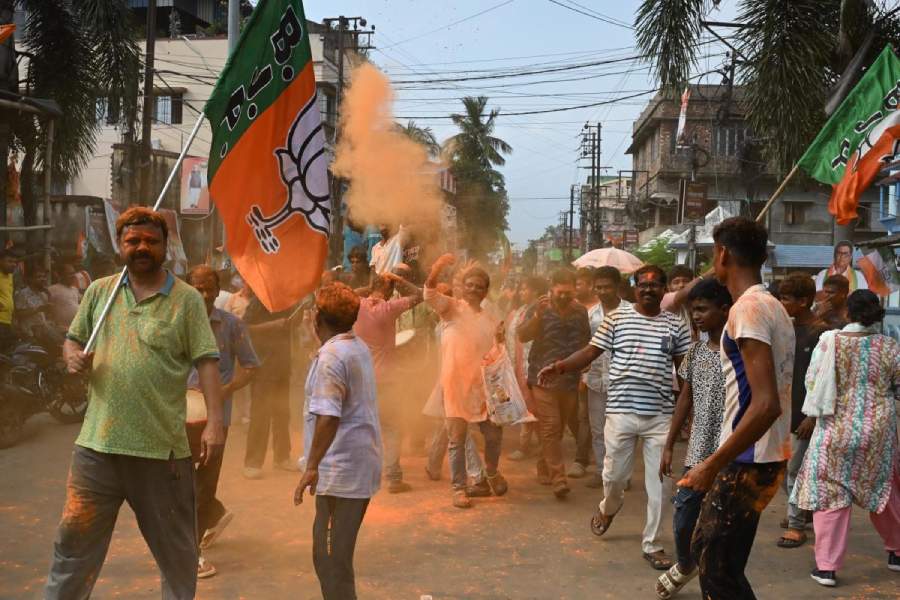
Shah said the Trinamool Congress was sure to lose Bengal if they too tried to protect “ghuspetiyas”.