Tuesday, 26 May 2026
Tuesday, 26 May 2026
Tuesday, 26 May 2026
It was not a revolt for perks or privilege, nor a scramble for power or an attempt to replace one elite with another.
What drove Generation Z into the streets across 2025 was a more elemental demand: that education, healthcare, housing and dignity should not be gated commodities, and that corruption entrenched in power should no longer be tolerated.
From capital cities to provincial towns, the year unfolded as a rolling chronicle of youthful defiance, stitched together by social media and a belief that dignity, accountability and fairness were non-negotiable.
Born between the late 1990s and the early 2010s, Gen Z emerged as the most visible political force of the year. From Southeast Asia to Africa, Europe to the Americas, young crowds filled streets with hand-painted placards and slogans forged online — demanding not revolution, but accountability.
Indonesia’s ‘One Piece’ revolt
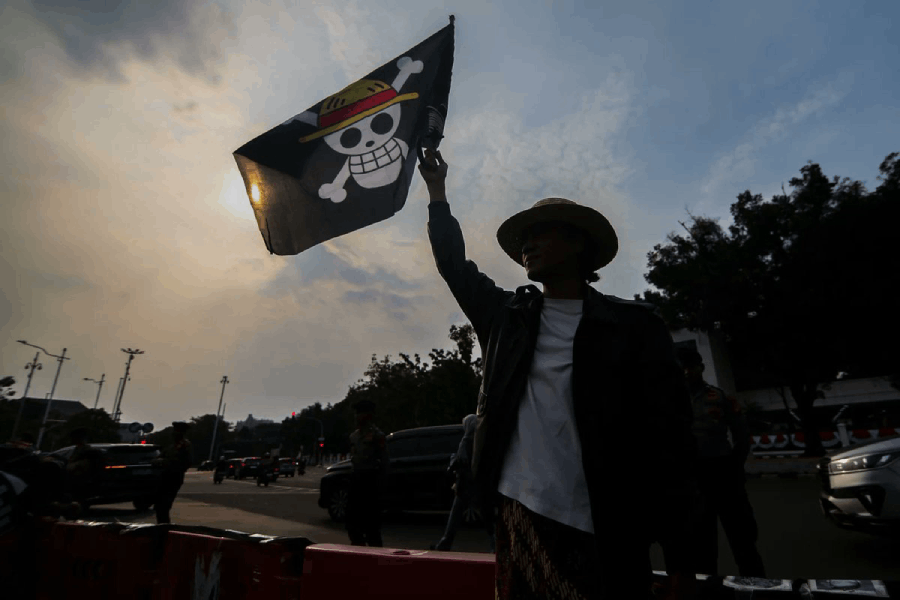
The spark was lit in Southeast Asia. In Indonesia, the movement began at the end of the summer when the announcement of housing allowances for members of parliament, nearly ten times the minimum wage, triggered outrage.
Students poured into the streets of Jakarta and beyond, and a striking symbol soon emerged from the marches: the pirate flag from the manga One Piece, adopted as the emblem of the Gen Z revolt.
The protests were met with repression, and a dozen were killed, underscoring how youthful mobilisation could collide with state power.
Nepal’s rupture and a digital first transition
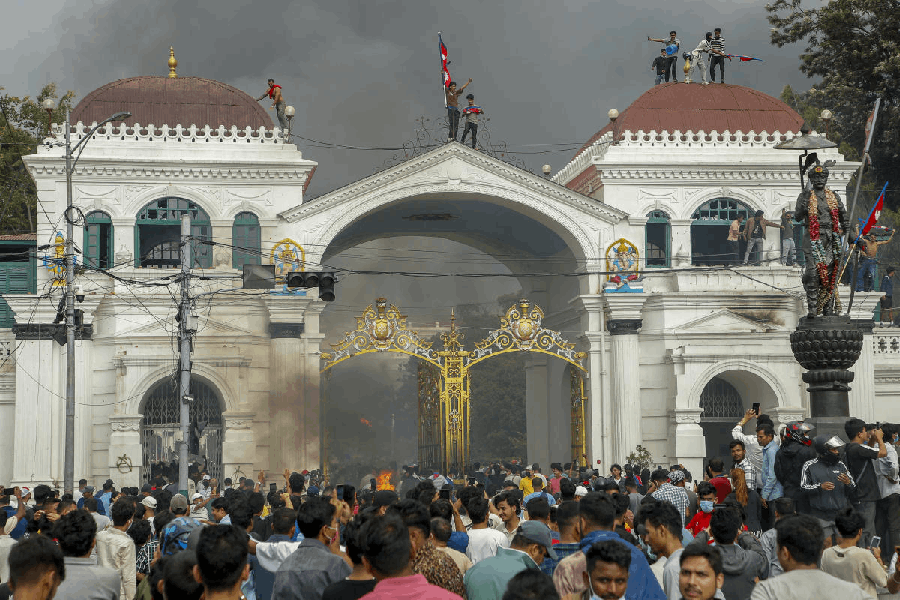
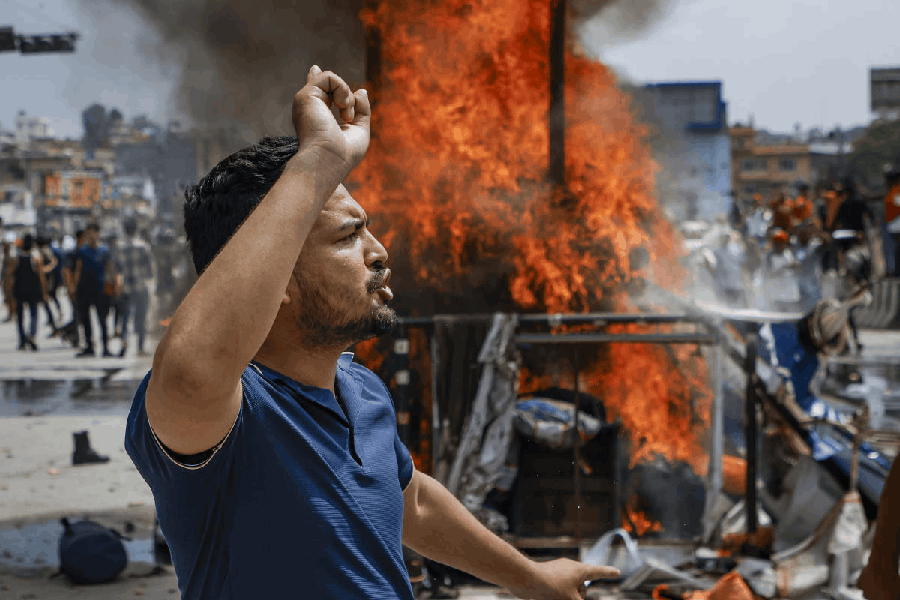
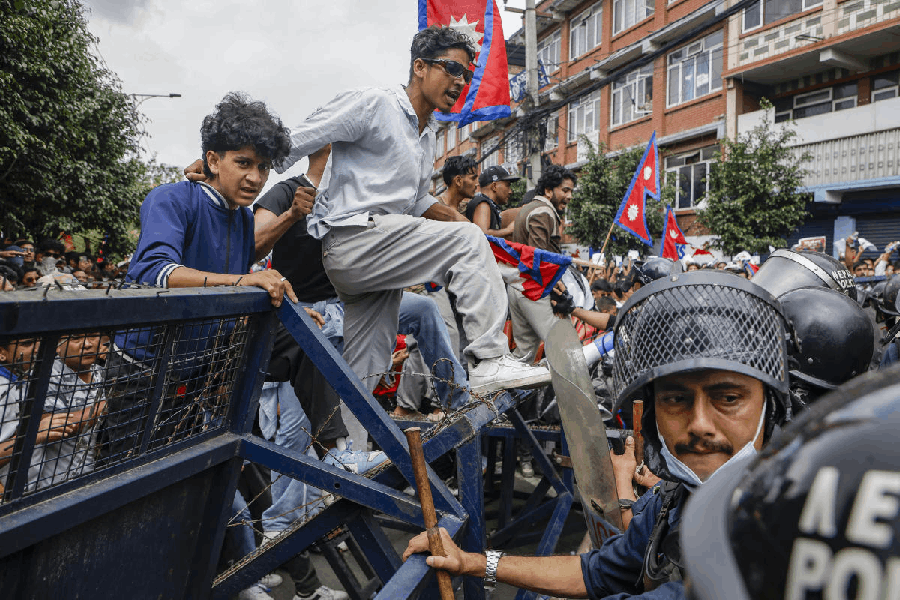
By September, the momentum had shifted to the Himalayas. In Nepal, viral videos circulating on Instagram and TikTok laid bare the lavish lifestyles of so-called nepo-kids, while the government responded by blocking around twenty digital platforms.
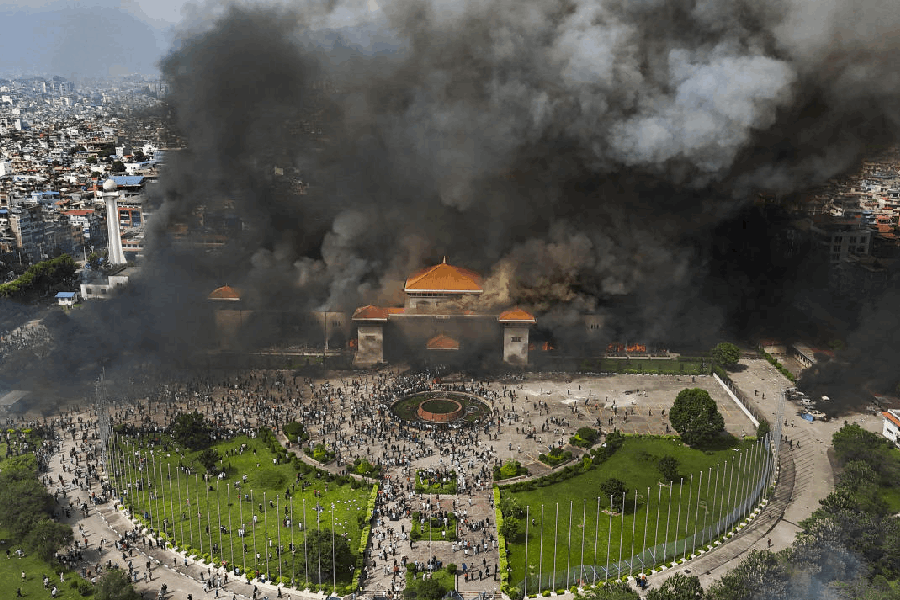
Anger spilled onto the streets of Kathmandu, parliament was set on fire, and for two days the country was gripped by violent riots.
At least 76 people were killed and more than 2,000 injured, according to police, including a 12-year-old and several students.
Yet the political impact was undeniable. The protests culminated in the resignation of Prime Minister K.P. Sharma Oli and the fall of the government.
What followed was unprecedented. An interim prime minister, former Supreme Court chief justice Sushila Karki, was appointed after a vote organised on Discord, marking the first time a mobilisation born online and on the streets translated directly into a political transition.
A commission of inquiry was set up to investigate the deaths of protesters. For Nepal’s youth, it was a rare victory, proof that digital-first mobilisation could force tangible change.
The movement did not subside. Attention shifted to voter registration and a renewed fight against corruption, with early legislative elections scheduled for March 2026.
Madagascar’s hijacked upheaval
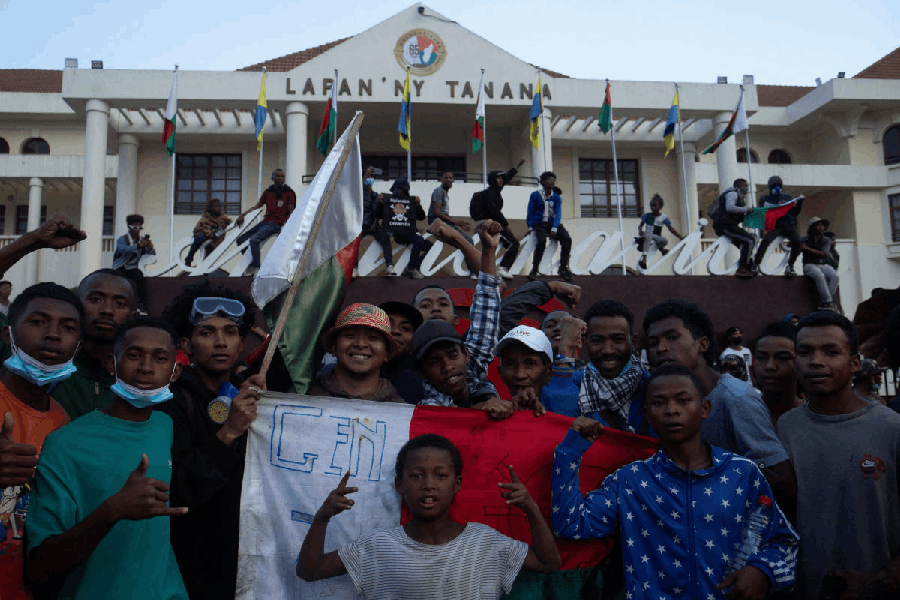
In Madagascar’s capital Antananarivo, youth-led protests that initially focused on water and power cuts widened into demands for the president’s resignation.
Demonstrators chanted that they were not asking for luxury, only the means to live with dignity. Five people were killed in the unrest.
After weeks of demonstrations, President Andry Rajoelina was overthrown, but not by the protesters themselves.
A military coup removed him, leaving power once again in the hands of the army, a familiar actor in the country’s political system.
The uprising, having failed to constitute itself as a political force, was effectively hijacked.
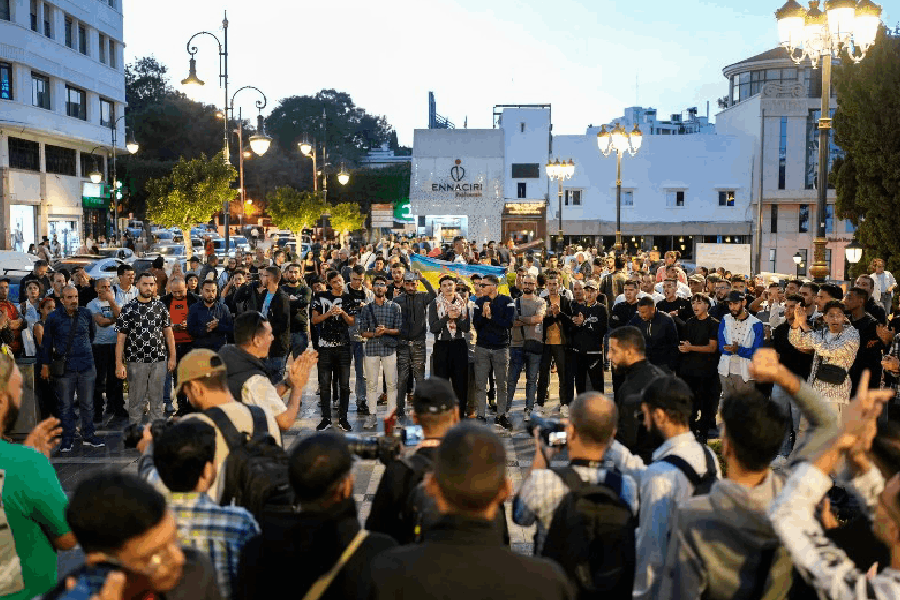
Morocco’s Gen Z 212
In Morocco, mobilisation took a different shape. The Gen Z 212 collective, named after the country’s telephone code, organised primarily on Discord, coordinating calls to demonstrate and articulating priorities such as school reform, access to healthcare and social justice.
The protests did not shake the monarchy, but they did force a response.
The royal cabinet announced modernisation measures and investments in hospitals and schools, acknowledging the legitimacy of the demands.
Repression, however, tempered the momentum. Official figures showed 1,473 young people detained, including 330 minors, and at least three people were killed.
Europe was not immune
In September, France witnessed a convergence of labour and youth anger as teachers, train drivers, pharmacists and hospital staff went on strike, while teenagers blocked high schools to protest looming budget cuts.
Unions demanded more spending on public services, higher taxes on the wealthy and the reversal of an unpopular pension reform that raised the retirement age.
In Spain, tens of thousands took to the streets against Prime Minister Pedro Sanchez’s government amid political and corruption controversies, sparked by leaked audio recordings in which a socialist party member made defamatory comments about police investigators probing graft allegations involving the prime minister’s wife.
More than 100,000 people attended demonstrations under the banner Mafia or Democracy. Separately, soaring rents and a lack of affordable housing pushed Spaniards into massive street protests.
In North Macedonia, mass demonstrations followed allegations of bribery and negligence after a nightclub fire killed around 63 people.
Investigations revealed the club had been operating with an invalid licence obtained through bribes.
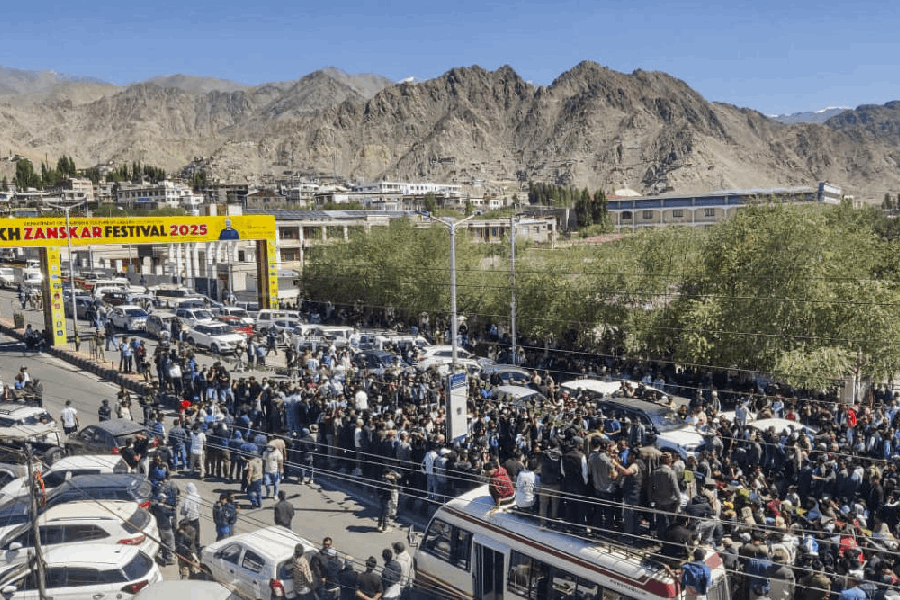
Ladakh protest
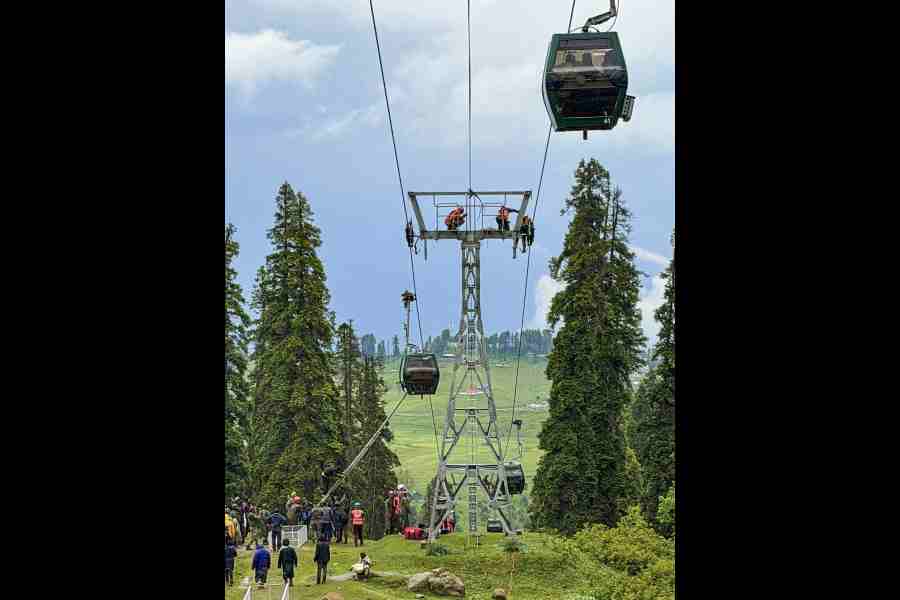
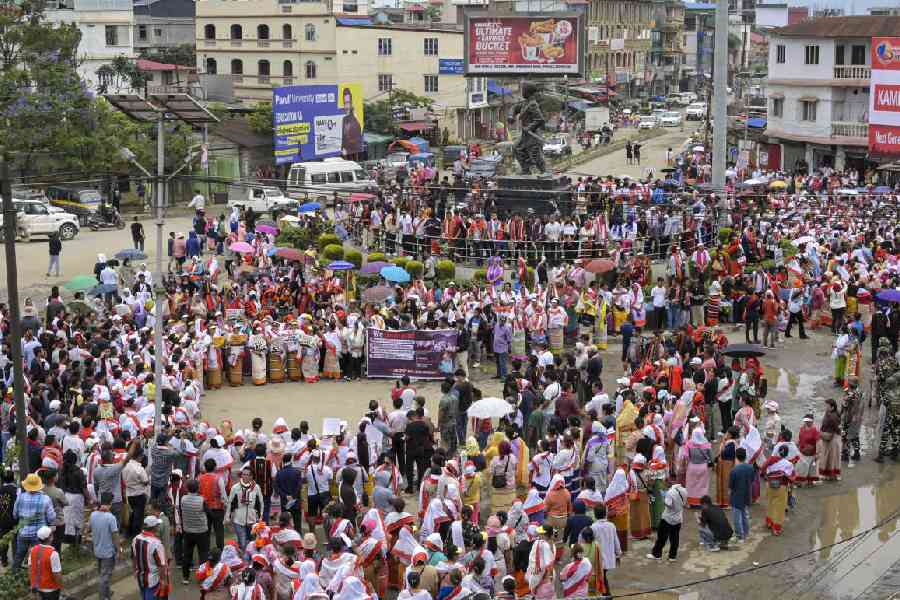
South Asia offered another stark reminder of the costs of dissent. In India, the region of Ladakh entered a phase of turmoil in September as protests demanding greater autonomy turned violent, leaving four civilians dead and several injured.
The arrest of scientist and activist Sonam Wangchuk, who had been at the forefront of the movement, further inflamed tensions.
Authorities cut internet services were cut and imposed curfew across the valley, echoing a familiar pattern of state response.
Across the Atlantic, Peruvian youth mobilised from Lima to Cusco against political instability, corruption and record levels of insecurity.
In the Gambia, protesters demanded accountability from leaders accused of long-standing corruption. Elsewhere in Africa, protests erupted in Mali, the Central African Republic and Togo over attempts to extend leaders’ time in power.
On the American continent and beyond, controversial laws became flashpoints, from Indonesia’s military law changes to concerns in Ukraine over weakening anti-corruption bodies, and in Brazil over legislation seen as protecting politicians.
The toll was heavy. Beyond Indonesia, Morocco, Madagascar and Nepal, deaths and detentions marked protests elsewhere, reinforcing the risks young people were willing to take.
Yet 2025 also marked a turning point in how youth power was perceived. The seeds sown by Bangladesh’s 2024 movement, widely seen as the first successful Gen Z revolution, appeared to bear fruit.
That earlier uprising challenged the notion that young people were disillusioned with democracy or checked out of politics.
Each had its own domestic causes, but all were triggered by deep anger over perceived corruption, cost-of-living crises and widespread economic discontent.
The movements did not always produce lasting political platforms, and their futures remained uncertain. Some forced governments to fall, others were co-opted or repressed, and many hovered in a fragile in-between.
What set Generation Z apart in 2025 was its ability to organise, impose themes and force responses without immediately seeking to take power.
Geography varied, but the reasons echoed each other: corruption, rising economic stress and fears of democratic backsliding.