Tuesday, 26 May 2026
Tuesday, 26 May 2026
Tuesday, 26 May 2026

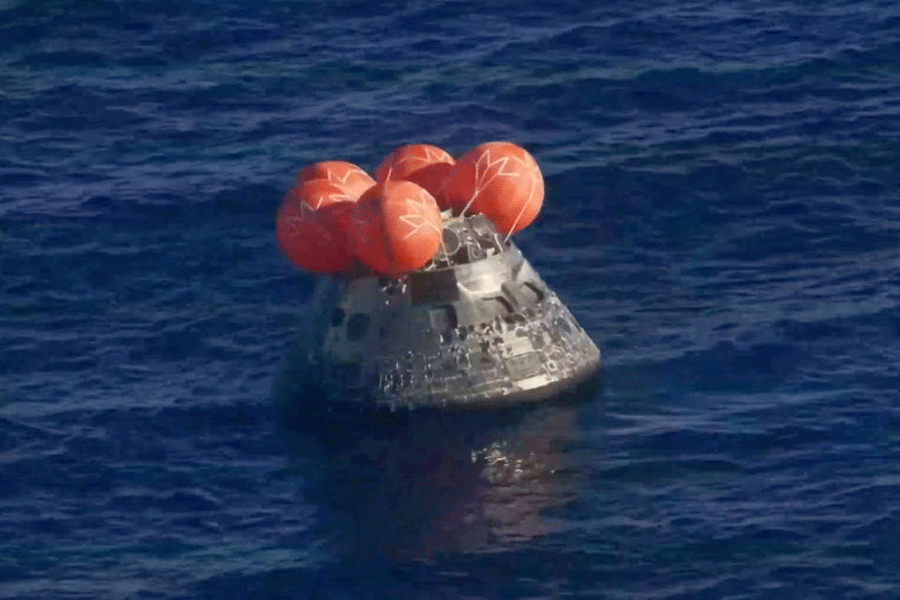
The four astronauts of NASA’s Artemis II mission safely splashed down in the Pacific Ocean on Friday, concluding a nearly 10-day journey that marked humanity’s first crewed voyage to the moon’s vicinity in more than half a century and paving the way for future lunar landings.
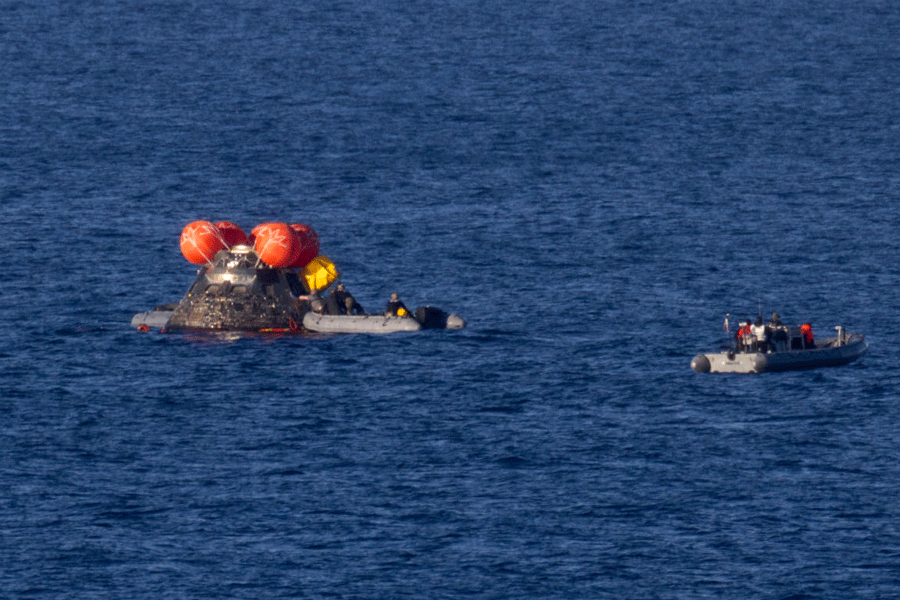
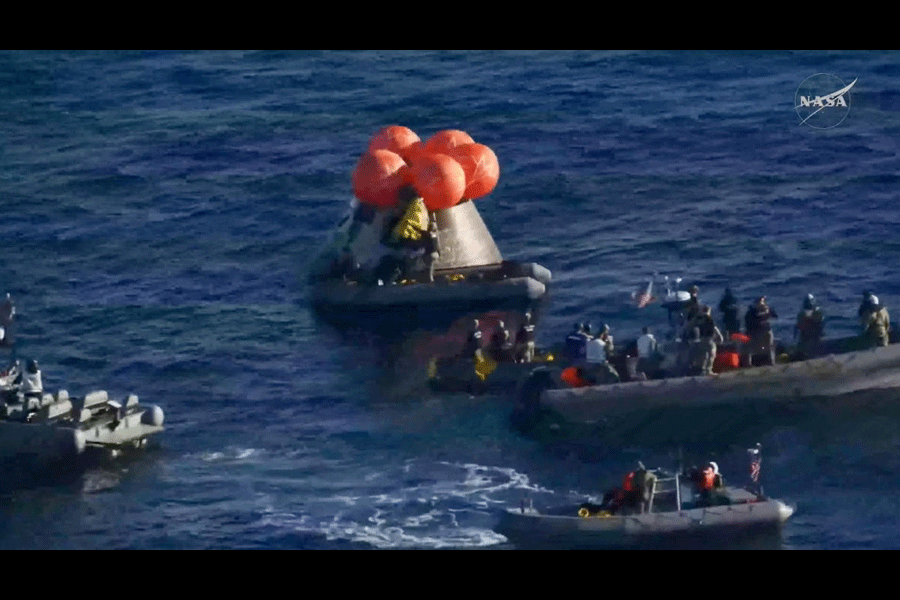
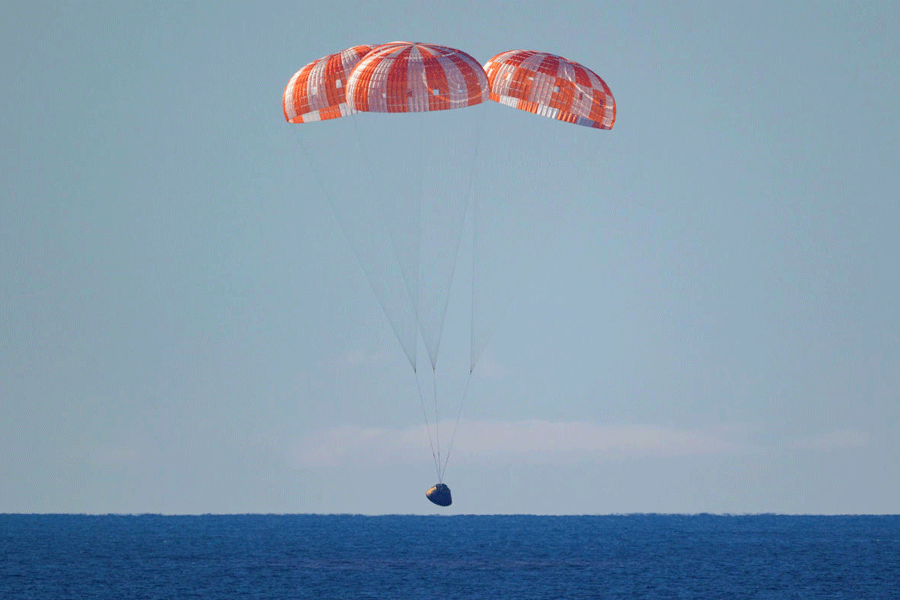
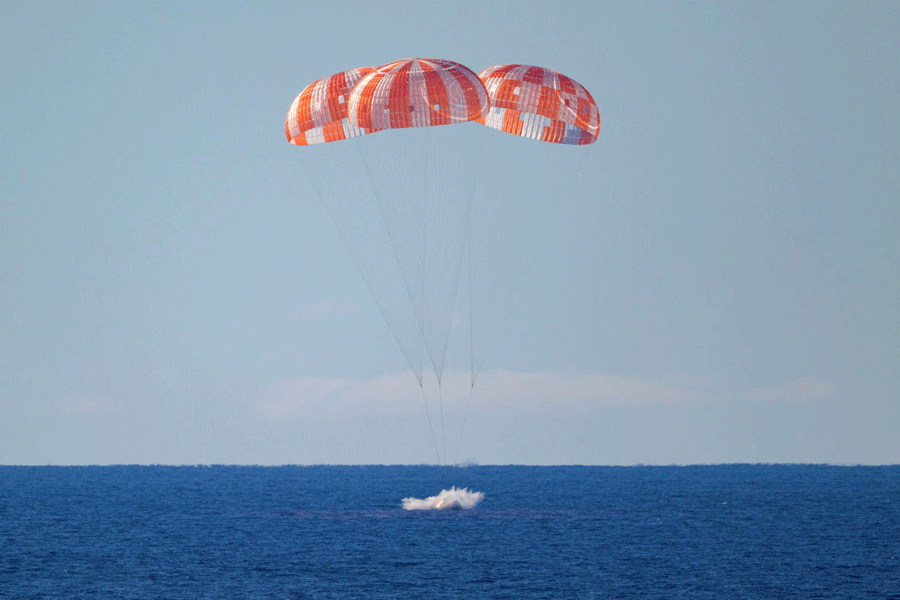
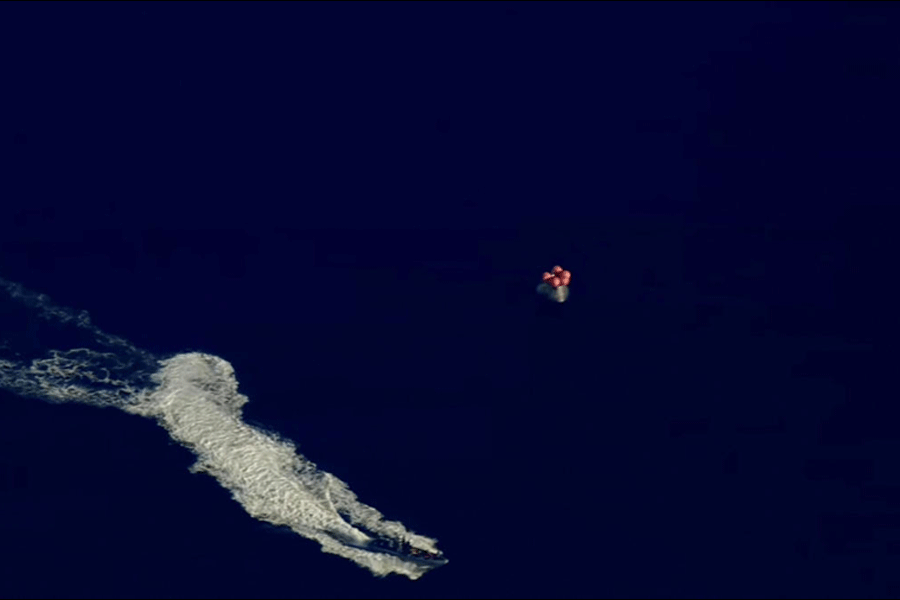
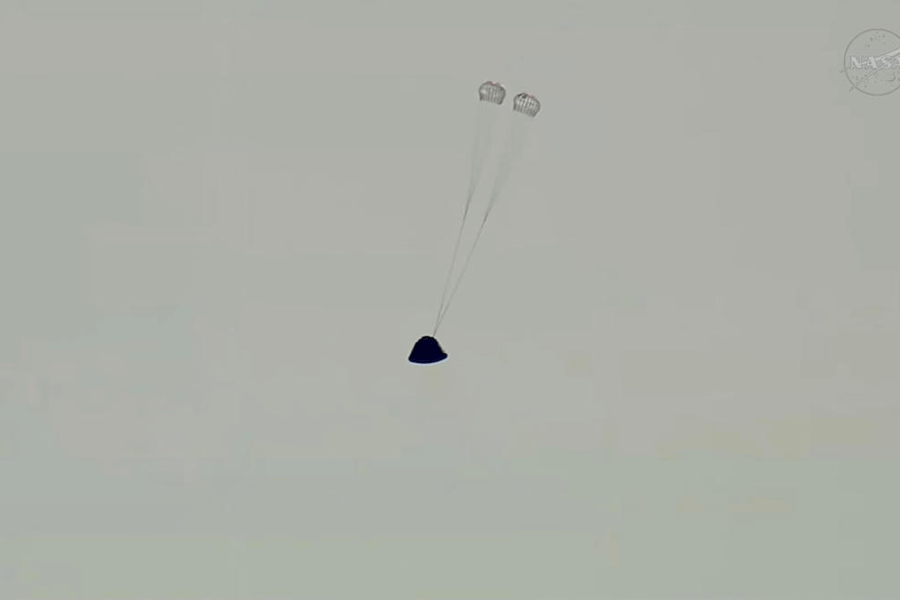
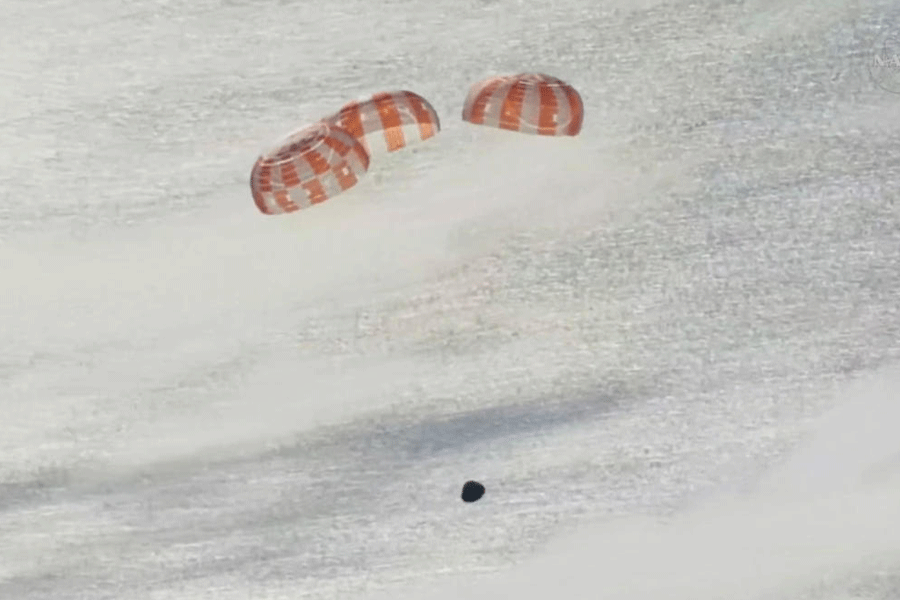
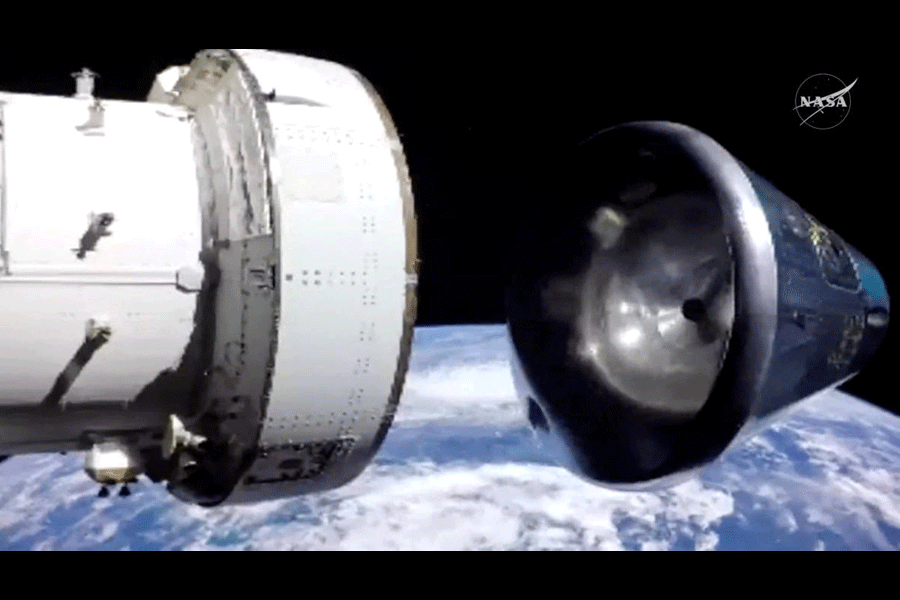
The gumdrop-shaped Orion capsule, dubbed Integrity, parachuted into waters off the California coast after a fiery re-entry through Earth’s atmosphere, capping a record-breaking mission that took the crew farther from Earth than any humans before.
Commander Reid Wiseman, pilot Victor Glover, mission specialists Christina Koch and Canadian astronaut Jeremy Hansen were recovered after their spacecraft endured temperatures of around 5,000 degrees Fahrenheit (2,760 degrees Celsius) during descent, including a tense communication blackout caused by superheated plasma enveloping the capsule.
“A perfect bull's-eye splashdown,” Mission Control's Rob Navias reported.
The astronauts hit Earth’s atmosphere traveling at Mach 33, with Mission Control closely monitoring the spacecraft’s heat shield — a critical component that had shown unexpected wear during an earlier uncrewed test flight in 2022.
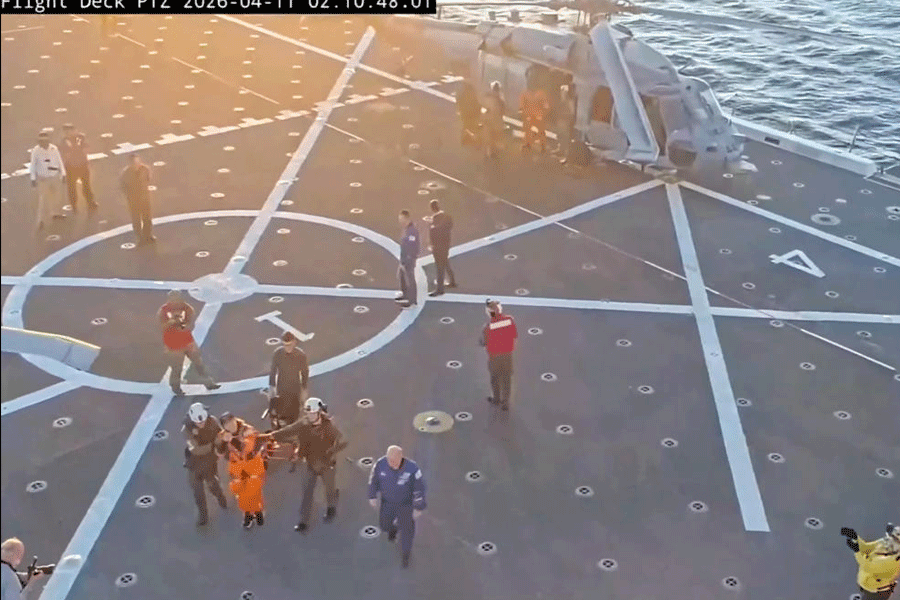
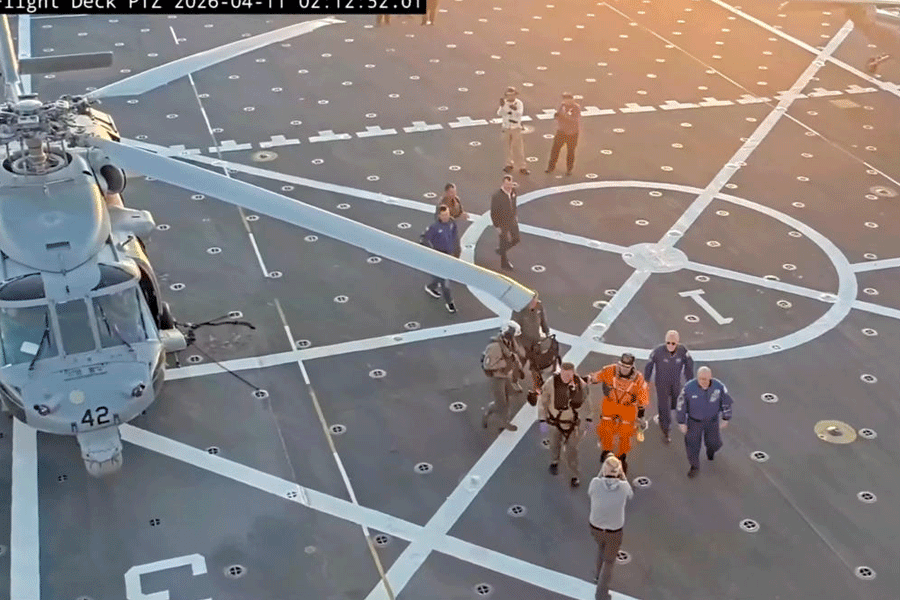
Tension eased as communications were restored and parachutes deployed, slowing the capsule before its gentle splashdown. Recovery teams, including the USS John P Murtha and U.S. Navy personnel, moved swiftly to retrieve the crew, who were described as being in good condition.
Rick Henfling, the flight director, said the Artemis II astronauts are “happy and healthy and ready to come home to Houston.”
“We all breathed a sigh of relief once the hatch opened up, that's when we brought the team in,” he said. “We said a few words to the flight controllers, and then we turned around to the families and waved and gave them a thumbs up, and we all watched as each of their four astronauts got out of the spaceship and were hoisted up onto the helicopters. It was a great day.”
Henfling added that his team felt “anxiety” during re-entry but remained confident in their preparation.
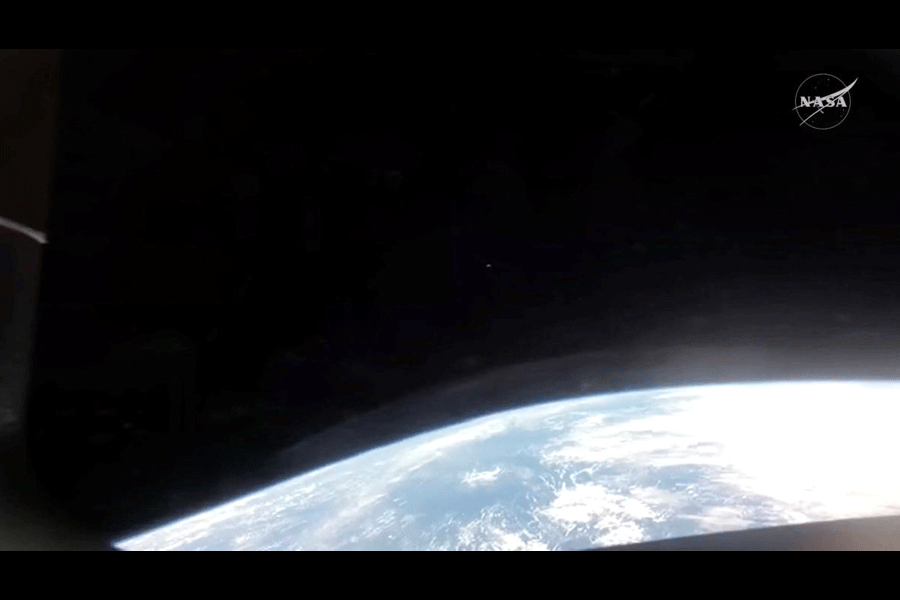
The mission, launched on April 1 aboard NASA’s Space Launch System rocket, traveled roughly 700,000 miles, reaching a peak distance of 252,756 miles from Earth — surpassing the record set by Apollo 13 in 1970. It marked the first human journey to the moon since Apollo 17 in 1972.
“The path to the moon is open but the work ahead is greater than the work behind,” said Amit Kshatriya, Indian-origin NASA Associate Administrator.
“Yesterday, flight director Jeff Radigan said we had less than a degree of an angle to hit after a quarter of a million miles to the moon,” he said. “And their team hit it. This is not luck; that is 1,000 people doing their job.”
During the mission’s lunar flyby, the crew captured unprecedented views of the moon’s far side and witnessed a total solar eclipse.
The eclipse, in particular, “just blew all of us away”, Glover said.
The mission also carried historic firsts, with Glover becoming the first Black astronaut, Koch the first woman, and Hansen the first non-U.S. citizen to participate in a lunar mission.
NASA Administrator Jared Isaacman hailed the mission as a turning point in human spaceflight.
“We are back in the business of sending astronauts to the moon, bringing them back safely and to set up for a series more,” he said. “This is just the beginning.”
Despite its success, the mission encountered minor technical issues, including valve problems in the capsule’s drinking water and propellant systems, as well as a malfunctioning toilet.
“We can't explore deeper unless we are doing a few things that are inconvenient,” Koch said, “Unless we're making a few sacrifices, unless we're taking a few risks, and those things are all worth it.”
Added Hansen: “You do a lot of testing on the ground, but your final test is when you get this hardware to space and it's a doozy.”
The Artemis II mission serves as a crucial test flight for NASA’s broader lunar ambitions, including establishing a long-term presence on the moon as a stepping stone to Mars.
“The next mission is right around the corner, and you know, we'll take the lessons learned from Artemis II,” Henfling said.
“I think anybody who's assigned to that next mission is going to be as successful as us,” he said.
Under NASA’s Artemis program, upcoming missions aim to conduct further tests in lunar orbit before attempting a crewed landing near the moon’s south pole later this decade.
“But we really hoped in our soul that we could for just for a moment have the world pause and remember that this is a beautiful planet and a very special place in our universe, and we should all cherish what we have been gifted,” Wiseman said.