Thursday, 25 June 2026
Thursday, 25 June 2026
Thursday, 25 June 2026
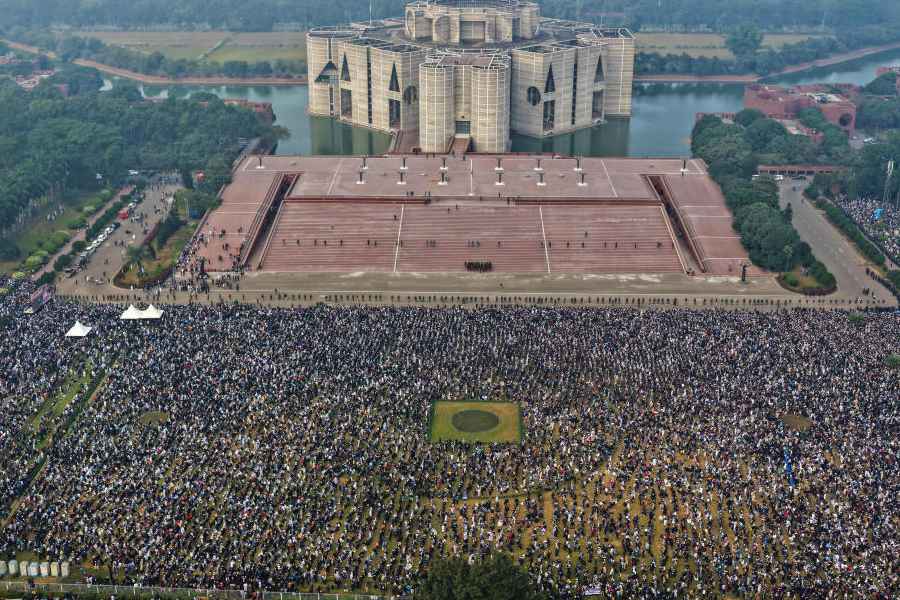
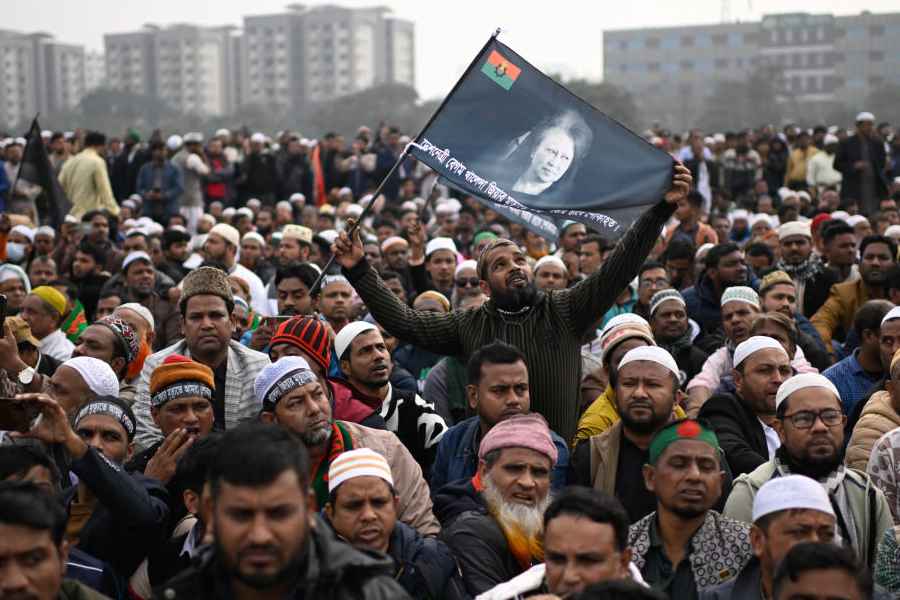
Hundreds of thousands gathered in Dhaka on Wednesday to bid farewell to former Bangladesh prime minister and BNP chairperson Khaleda Zia, as she was laid to rest near the parliament complex amid heavy security.
Zia, a three-time prime minister and one of Bangladesh’s most influential political figures, died on Tuesday at the age of 80 after a prolonged illness.
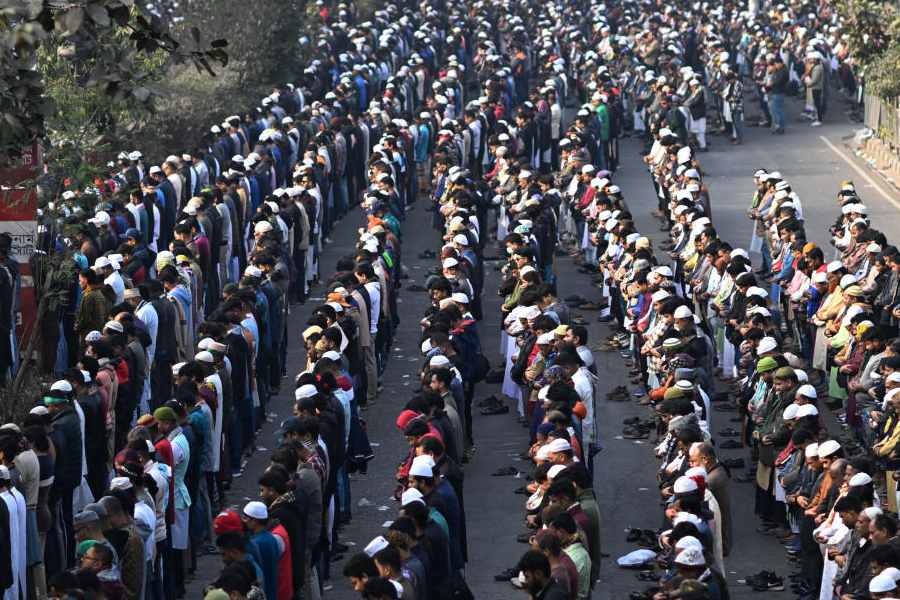
Her funeral prayers were held at Manik Mia Avenue, drawing leaders and dignitaries from across South Asia and beyond.
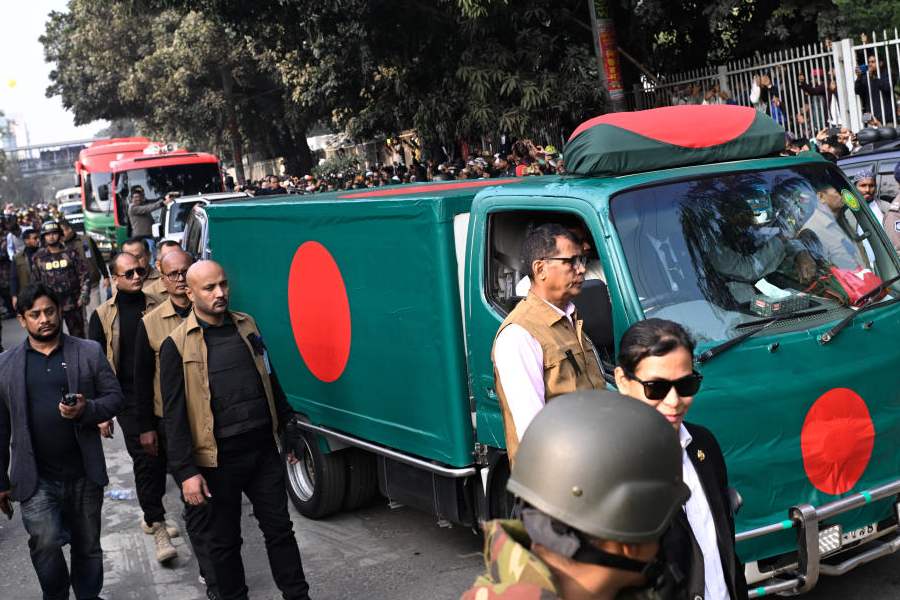
India’s external affairs minister S. Jaishankar, senior leaders from Pakistan and Nepal, diplomats, and Bangladesh’s political and military leadership attended the ceremony. Zia’s coffin, draped in the national flag, was brought in a convoy from her residence.
Thousands of supporters lined the area outside the Jatiya Sangsad Bhaban to catch a final glimpse of the leader they followed for decades. Many Bangladesh Nationalist Party supporters carried flags bearing her photographs.
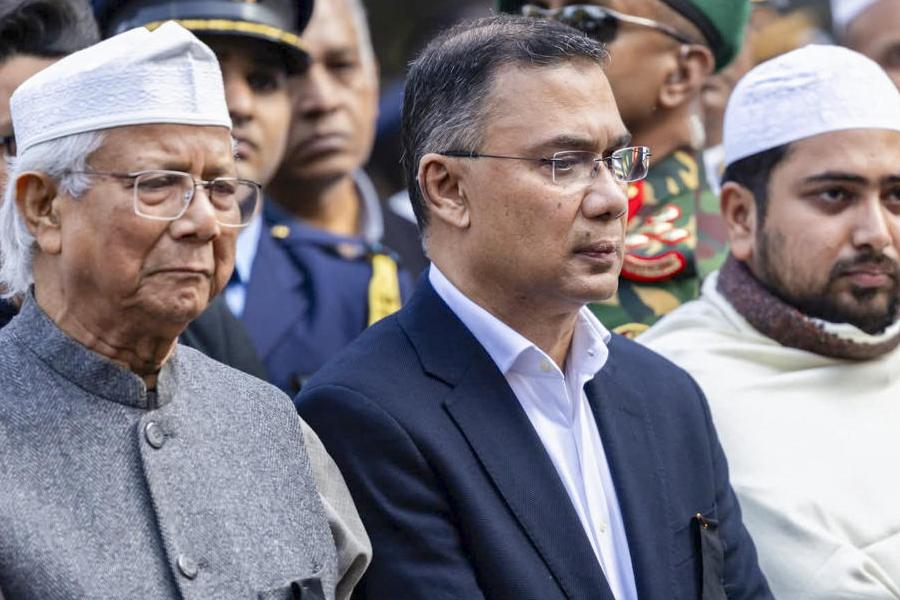
Among those present were interim government chief Muhammad Yunus, Chief Justice Zubayer Rahman Chowdhury, and Zia’s son and BNP acting chairman Tarique Rahman.
Ahead of the prayers, her elder son addressed the gathering, saying, "Please pray to Allah seeking her place in heaven." The namaz-e-janaza was led by Baitul Mokarram National Mosque’s chief cleric Mohammad Abdul Kader.
BNP standing committee member Nazrul Islam Khan read out a brief biography, tracing Zia’s long political life. As prayers were offered, many mourners were seen in tears.
After the prayers, Zia was laid to rest with state honour beside her husband’s grave at around 4:30 pm local time.
Foreign dignitaries included Bhutan’s foreign affairs and external trade minister Lyonpo DN Dhungyel and Maldives higher education and labour minister Ali Haidar Ahmed.
Ambassadors, high commissioners and heads of international organisations based in Dhaka were also in attendance.
A day earlier, in a televised address, Chief Adviser Muhammad Yunus announced a three-day period of state mourning and a one-day general holiday in her honour.
Zia had been battling several health issues for years, including liver and kidney complications, heart disease, high blood pressure, diabetes, arthritis and infections.
Her last public appearance was on November 21 at the Armed Forces Day reception at Dhaka Cantonment. Two days later, she was admitted to Evercare Hospital for routine tests, during which doctors detected a chest infection and kept her under observation.
Her political life stretched over four decades and reflected Bangladesh’s turbulent democratic journey. F
rom leading the BNP and heading governments to facing corruption convictions and later receiving a presidential pardon, Zia remained a central figure in national politics. She entered public life at the age of 35 after the assassination of her husband in 1981.
He was a former military ruler who founded the BNP in 1978. A decade later, in 1991, the BNP won the general election, making Khaleda Zia Bangladesh’s first woman prime minister and the second woman to lead a Muslim-majority country after Pakistan’s Benazir Bhutto.