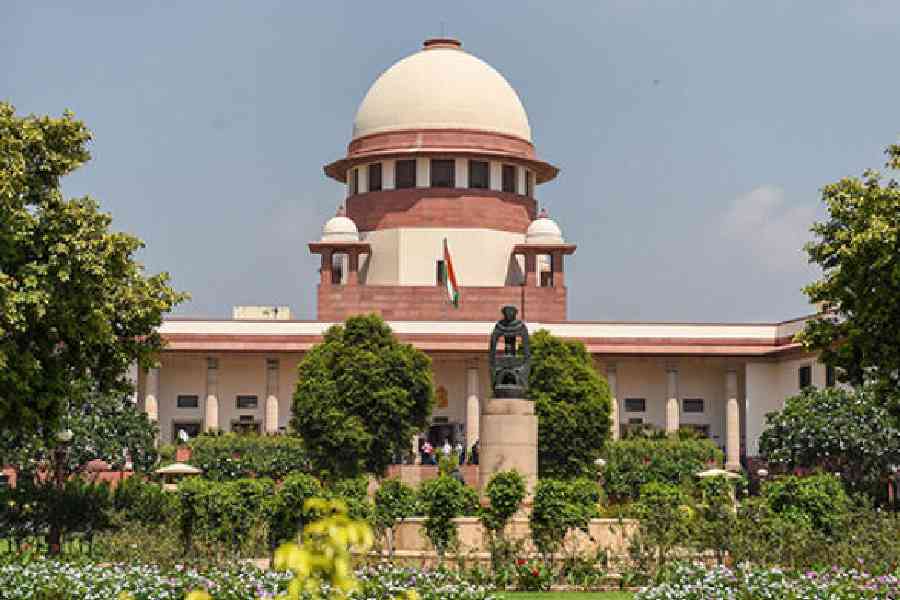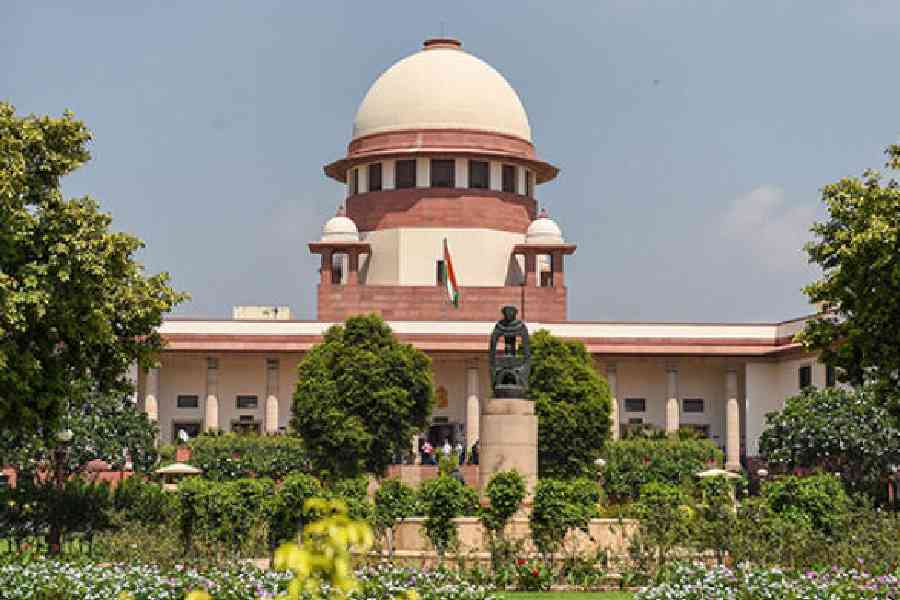
The Supreme Court on Monday rejected a plea to allow the 27 lakh people excluded from Bengal’s rolls to vote in this Assembly election pending the adjudication of their appeals before the tribunals.
If such a concession were made, the bench argued, it would conversely have to suspend the voting rights of the (7 lakh) others whose inclusion in the voter list has been challenged before the appellate tribunals.
According to a report submitted to the top court by Calcutta High Court Chief Justice Sujoy Paul, some 34.35 lakh appeals are pending before the tribunals, which means over 7 lakh of these are against inclusions.
However, the bench orally observed it would have to “apply our mind” if the large-scale deletions are deemed to have affected poll outcomes, for instance, when the deletions outnumber the margin of victory.
The bench did not elaborate. Defeated candidates can file petitions seeking the cancellation of an election and a re-election if they have grounds to question the results.
The bench also expressed concern that the SIR in Bengal had excluded millions of voters for “logical discrepancies”, a category not applied during the Bihar SIR last year.
It underlined that voters who could map themselves to the previous post-SIR rolls were automatically included in Bihar, and yet many who had done so in Bengal had been put under the “logical discrepancies” category.
While rejecting the petition to allow excluded people to vote pending the adjudication by the tribunals, the bench of Chief Justice Surya Kant and Justice Joymalya Bagchi said it was not “expressing any view on the merits of the case”.
“This (upholding the plea) is entirely out of the question. Then the voting rights of the other individual voters have to be suspended,” the bench told senior advocate Kalyan Banerjee, appearing for the Bengal government that was supporting the petition, filed by 13 aggrieved individuals.”
The bench added: “If we allow them to vote, then let us stop the voting rights of people who are included.”
Justice Kant elaborated: “…55 per cent objectionshave been rejected andsuch voters are included. The objectors have gone on appeal; they will ask for the same order.
“We are equally concerned that we don’tcreate a situation where appellate tribunal members are bogged down and faceanother challenge.”
Bihar parallel
Justice Bagchi asked senior advocate D. Seshadri Naidu, appearing for the Election Commission, why Bengal voters who had mapped themselves to the 2002 list received “logical discrepancy” notices.
“Your original ECI notification on SIR did not touch (question the) 2002 list, but your logical discrepancy list rejection reasons are there even for (those on) the 2002 list,” he said.
“When Bihar SIR was argued, submissions of ECI were unequivocal that 2002 list members need not give any document. Please see your written submissions in the Bihar case; you had said the 2002 electorate need not give documents.”
Naidu responded that those claming to be on the 2002 list had to prove they were the same person, since manyof them were now using “aliases”.
Justice Bagchi replied: “Now you are improvising the submissions which you made earlier.”
He added: “That is why we need an appellate tribunal. We need to protect due process rights. The right to vote in a country one is born in is not only constitutional but also sentimental.”
Justice Bagchi further observed: “Unless and until there is enormous amount of voters excluded that materially affect the election, the election cannot be cancelled. If 10 per cent does not vote and the winning margin is more than 10 per cent, then what willhappen?
“But suppose the margin of victory is only 2 per cent, and 15 per cent of the electorate who are mapped could not vote, then… maybe we have to apply our mind.
“We are not expressing any opinion, but we would definitely have to apply our minds. The concern of a vigilant voter whose name correctly or incorrectly is not in the list is also in our minds.
“Earlier, a candidate was given primacy before the appellate tribunal because a candidate cannot be denied the right to contest. Please don’t think the question is not in our mind, that ‘What about those who are excluded?’”
The court did not specify a date for the next hearing. But on a request from senior advocate Shyam Divan, appearing for Bengal, it indicated there might be another hearing on the matter next Monday.
An order dictated by the bench later said: “Since the petitioners have already appealed before the appellate tribunals, in our considered view, the apprehensions expressed in the petitions are premature. If the plea is allowed, then necessary consequences will follow. We are not expressing any view on the merits of the case.”