This election fractured families across the city.
Husbands and wives, brothers and sisters, parents and children found themselves divided — not by political choice, but by who was allowed to vote and who was not.
Tens of thousands of residents, whose names were deleted from the electoral rolls, stayed home — angry, excluded and feeling like outsiders in their own country.
Split siblings
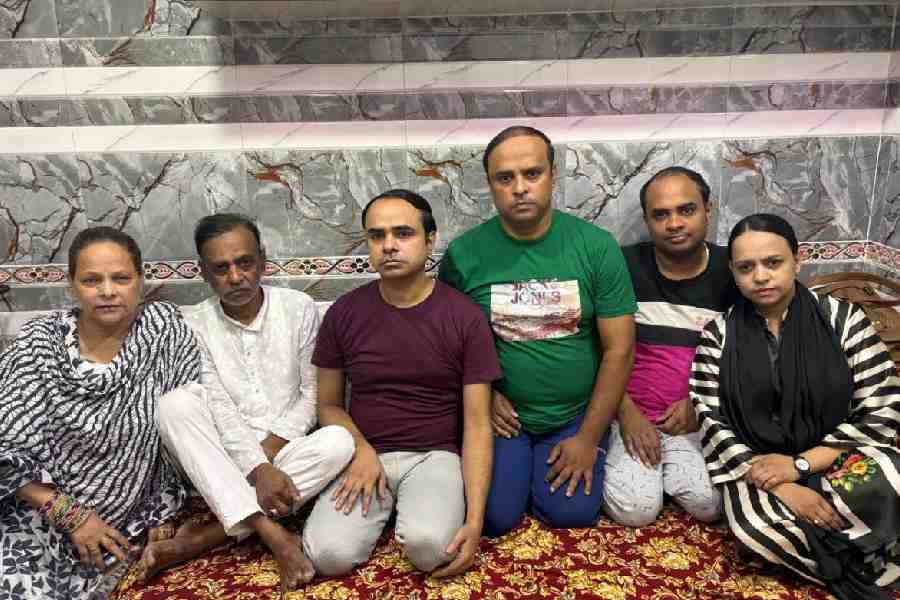
In a family on Abdul Halim Lane in the Chowrangee constituency, the divide ran through the household. Three siblings were able to vote; three others were not — their names remain “under adjudication”.
For years, all six siblings, along with their parents, would walk together to a nearby school that housed their polling booth.
“Every election, it used to feel like a family festival. We would go together, stand in the queue, vote, and return home together,” said Rizwana Asghar, 32, a physiotherapist.
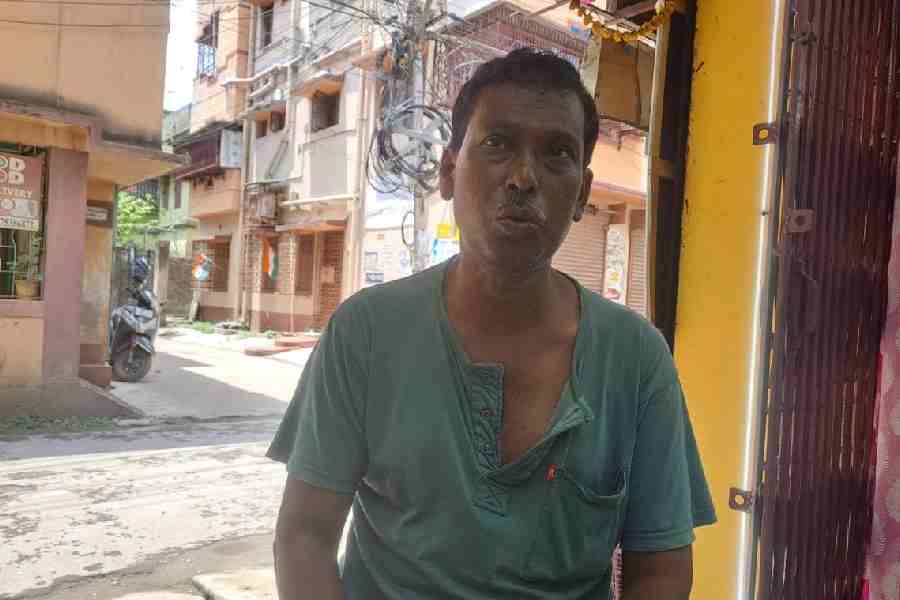
Ranen Mahata at home on Wednesday, while his wife and daughter went to vote
This year was different. Rizwana and her two brothers, Sk Imtiaz and Sk Nasir, found their names missing from the rolls. Their other siblings — Aftab Alam, Anwar Alam and Muskan Asghar — were listed, along with their parents, Sk Asghar Ali and Rehana Begum.
Though Rizwana now lives in Rajabazar after her marriage, she returns to her parents’ home on election day to vote. “This time too, I came — but I did not go to the booth. Three of us stayed back while the others went,” she said.
She considered accompanying them but decided against it. “It would have been embarrassing. Neighbours would have asked why we were standing outside the gate.”
Election day rituals also fell apart. In previous years, the family would cook biryani and have a feast together. This time, there was no biryani.
The three siblings had attended SIR hearings on January 27 after the Election Commission flagged a discrepancy in their father’s name. “His name is Sk Asghar Ali, but the EC mistakenly recorded it as Asghar Ali. We submitted affidavits and documents, but our names are still under adjudication,” Rizwana said.
“Many families across Calcutta are facing similar issues,” said Hera Nafis, an advocate at Calcutta High Court. “Appeals have been filed, but names have not been restored.”
Only parents vote
For Krishnapriya Dutta, 35, a voter in the Dum Dum constituency, polling day was like a tradition. She would prepare the night before — gathering voter cards and documents — and wake early to head to the booth with her mother, eager to be among the first voters. Her father would go later.
This time, her name was missing from the February 28 list. Her parents’ names remained.
“I did not feel the urge to get out of bed,” she said. “Usually, I would be up early, excited. This time, I woke up late.”
Her parents went to vote without her. “When they came back, I asked them to show me their inked fingers,” she said.
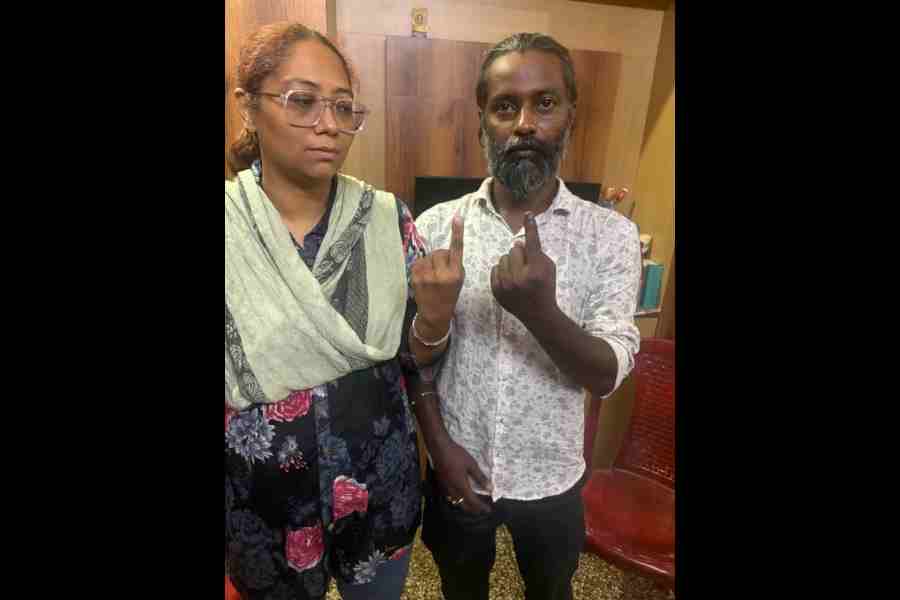
Kahkashan, who could not vote, with her husband Arfat Khan, who did
Couples divided
Daisy Collins, who changed her name to Kahkashan Khan after marrying Arfat Khan, had updated her voter ID over a decade ago. She was called for an SIR hearing and submitted her marriage certificate, affidavit and other documents. The couple are residents of the Chowrangee constituency.
“The officials asked why I changed my name. I said it was my choice,” she said.
Despite this, her name was deleted. “I stayed at home on Wednesday. I felt so disheartened. This vote was crucial, and I wanted to participate,” she said.
In Belgharia, on the city’s northern outskirts, 54-year-old Ranen Mahata also did not step out.
As his wife and daughter went to vote, he tried to cope in his own way — by keeping busy. “I went to the kitchen and started scrubbing utensils. Then I picked up a broom and began cleaning,” he said, sitting outside his home in the Kamarhati constituency. “The pain was so intense that I did not know what to do.”
A small jewellery shop owner, Mahata is the youngest of three brothers. The names of his two brothers and six sisters appeared on the rolls. His did not.