
Photo: Red Bull
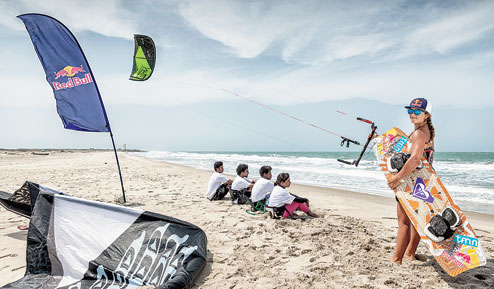
It’s the new craze on beaches across Goa and coastal regions of south India. Kite-surfing’s about skimming the waves and flying above them into the air, doing aerobatics and staying airborne as long as possible.
This is a high-adrenaline combination that offers the double thrill of surfing and flying in mid-air.
Flying above the waves for a few heart-stopping “hangtime” moments is the dream that’s bringing many adventure-seekers to the shores of Goa and some parts of coastal India. One of them is Shaila Pandole, 31, a schoolteacher from Mumbai who started kite-surfing almost two years ago and now’s addicted to the sport. “I even travel as far as Rameswaram in Tamil Nadu for kite-surfing. Unlike other water-sports, this is challenging,” she says.
She’s right. Kite-surfing isn’t easy. You’ve got to catch the wind and then ride it at speeds of anywhere between 40km and 50km per hour. When you’re moving fast enough, you jump about 7m-to-15m in the air and stay there for as long as possible, controlling your movements by tugging at the kite, which is attached to four lines. The surfboard strapped to your feet is used for traction. And small waves are enough for kite-surfing, say experts.

Photo: Quest-Expeditions Pvt Ltd
Hangtime, the manoeuvre in which you remain suspended in the air as long as possible, is what gives you bragging rights in the kite-surfing community. Although kite-surfing’s around 25-years-old in the West, it only arrived in India recently.
In India, the top kite-surfing destinations are spread out between Goa, coastal Karnataka and Tamil Nadu. On some beaches in these states, you’ll find experienced kite-surfers, schools teaching kite-surfing and plenty of
adventure clubs.
Goa’s kite-surfing scene is mainly in the north between Morjim and Arambol beaches and the ideal months to be in the air are between February and May. “That’s when moderate-to-strong winds are available,” says Philippe Dartnell, founder, Yogi Kiting, a kite-surfing school in Goa that operates from the Montego Bay Resort at Morjim. Dartnell’s a certified instructor who trained at the UK’s International Kiteboarding Organisation (IKO).
The advantage during these months is that it’s the lean season for tourism in Goa and there are fewer people on the beach — though it can be hot.
You can’t take to kite-surfing right away as it needs a fair bit of training. “We emphasise more on flying the kite, the rest is about board skills. It’s imperative that a kite-surfer learns to read and understand the elements of nature — both wind and water,” says Dartnell.

Photo: Yogi Kiting
Beginners need about five to six hours of classes where they learn the ways to handle and fly a kite without the board. A bit of “body-dragging” (using the kite without the surfboard) in the water is recommended. “Body-dragging helps in your kite-flying skills and also helps you to maintain control. If you get the control right, you can skate well in the water,” explains Jehan Driver, a professional kite-surfer and founder of Quest-Expeditions, a Rameswaram-based adventure company offering kite-surfing training.
A three-hour package at Quest- Expeditions costs Rs 7,500 per person. It includes kite-boarding equipment rentals, safety gear, as well as introductory lessons to kite-boarding.
Kite-surfing gear in India costs Rs 80,000 to Rs 1.2, lakh depending on the quality. But high equipment costs haven’t deterred enthusiasts, judging from the large number of kite-surfing competitions being organised and enthusiasts turning up from all over the country.
Take a look at Deeksith Suvarna, 22, a regular surfer from Mangalore who first participated in the Red Bull Quila Surf in Mumbai three years back and has taken part in several local kite-surfing events in Mangalore. “It’s an expensive sport, but the fun’s enormous. That’s why you find so many people taking to kite-surfing,” says Suvarna. Red Bull, which sponsors adventure events, has even invited world-renowned surfers to teach nuances of the sport to Indian enthusiasts.
Like most water-sports, safety precautions are a must. “For a beginner, a helmet and life jacket would be a good investment and a healthy dose of commonsense too,” says Dartnell. And how far from the shore should you go? Most experts suggest beginners shouldn’t go further than 100m-to-150m or stray into areas where the water is deeper than 5ft-to-6ft. Adds Dartnell: “We have a saying in kite-surfing, ‘Go out as far as you’re willing to swim.’ ”
At Vaayu Ocean Adventures in Goa, the cost of kite-surfing for 10 hours is around Rs 27,500. “This includes private lessons and required equipment,” says Rahul Malaney of Vaayu Ocean Adventures which offers kite-surfing at Ashvem Beach in north Goa.
GoBananas, an event company that operates in North Goa also offers kite-surfing. “During the (February-to-May) peak season, we train around 80 new people and numbers increase every year,” says Tanweer Bashir
of GoBananas.
Of course, being fit is very important for kite-surfing. Kite-surfers need upper body strength vas the arms and shoulders are in constant motion. You can expect your arm muscles to ache and to have sore wrists too. “It also increases your concentration and co-ordination as you’re multitasking by keeping the kite in the air and balancing yourself on the board,” notes Dartnell.
So, strap on and get ready for some “hangtime” and see your mind, body and spirits soar.