 |
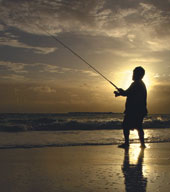
There are those amongst us who thrive on excitement ? battling white water rapids, bungee-jumping off steep cliffs or braving the chills and thrills of treks in the mountains. But then there are the others ? relaxed, laid-back souls, for whom true comfort is all about indulging in life?s simple pleasures. Like angling. Sure, maybe the most challenging thing you can do here is lock horns with a Giant Catfish or hunt down a Yellowfin, but so far as die-hard anglers are concerned, that?s the most excitement they need. So, whether you?re the type who likes to string a worm onto a makeshift line ? or a pro with the latest in fishing gear ? get set for loads of fun, for India, with its dozens of rivers and thousands of streams, offers fishing opportunities galore.
What makes angling easy in India is that most major cities lie along rivers, making fishing spots extremely easy to reach. What?s more, most states have well-organised Departments of Fisheries, where special hatcheries ensure that there?s always a gene pool of local and exotic fish available. This apart, fish sanctuaries and hatcheries in Himachal Pradesh, Uttar Pradesh and other states through which major rivers flow, also maintain a vast stock of fish which are specially bred for re-stocking rivers.
The fishing trails
Before stocking up on the fishing tackle, it?s advisable to have the best spots down pat. And here, Himachal Pradesh, Karnataka, Uttar Pradesh and Jammu and Kashmir rank way up there among the best places in India for freshwater fishing. Streams feeding the Beas river in the Kulu Manali region are known for brown trout and in U.P, the Dodital Lake ensures a good catch during all seasons. This apart, the Ramganga and the Sharda rivers near Jim Corbett National Park promise an encounter with the mighty mahseer, while Rishikesh is another fishing site rating high on the popularity scales.
Moving eastwards, the main sites for fishing in Arunachal Pradesh are Bhalukpong and Topi on the river Kameng, Pashighat on the river Siang and Tezu on the river Lohit. The Brahmaputra, its tributaries and smaller streams and rivers are home to two main sport fish, locally known as the katli and the jhungha, though other varieties like the brown trout and the mahseer are also found, especially in Assam?s Teesta and Manas rivers. The Chilka Lake in Orissa too, offers game fishing, and is rich in tiger prawn, tuna and other fish.
Due south and the Mahanadi, Kaveri, Krishna and Godavari are open to angling almost all year, barring a short spell in the monsoons when the fish are breeding. Prominent species in the peninsular rivers include the high-backed mahseer, the purree, the khudchee and the white carp. The streams, rivers and pools in the Nilgiris are Tamil Nadu?s best fishing sites and in Kerala, good angling is possible in the streams around Munnar. The Kaveri, in Karnataka, is the prime angling river and the sea-fishing region extends from Goa to Thiruvananthapuram along the south-west coast.
And finally, it?s on to the Lakshwadeep and Andaman and Nicobar Islands where the waters teem with marine life, though conservation laws here have put a large portion off-limits for anglers.
All in good time
Angling is possible on Indian rivers almost all year, although most state authorities forbid it during the monsoons. However, regional variations have to be kept in mind ? winters in the Himalayas, for instance, are too cold for fishing. October to November and mid-February to mid-May are the best times for sport-fishing.
License to reel
Licences and permits are must-haves, so ensure you get hold of them from the designated official, or your fishing trip may get nipped in the bud even before it properly takes off. Most licences are issued for a specified stretch of water, but in any case, most fish caught must be released back, and anglers are restricted to a specified number of fish per day.
Bag it
Before setting out for the big catch, make sure you stock up on rods, lines, hooks, reel, flies, spinners, spoons and bait. Light water-proof clothing ? brown or green in colour, is a must ? as are waterproof shoes or light sandals. Don?t forget the sunscreen, hat and dark glasses either ? you?ll be sitting for hours in the sun, rest assured you?ll need them.
You?ll need patience, preparation, and skill to make the line work for you, but for the die-hard fisherman, the thrill of landing that prize catch makes it all totally worth the while.