
⇒ He would not pay a fellow passenger’s cab fare.
⇒ He would often keep his pair of shoes poles apart in the wake of them being stolen.
⇒ He once kept a famous Bengali singer waiting at the Howrah Station promising him a career in Mumbai — that never happened.
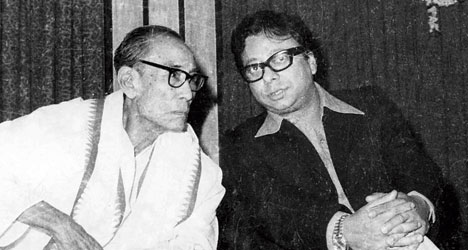
These and a few other colourful vignettes of the legendary musician S.D. Burman find a place in a new book titled The Prince Musician (Westland). Penned by Anirudha Bhattacharjee and Balaji Vittal, who won the National Award in 2011 for their book R.D. Burman: The Man, The Music, the new title traces the Burman families, the background of a few songs from films and the relevance of his music. t2 caught up with the Calcutta-based co-author of the book, Anirudha Bhattacharjee, for a chat.

How easy or difficult is it to write about a person who’s no more?
Actually, it is quite difficult in the sense that we are dependent on people’s views and versions. For instance, the same person often changes his version making it difficult for us to choose the most authentic one. Another problem that often crops up is people contradict each other’s versions, which I suspect is often due to their ego. This book was no exception. In some instances, we faced difficulties as people who were SD’s associates have now aged and cannot remember most of the incidents. Sources disappear, too, like we were trying to contact legendary singer Suman Kalyanpur and despite many phone calls and a lot of research, she is simply untraceable. Archiving is not such a great sector in India, especially for books like this, and though we tried a lot of libraries, we could not manage relevant information. Which is why this book, commissioned in 2012, took so many years.
What about his family members from Tripura? Did you get some material from them?
Unfortunately, SD detached himself from the royal family and that is why we got no interest from them. I have had some good responses from people in Comilla zilla but most material came from associates who worked with him. He has a house in South End Park in south Calcutta and I have often taken visitors from even Pakistan there but never got beyond the gates. A guard never lets people inside.

(published by Westland; Rs 479 on amazon.in)
Has the book (or even the earlier ones) found takers or audiences in book festivals?
Well, the book and us did find a place at a few festivals in Calcutta, Bhubaneswar, Chandigarh, Lahore. Balaji and I are friends from Jadavpur University, both of us are engineers. Both of us can sing. So instead of hardcore marketing, we often tell our story through singing and narrating stories from the book. That’s how we market or present our books. The book on R.D. Burman sold about 10,000 copies. We got a cash prize and gold medal for this from the India government. I am told even Asha Bhonsle liked the book on RD. Another discovery we had is that India is not so keen on retro reading material but Lahore/Pakistan certainly is. They love reading books like this.
What is your primary takeaway from the research you did for this book?
Both Balaji and I realised that SD had a lot of resilience to stick around. Otherwise with the number of initial failures, anyone would have backtracked. But not this man. He had a tough family life, too, and yet he hung around and met phenomenal success later on. Which is why this book makes such good read as a lot of people, including our publishers, felt that SD deserves much more than the other books on him.
What next after this?
Balaji is very keen to do a book on villains, not an analysis but a good narrative from past to present. Maybe categories like zamindars, dacoits, rapists, family villains.
Samarjit Guha
(The writer is director, homes, at Future Hope)