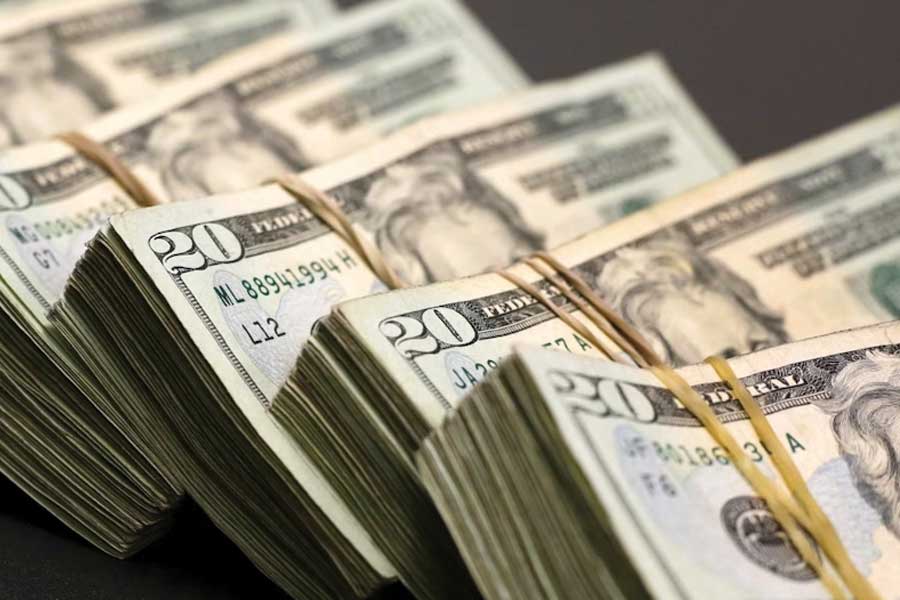
The U.S. dollar continued on its sharp upward trajectory on Tuesday, hitting multi-month peaks against the euro, sterling and yen as tensions in West Asia fuelled fears of prolonged global inflation and triggered broad demand for safe-haven assets.
A jump in crude prices has pushed traders to re-evaluate the likelihood and timing of interest rate cuts by major central banks. Higher energy costs threaten to elevate consumer prices, particularly for economies heavily dependent on oil imports, making policymakers more cautious about easing financial conditions too soon.
In that context, the United States is increasingly viewed as a relative safe haven, supported by its higher degree of energy self-sufficiency and generally resilient economic data, some analysts said.
"The world is realizing that this conflict may go on for a long time, particularly as Iran seems willing to retaliate and not give any concessions," said Juan Perez, director of trading at Monex USA in Washington.
In late-morning trading, the dollar surged against the euro , which was last down 1.2% at $1.1554. Earlier in the session, the euro fell to its lowest level since late November.
Against the yen, the dollar rose 0.3% to 157.74 yen after earlier climbing to its highest since January 23, when the New York Federal Reserve reportedly conducted ratechecks on the dollar/yen pair.
Europe and Japan are more exposed to higher energy costs than the U.S., which is a net energy exporter.
Sterling tumbled 1% on the day against the dollar to $1.3262, hitting its lowest since December. The currency had already been languishing because of domestic economic and political headwinds.
The dollar index, which measures the greenback against a basket of currencies, rose 1.2% to 99.649, after earlier touching a more than three-month peak.
Invesco strategists cautioned that the rally could be short-lived, highlighting that "tepid" dollar gains after U.S. strikes on Iranian nuclear sites last June quickly gave way to underperformance.
In Japan, Finance Minister Satsuki Katayama said financial officials were closely monitoring markets with an "extremely strong sense of urgency".
When asked about the possibility of currency intervention, she said Japan had reached a common understanding with the U.S. last year.