The government will phase out the Wholesale Price Index (WPI) over the next five years while simultaneously introducing a more detailed Producer Price Index (PPI), covering output, input and services prices, in a bid to offer a more realistic assessment of inflationary trends in the economy.
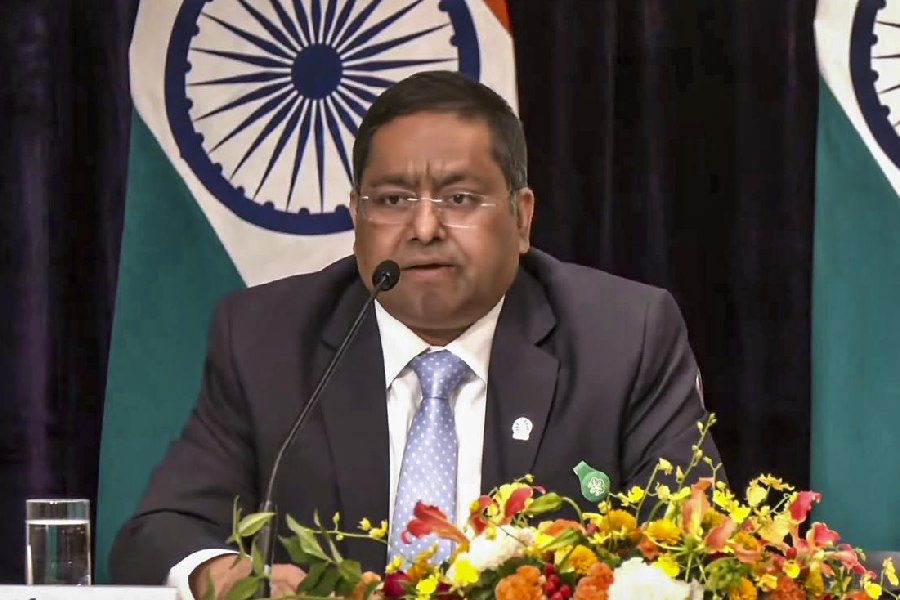
Speaking with reporters, Praveen Mahto, Principal Economic Adviser in the Commerce and Industry Ministry, said that the Department for Promotion of Industry and Internal Trade (DPIIT) will release the revised series of WPI with new base year 2022-23 on June 15, which would replace the existing series with base year 2011-12.
In addition, the department would release a new series of PPI from June 15. It will have three indices - Output PPI, Trial Input PPI and Services PPI.
Initially, services PPI will have seven services - Banking, Securities Transaction, Insurance, Management of Pension Funds, Railways, Air (Passenger), and Telecom.
"Considering the wide usage of WPI in price escalation clauses, this index will be released for five years from the date of release of the revised series along with PPI and will be discontinued thereafter," the ministry said in a statement.
The five-year period would give users sufficient time to switch from WPI to PPI.
Mahto said that after five years, the PPI is expected to replace WPI.
The transition from WPI to PPI aligns with global best practices adopted by advanced economies and the recommendations of the International Monetary Fund (IMF).
The availability of both Output PPI and Input PPI provides a better understanding of the price movements of output items vis-à-vis the input items used in an industry.
It also explains how inflation experienced by producers of input items is passed through to the output they produce.
Mahto said that the Service PPIs for seven services have been compiled in the first phase based on the availability of data from administrative sources/agencies.
More services are planned to be added to the PPI basket of services in subsequent phases, subject to data availability.
The DPIIT informed that WPI and Output PPI are being compiled on monthly basis and will be available for the month of May 2026 (Provisional) alongwith the back series from April 2023 to April 2026 (37 months) on June 15.
The monthly Trial Input PPI (for the manufacturing sector only) will be published on an experimental basis from March 2026 onwards.
"This would enable the department to examine the data quality and also receive feedback from stakeholders and users. Service PPI, compiled on a quarterly basis, will be released for Q4 of 2025-26 (provisional) along with the back series from Q1 of 2023-24 to Q3 of 2025-26," the ministry said.
Speaking about the new series of WPI (2022-23), Dilip Kumar Sinha, Deputy Director General in the Office of the Economic Advisor, said the total number of items has increased from 697 to 957.
He said that new sources of energy, such as solar and wind, have been added under electricity group. In addition, nuclear electricity has been included in the basket.
Similarly, crude petroleum and natural gas have been shifted from the primary articles to the fuel and power.
This reorganisation would lead to better alignment, as this group already houses other major fuels such as coal, electricity, and petroleum products.
WPI, Output PPI, and Service PPI are compiled on the basis of basic price (which excludes net tax and trade and transport margins), whereas Input PPI is compiled using the purchaser's price, since industries purchase inputs from the market.
WPI revision is a periodic exercise. Two major indices are used to track price movements -- the Wholesale Price Index (WPI) and the Consumer Price Index (CPI). While the WPI measures price movements in wholesale markets, the CPI tracks inflation at the retail level and includes certain services.
WPI is a key indicator for measuring the average change in the prices of a fixed basket of commodities at the initial stage of a commercial transaction over a given period, with reference to a base year.
Ever since the introduction of the WPI in 1942 with the base year 1939, seven revisions have taken place, introducing new base years - 1952-53, 1961-62, 1970-71, 1981-82, 1993-94, 2004-05 and 2011-12.
The current WPI base year 2011-12 series was launched in May 2017.
Wholesale price inflation shot up to a 42-month high of 8.3 per cent in April, driven by a spike in energy prices following disruptions caused by the West Asia conflict. Most countries in the world release output PPI and services PPI.
When asked whether government contracts that are currently have price-escalation clauses linked to the Wholesale Price Index (WPI) would be shifted to the Producer Price Index (PPI) in the coming years, Mahto said that the department of expenditure will come out with a circular "very soon" to inform all the users that "in a period of five years, we will be transiting from WPI to PPI. So, henceforth in case they want to enter into a long term contract then they should be using PPI rather than WPI".
He also said that the PPI services will be released quarterly.
Major economies such as the US, China, Japan, Germany, France and other G-20 countries use PPI to measure the average changes in prices received by domestic producers for their output.
In January 2025, a working group was constituted under the chairmanship of then Niti Aayog Member Ramesh Chand for revision of WPI and compilation of PPI with base year 2022-23.
Except for the headline, this story has not been edited by The Telegraph Online staff and has been published from a syndicated feed.